World/Internationalen
Russian Strikes on Kyiv Spill Into Romania and Moldova Raising Regional Tensions
At least 17 people were killed in a massive attack that saw debris and airspace violations affect neighboring NATO and European countries.
PENN Explainer
Hear this story explained in 90 seconds.
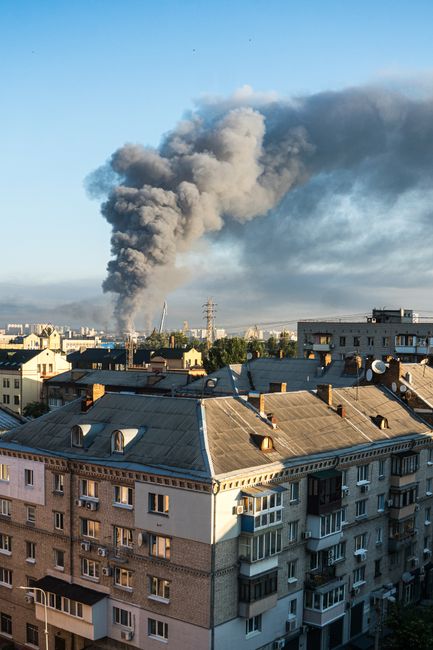
A massive wave of Russian strikes targeted the city of Kyiv and its surrounding regions overnight, resulting in at least 17 deaths and dozens of injuries. The attacks are particularly notable because they spilled over into the neighboring countries of Romania and Moldova. This development has raised significant concerns about the safety of international borders in Eastern Europe. Local authorities in Ukraine reported that rescue teams worked through the morning to find survivors in residential areas hit by the barrage.
In Romania, which is a member of the NATO alliance, officials reported that debris from the attacks landed on their territory. The Romanian Ministry of National Defense stated that they are monitoring the situation closely and have increased surveillance of their airspace. This incident marks a significant moment where the physical effects of the conflict have reached a NATO member state. Romanian leaders have called for a thorough investigation into how the debris crossed the border.
Moldova also reported that its airspace was violated during the heavy barrage of missiles and drones. The Moldovan government expressed deep concern over the safety of its citizens living near the border with Ukraine. While no casualties were reported within Moldova, the event has increased local anxiety and prompted calls for better regional security. The government in Chisinau has frequently warned about the risks of being caught in the crossfire of the ongoing conflict.
International reaction to the news of the spillover has been swift and focused on the risk of escalation. Leaders from several European nations have called for restraint and a renewed focus on protecting civilian lives. The event has sparked new discussions among diplomats about the dangers of the conflict expanding beyond Ukraine's borders. Many international observers are watching to see if this leads to a change in how neighboring countries defend their territory.
NATO officials have been briefed on the situation regarding the debris found in Romania. The alliance has previously stated that it will defend every inch of its territory if it is ever directly attacked. However, officials are currently treating this specific incident as a consequence of the strikes on Ukraine rather than a deliberate attack on the alliance. They are working with Romanian authorities to ensure that all safety protocols are being followed along the border.
Ukrainian President Volodymyr Zelenskyy spoke about the attacks in a public address, highlighting the urgent need for stronger air defense systems. He noted that the spillover into neighboring countries shows that the conflict affects the safety of the entire region. President Zelenskyy continues to seek international support to help protect Ukrainian skies from future large-scale strikes. He emphasized that the security of Ukraine is closely linked to the security of its neighbors.
The Russian Ministry of Defense has not issued a specific statement regarding the debris found in Romania or the airspace violation in Moldova. They typically maintain that their strikes are aimed at military targets and energy infrastructure within Ukraine. The Russian government has often suggested that technical malfunctions or Ukrainian air defense efforts are responsible for debris falling outside of intended target zones. This remains a point of contention between the involved nations.
Humanitarian organizations are worried about the impact of these large-scale strikes on the civilian population. The destruction of homes and essential infrastructure makes it harder for people to access basic needs like water and electricity. Groups such as the International Committee of the Red Cross are monitoring the humanitarian needs in the affected areas of Kyiv. They are also looking at how the increased tension is affecting people living in border communities in Romania and Moldova.
The spillover has caused a shift in how other neighboring countries view their own national security. Countries like Poland and the Baltic states are watching the situation with high levels of alertness and have expressed solidarity with Romania and Moldova. The event highlights the fragile nature of peace in Eastern Europe during this period of intense military activity. Many of these nations are now reviewing their own air defense capabilities and border security measures.
Diplomatic channels remain open as countries try to prevent further escalations that could lead to a wider conflict. Meetings are being held at the United Nations and within the European Union to address the latest developments in the region. The goal of these discussions is to find ways to ensure that the conflict does not draw in more nations. Diplomats are emphasizing the importance of communication to avoid any misunderstandings that could lead to a larger crisis.
As the cleanup continues in Kyiv, the international community remains on edge regarding the potential for more border incidents. The physical impact on Romania and Moldova serves as a reminder of the far-reaching consequences of modern warfare. The world continues to watch how these nations and their allies will respond to the evolving situation on the ground. For now, the focus remains on providing aid to the victims and maintaining stability along the borders.
In the coming days, more information is expected to emerge regarding the specific types of weapons used in the attack. Experts will likely analyze the debris found in Romania to determine the origin and path of the projectiles. This technical information will be crucial for the diplomatic and military assessments being made by NATO and the European Union. The results of these investigations will help shape the international response to this latest escalation.
Neutrality note
Auto-harvested from global news wires and presented neutrally by PENN.
to vote
Comments
No comments yet — be the first to share your thoughts.
Related stories in World/International

United Nations General Assembly Endorses New World Map to Accurately Represent Landmass Proportions
2026-09-07
United Nations General Assembly Adopts Resolution Promoting Maps That Accurately Reflect Africa's Scale
2026-09-07