
Tokyo Commercial Real Estate Market Booms Amid Rising Rents
Surging office demand and low vacancy rates drive record investment despite the highest interest rates in over three decades.
PENN Explainer
Hear this story explained in 90 seconds.
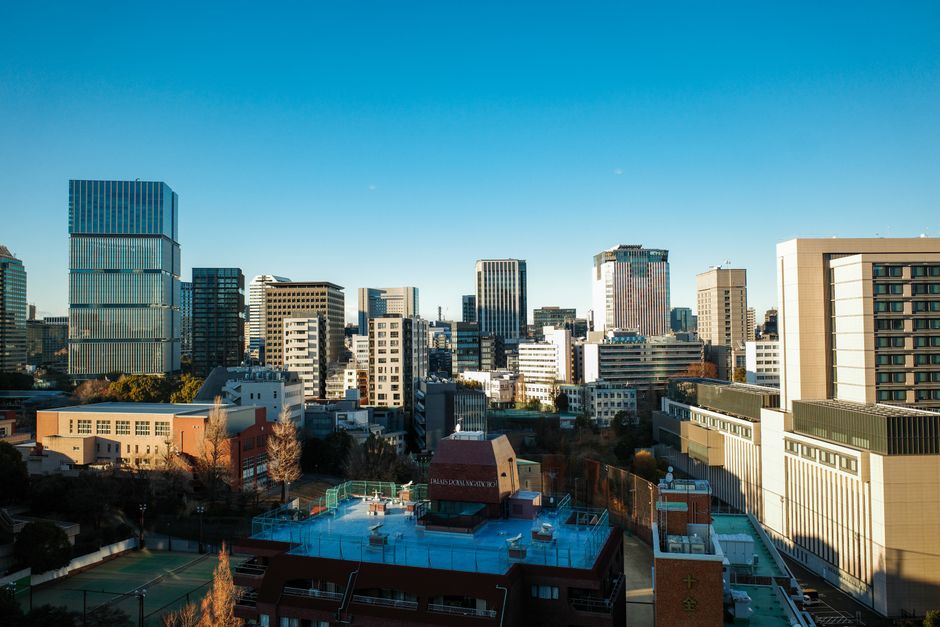
The commercial real estate market in Tokyo is experiencing a period of significant growth, with investment activity reaching its highest third-quarter level since 2007. Despite the Bank of Japan raising interest rates to 1.25%, the highest level in 31 years, investors remain active in the capital. Data from the brokerage firm Jones Lang LaSalle shows that commercial property investment across Japan totaled 2 trillion yen, or approximately $13 billion, during the third quarter of 2026.
Office transactions accounted for 36% of this total investment volume, making it the largest sector in the market. Nearly 70% of all investment activity was concentrated within the Tokyo region. Analysts suggest that the market remains resilient because rising rents are providing investors with substantial growth in rental income, which helps offset the impact of higher borrowing costs.
Several factors are driving this demand for office space, including a steady culture of in-office work and a limited supply of new buildings. Companies are increasingly seeking high-quality office space to attract and retain top talent in a competitive labor market. This trend has led many traditional Japanese corporations to move into modern, well-equipped buildings that they previously might have avoided.
Vacancy rates in Tokyo have dropped to 1.3%, which is among the lowest levels for any major city globally. For high-end, top-tier office buildings, the vacancy rate has remained below 1% for four consecutive quarters. This scarcity of available space has put upward pressure on rents, which are expected to continue rising through 2030.
Koji Naito, the head of capital markets research at JLL Japan, noted that investors are finding significant potential to increase returns. He explained that many existing buildings have rents that are currently below market levels, allowing for substantial upside as leases are renewed. This focus on rental growth is shifting the investment strategy from relying on rising property values to prioritizing operational income.
Major private equity firms are also adjusting their portfolios to capitalize on these market conditions. Blackstone is currently pursuing the sale of the office portion of the Tokyo Garden Terrace Kioicho, a prominent mixed-use complex. The firm is reportedly seeking about 300 billion yen for the office space, roughly two years after it agreed to acquire the entire complex for 400 billion yen.
Industry experts believe that Blackstone is likely to secure a significant profit from this transaction because it is selling only the office component of the property. While a representative for Blackstone declined to comment on the matter, the move highlights the high demand for prime commercial assets in the city. Other notable deals, such as the sale of Pacific Century Place Marunouchi for 230 billion yen, further underscore the strength of the current market.
This trend of rising rents and high demand is not limited to Tokyo. Major cities like Osaka and Nagoya are also seeing rental growth for top-tier office buildings as supply remains tight. In Osaka, rents for high-end office space reached record highs during the third quarter of 2026.
Residential property markets in Tokyo are also experiencing similar pressures. Average rents across the city's 23 wards have seen consistent annual increases, driven by limited supply and high occupancy rates. For institutional owners of residential apartments, these sustained rental increases are providing a reliable source of income growth.
Looking ahead, the market faces a complex environment as construction costs continue to rise due to labor shortages and expensive materials. However, analysts at firms like Savills and Colliers expect that the demand for modern, high-quality space will continue to outpace supply in the near term. This dynamic is expected to keep upward pressure on rents across both the commercial and residential sectors in Japan's major urban centers.
You've reached your free article limit
You've read 10 of 10 free articles this month. Subscribe to Planet Earth News Network for unlimited access to neutral, global journalism — plus puzzles, podcasts, and the weekly newsletter.
Already a subscriber? Sign in.
Ask the Author
Subscribers can ask the journalist a question about this story. Subscribe to ask.
Neutrality note
Auto-harvested from global news wires and presented neutrally by PENN.
to vote
Comments
No comments yet — be the first to share your thoughts.
Related stories in Real Estate & Housing

U.S. Commercial Real Estate Faces Continued Financial Strain as Mall Defaults Rise
2026-11-17
U.S. Commercial Real Estate Faces Mounting Pressure as Billions in Debt Reach Maturity
2026-11-17