Word of the Day: Tsundoku
The Art of the Unread Library
Hear this story explained in 90 seconds.
The Word
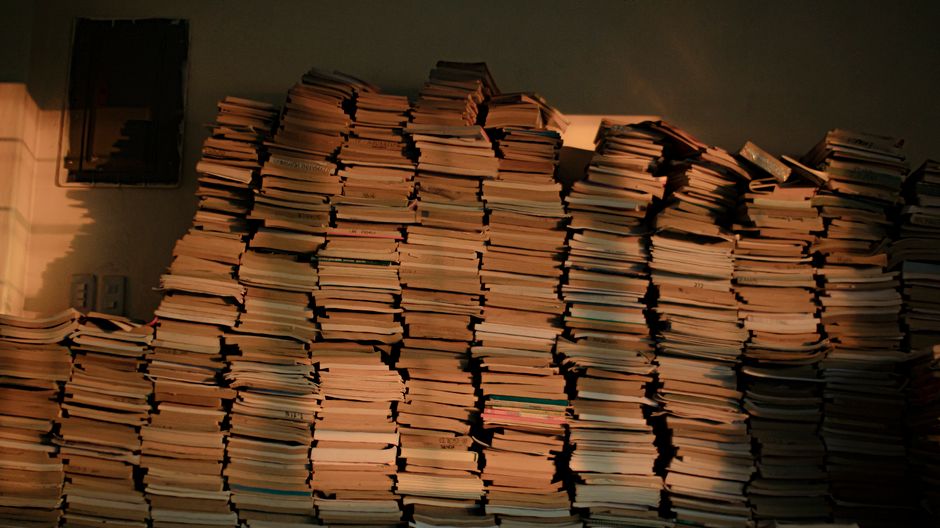
Tsundoku is a noun that describes the act of acquiring reading materials but letting them pile up in one's home without actually reading them. Originating from Japan, this term is a fascinating portmanteau that blends linguistic history with a relatable modern habit. Etymologically, it is derived from the Japanese verb 'tsumu' (to pile up) and 'doku' (to read). Some linguists also suggest it incorporates 'tsunde-oku', which means to stack things up and leave them for a while. It is not merely a description of clutter, but a specific cultural acknowledgment of the aspiration to read versus the reality of time constraints.
The term first appeared in the Meiji era, with records dating back to at least 1879. It was famously used in the phrase 'tsundoku sensei' to describe a teacher who possessed a vast library of books but failed to read them. Despite its origins as a gentle, satirical jab, the word carries no malice or stigma in Japanese culture today. It is viewed as an endearing, almost whimsical admission of one's literary ambitions.
Unlike 'bibliomania,' which implies an obsessive desire to collect books for the sake of ownership or curation, 'tsundoku' is rooted in the intention to read. It is the physical manifestation of a 'to-read' list that has outgrown its digital boundaries. For many, these stacks represent potential knowledge and future adventures, serving as a comforting presence rather than a source of shame.
In modern usage, the word has transcended its Japanese borders to become a beloved term among bibliophiles worldwide. It is frequently used in social media circles and literary discussions to validate the habit of buying more books than one can possibly finish. It turns a potential 'problem' into a shared, lighthearted experience.
Linguistically, 'tsundoku' is a classic example of a Japanese homophonic pun. The combination of 'tsunde-oku' (to stack and leave) and 'doku' (to read) creates a clever play on words that is difficult to replicate in other languages. It highlights how Japanese often uses compound kanji to encapsulate complex social behaviors into a single, punchy noun.
To use it in a sentence, one might say: 'My nightstand is currently suffering from a severe case of tsundoku, with five new novels waiting for a weekend that never seems to arrive.' Another example: 'I promised myself I wouldn't buy more, but the bookstore sale was too tempting, and now my tsundoku pile has reached the ceiling.'
It is important to note that while 'doku' specifically refers to reading, the term is sometimes colloquially applied to other media, such as magazines or manga. However, purists argue that it should remain strictly within the realm of literature. Regardless of the strict definition, the sentiment remains the same: the joy of acquisition often outpaces the speed of consumption.
As we navigate an era of digital distraction, the physical stack of books serves as a tactile reminder of our intellectual goals. Whether you have a small stack or a towering mountain of unread pages, you are participating in a tradition that is over a century old. Embrace your tsundoku as a library of possibilities.
Pronunciation
English: tsoon-DOH-koo | IPA: /tsʊnˈdoʊkuː/
The word is pronounced with the primary stress on the second syllable, 'DOH'. English speakers should be careful with the 'tsu' sound at the beginning, which is a single, crisp consonant sound common in Japanese but less frequent in English. In Japanese, the word is pronounced similarly, though with a flatter pitch accent. Ensure the 'u' sounds are short and clipped, rather than elongated, to maintain the authentic Japanese cadence.
Translations
- English: Tsundoku
- Spanish (Spain): Acumulación de libros sin leer
- Spanish (Latin America): Acumulación de libros sin leer
- French: Accumulation de livres non lus
- German: Bücherstapel (unread book pile)
- Italian: Accumulo di libri non letti
- Japanese: 積ん読 (tsundoku)
- Chinese: 积读 (jī dú)
- Hindi: अनपढ़ी किताबों का ढेर (anpadhi kitabon ka dher)
- Bengali: না পড়া বইয়ের স্তূপ (na pora boier stup)
- Portuguese: Acúmulo de livros não lidos
- Esperanto: Amaso de nelegitaj libroj
- Russian: Стопка непрочитанных книг (stopka neprochitannykh knig)
- Latin: Acervus librorum non lectorum
You've reached your free article limit
You've read 10 of 10 free articles this month. Subscribe to Planet Earth News Network for unlimited access to neutral, global journalism — plus puzzles, podcasts, and the weekly newsletter.
Already a subscriber? Sign in.
Subscribers can ask the journalist a question about this story. Subscribe to ask.
Word of the Day feature by PENN editorial.
Comments
No comments yet — be the first to share your thoughts.
Senior Editor, Planet Earth News Network
View all articles by Desk →