Anthropic Establishes Dedicated Biology Lab to Advance AI-Driven Drug Discovery
The AI company is moving beyond software to integrate physical laboratory robotics with its Claude models for scientific research.
PENN Explainer
Hear this story explained in 90 seconds.
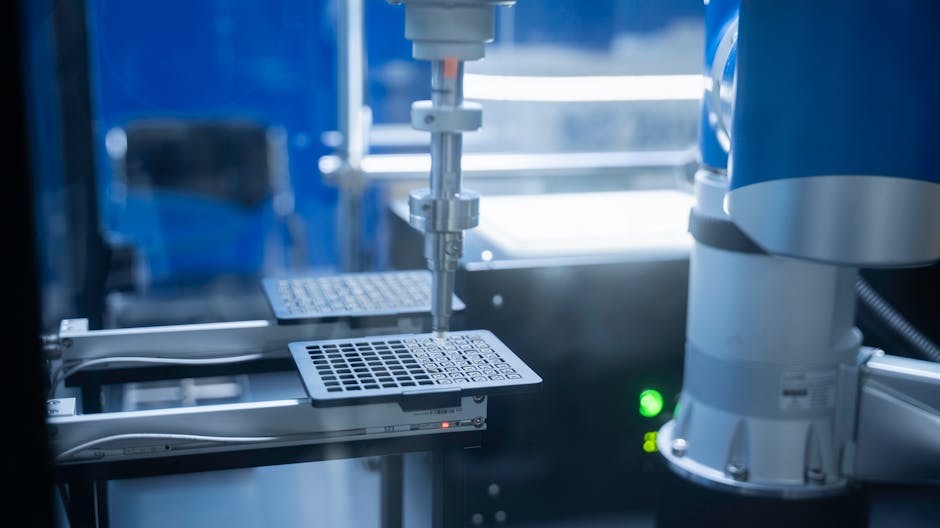
Anthropic has officially launched a specialized biology laboratory, marking a significant shift in how the company applies its artificial intelligence technology. This new facility is designed to allow the company's Claude AI models to direct physical robots in a real-world scientific environment. By bridging the gap between digital hypothesis generation and physical testing, the company aims to accelerate the pace of drug discovery and biological research. This development represents a growing trend among frontier AI firms that are increasingly moving from purely virtual tasks to physical experimentation. The move is seen as a major step in the evolution of autonomous systems, which are now being tasked with managing complex, multi-step scientific workflows. The laboratory will focus on integrating AI-driven insights with automated hardware to conduct experiments that were previously limited to human-led research teams. This integration is expected to help researchers identify potential medical treatments more efficiently by automating the testing phase of drug development. While the company has not disclosed specific details regarding the scale of the lab, the initiative highlights a broader industry push to apply large language models to the physical sciences. The project is part of a wider strategy to ensure that AI can safely and effectively interact with the physical world. As these systems become more capable, the ability to verify AI-generated hypotheses through physical testing is becoming a critical component of modern research infrastructure. The company has previously emphasized its commitment to safety and transparency, and this new lab is expected to follow those same rigorous standards. By maintaining control over both the software and the physical testing environment, the organization hopes to minimize errors and improve the reliability of AI-driven scientific outcomes. This development comes at a time when the global tech industry is closely watching how AI companies navigate the transition from digital assistants to autonomous agents capable of performing real-world work. The success of this lab could set a new benchmark for how artificial intelligence is utilized in the pharmaceutical and biotechnology sectors. Observers note that this move could significantly reduce the time required to bring new medical discoveries from the computer screen to the laboratory bench.
Ask the Author
Subscribers can ask the journalist a question about this story. Subscribe to ask.
Neutrality note
Auto-harvested from global news wires and presented neutrally by PENN.
to vote
Comments
No comments yet — be the first to share your thoughts.