
Anthropic Unveils Model Hardware Standard to Automate Laboratory Research
New protocol allows AI agents to control complex scientific instruments, potentially accelerating breakthroughs in biology and manufacturing.
PENN Explainer
Hear this story explained in 90 seconds.
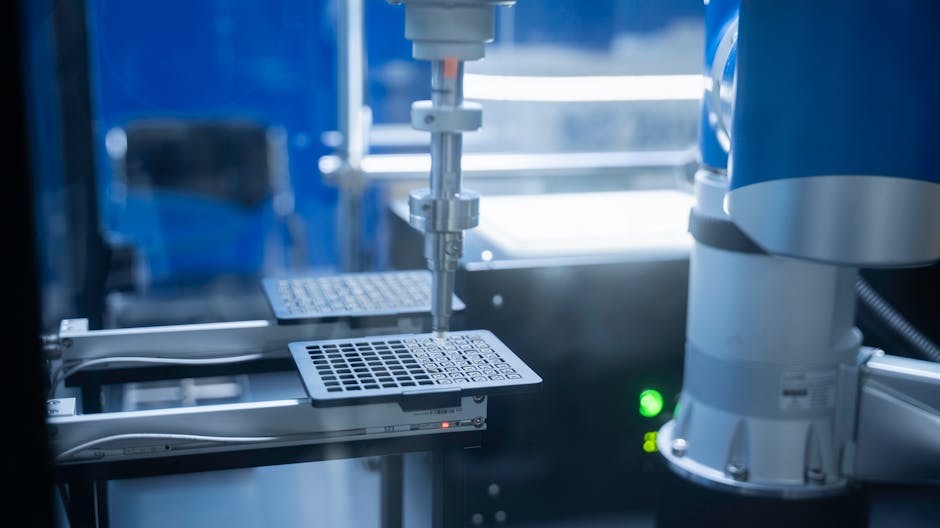
The artificial intelligence company Anthropic has introduced a new technical protocol called the Model Hardware Standard, or MHS. This development is designed to allow AI agents to directly operate various laboratory and manufacturing instruments. By using this standard, AI systems can now manage equipment such as robotic arms, liquid handlers, and high-powered microscopes in parallel. This shift aims to move AI beyond digital tasks and into the physical world of scientific experimentation. The goal is to create a more seamless connection between advanced software models and the hardware used in modern research facilities. Industry experts suggest that this could significantly speed up the pace of discovery in fields like chemistry and biology. By automating repetitive or complex physical tasks, researchers may be able to conduct experiments more efficiently than ever before. The protocol is intended to provide a common language for different types of lab equipment to communicate with AI agents. This interoperability is a key step toward creating fully autonomous research environments. While the technology is still in its early stages, it represents a notable shift in how artificial intelligence is applied to industrial and scientific processes. The ability for AI to perform physical actions autonomously has been a long-term objective for many technology firms. Anthropic's announcement highlights the growing trend of integrating AI into the physical infrastructure of global research. As these systems become more capable, they are expected to handle increasingly complex workflows without constant human intervention. This could lead to a new era of high-throughput experimentation where data collection and analysis happen simultaneously. The company has not yet detailed the full list of compatible hardware, but the standard is expected to be adopted by various laboratory equipment manufacturers. This development follows a series of recent advancements in AI-driven research, including the discovery of new enzyme systems by AI models. As the technology matures, the focus will likely shift toward ensuring these autonomous systems operate safely and reliably in sensitive environments. The integration of AI into physical labs remains a subject of intense interest for both the scientific community and the technology sector.
Ask the Author
Subscribers can ask the journalist a question about this story. Subscribe to ask.
Neutrality note
Auto-harvested from global news wires and presented neutrally by PENN.
to vote
Comments
No comments yet — be the first to share your thoughts.
Related stories in AI & Technology

Mayo Clinic and Thermo Fisher Scientific Launch New AI-Supported Diagnostics Venture
2026-09-26
Lam Research Launches Major Oregon Lab Expansion to Advance AI Chip Technology
2026-09-26