Astronomers Identify Bizarre Decagon Atmospheric Wave Over Saturn's South Pole
New observations reveal a unique weather pattern at Saturn's southern pole, mirroring the famous hexagon found at the planet's north pole.
PENN Explainer
Hear this story explained in 90 seconds.
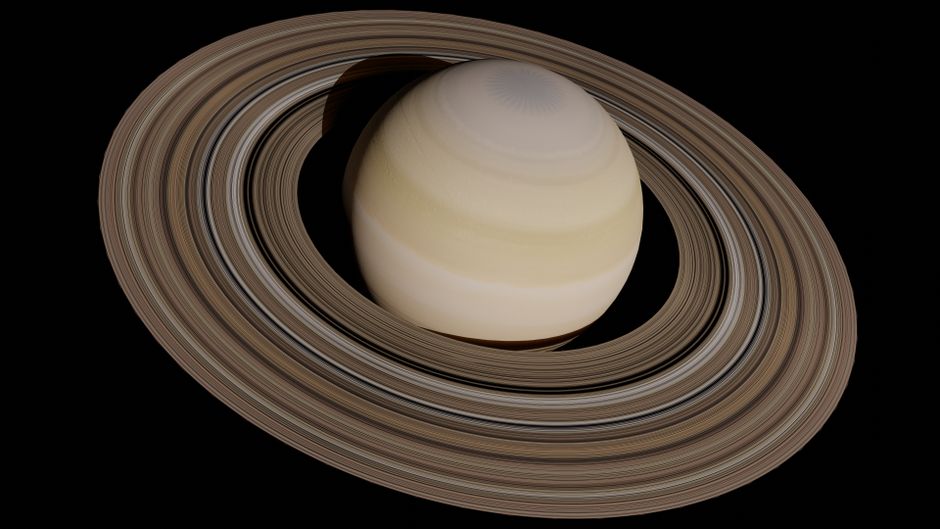
Astronomers have recently identified a striking atmospheric feature at the south pole of Saturn, described as a bizarre decagon-shaped wave. This discovery comes after years of studying the planet's complex weather systems and follows the long-standing observation of a famous hexagonal storm at the planet's north pole. The new finding suggests that Saturn's polar regions may host more structured atmospheric phenomena than previously understood by planetary scientists. Meghan Bartels, a science journalist who reported on the findings, noted that this discovery adds a new layer of mystery to the gas giant's turbulent atmosphere. The decagon was observed through detailed imaging, providing a fresh perspective on how gas giants manage energy and wind patterns at their poles. While the northern hexagon has been a subject of intense study since its discovery, the southern decagon offers a new point of comparison for researchers. Scientists are now working to determine the physical mechanisms that allow such distinct geometric shapes to persist in a fluid, gaseous environment. These patterns are believed to be caused by atmospheric waves that interact with the planet's rapid rotation and deep-seated wind currents. Understanding these waves is essential for building more accurate models of Saturn's climate and internal dynamics. The research highlights the ongoing value of planetary exploration and the importance of high-resolution data in uncovering hidden features of our solar system. As technology improves, astronomers expect to find even more subtle details in the clouds of distant planets. This discovery serves as a reminder that even well-studied worlds like Saturn still hold many secrets waiting to be revealed. Future missions and continued analysis of existing data will likely provide more clarity on how these geometric storms form and evolve over time.
Ask the Author
Subscribers can ask the journalist a question about this story. Subscribe to ask.
Neutrality note
Auto-harvested from global news wires and presented neutrally by PENN.
to vote
Comments
No comments yet — be the first to share your thoughts.
Related stories in Space & Astronomy

NASA Successfully Launches Nancy Grace Roman Space Telescope to Study Dark Universe
2026-10-02
Impulse Space Awarded $28 Million U.S. Space Force Contract for Orbital Monitoring
2026-10-02