British Columbia Declares State of Emergency Amid Surge in Out-of-Control Wildfires
More than 20,000 residents have been forced to evacuate as fast-moving blazes destroy homes across the province's southern interior.

PENN Explainer
Hear this story explained in 90 seconds.
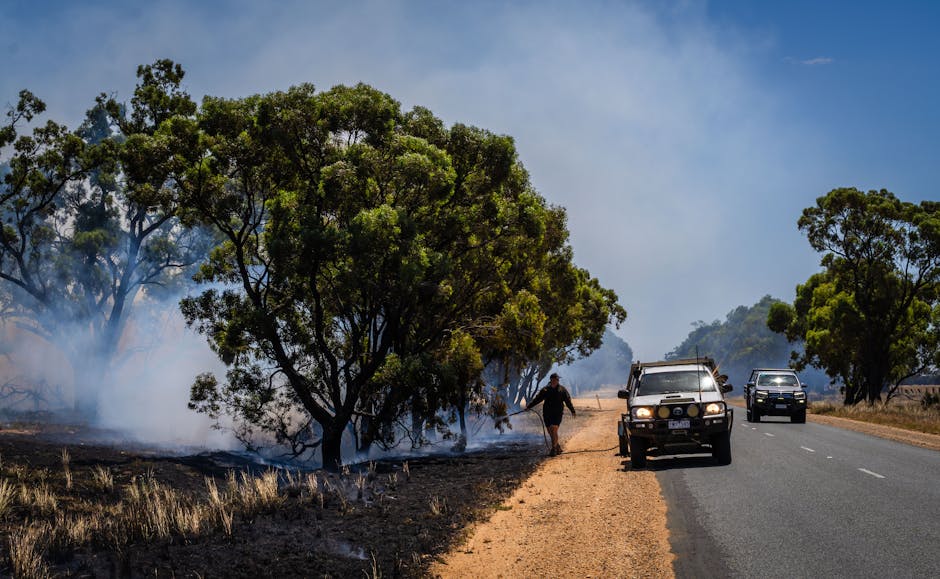
The government of British Columbia officially declared a provincial state of emergency on August 9, 2026, in response to a rapid escalation of wildfire activity. More than 20,000 residents have been ordered to flee their homes as over 100 active blazes continue to burn across the region. The situation remains highly volatile, with officials describing the current conditions as both dynamic and threatening to public safety.
Strong winds reaching speeds of 115 kilometres per hour have significantly hampered firefighting efforts, particularly along the western shores of Okanagan Lake. These intense gusts have fanned flames into residential areas, resulting in the destruction of numerous homes near Vernon and Peachland. Many residents were forced to evacuate on short notice, with some individuals requiring emergency rescue by aircraft to reach safety.
British Columbia Premier David Eby emphasized the severity of the crisis during a recent briefing on the provincial response. He noted that the combination of hot, dry weather and high winds has created an environment where fires can spread with extreme speed. The provincial government is working closely with local authorities to manage the evacuations and provide support to those displaced by the fires.
The Canadian federal government has stepped in to provide additional resources to assist the province in its emergency management. This support includes the provision of temporary shelter and accommodation for thousands of residents who have been displaced from communities around Summerland and Peachland. Federal agencies are coordinating with provincial teams to ensure that essential services remain available to those affected by the evacuations.
Firefighting crews are currently battling a wide range of blazes, including the significant Bald Range wildfire in the southern interior. Approximately 100 firefighters from Mexico have been deployed to assist local teams in their efforts to contain the flames near Summerland. These international crews are working alongside Canadian personnel to protect infrastructure and prevent further loss of property.
In West Kelowna, local fire officials reported that a fast-spreading fire originating in Kalamoir Regional Park threatened hundreds of homes. Firefighters managed to save many of these structures by narrow margins, though the threat to the community remains high. The local fire chief stated that crews are working around the clock to establish containment lines in difficult terrain.
This year's wildfire season has been particularly challenging for western Canada, following a trend of persistent drought and extreme heat. While some areas in neighboring Alberta have seen moderate wildfire danger levels in recent months, the situation in British Columbia has reached a critical threshold. Meteorological data indicates that the region has experienced prolonged periods of dry weather that have left forests highly susceptible to ignition.
Investigations into the causes of the various fires are currently underway, including an inquiry by the Royal Canadian Mounted Police into the origins of the Bald Range fire. While lightning strikes have been a known factor in other regional fires, such as those in Washington state earlier this summer, the specific triggers for many of the current British Columbia blazes remain under assessment. Authorities are urging the public to remain vigilant and follow all evacuation orders strictly.
Transportation networks have also been significantly impacted by the wildfire activity, with sections of major routes like Highway 97 experiencing closures. These disruptions have complicated the movement of emergency vehicles and the evacuation of residents from threatened areas. Traffic management teams are working to keep key corridors open where it is safe to do so.
As the province continues to navigate this emergency, the focus remains on protecting human life and minimizing the destruction of communities. Officials are monitoring weather forecasts closely, as any shift in wind patterns or temperature could alter the trajectory of the fires. The state of emergency provides the government with additional powers to mobilize resources and coordinate a comprehensive response to the ongoing disaster.
Ask the Author
Subscribers can ask the journalist a question about this story. Subscribe to ask.
Neutrality note
Auto-harvested from global news wires and presented neutrally by PENN.
to vote
Comments
No comments yet — be the first to share your thoughts.