China and Russia Expand Scheduled Container Shipping Along Arctic Northern Sea Route
Increased seasonal traffic through the Arctic corridor aims to shorten transit times between Asia and Europe while raising environmental and safety concerns.
PENN Explainer
Hear this story explained in 90 seconds.
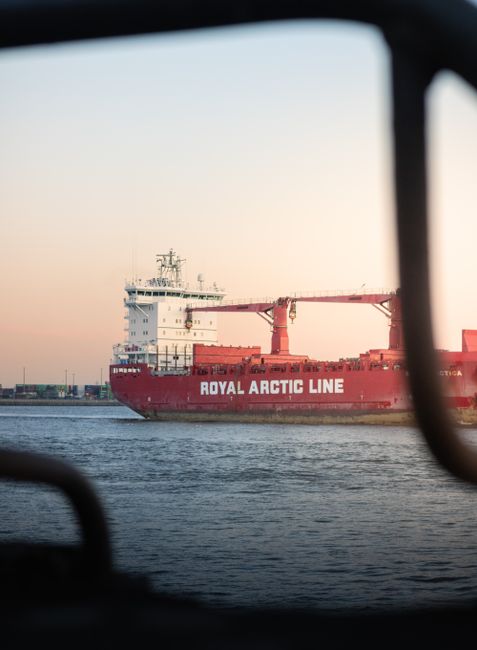
Chinese shipping companies have launched scheduled container services through Russia’s Northern Sea Route this summer, marking a significant shift from experimental voyages to regular operations. Operators including Sea Legend Shipping and NewNew Shipping are deploying ice-class vessels to navigate the corridor that stretches across Russia’s northern coastline. This development represents the busiest season yet for Chinese traffic on the Arctic passage, which connects Northeast Asia with European markets.
The Northern Sea Route offers a shorter alternative to traditional shipping lanes, such as the Suez Canal or the route around the Cape of Good Hope. By utilizing this Arctic path, vessels can save approximately 3,000 nautical miles and 15 days of travel time compared to the Suez route. These time savings have become increasingly attractive to carriers seeking to avoid disruptions in other global maritime regions.
Russian state nuclear company Rosatom, which manages the Northern Sea Route, has actively supported this expansion by issuing transit permits for multiple Chinese vessels. Transport Minister Liu Wei of China and Alexey Likhachev, the director general of Rosatom, recently held discussions to strengthen cooperation on the route. Both nations aim to enhance the competitiveness of the corridor to stabilize regional logistics and supply chains.
Despite the potential for faster transit, the route remains limited by a short navigation window, harsh ice conditions, and a lack of emergency infrastructure. Environmental groups and industry experts have expressed concern regarding the impact of increased shipping on the fragile Arctic ecosystem. Many European companies have signed agreements to avoid using the Arctic route due to these ecological risks and the potential for long-term damage to natural systems.
South Korea is also monitoring these developments closely as part of its own maritime strategy. The Korea Polar Research Institute recently launched an 83-day expedition aboard the research icebreaker R/V Araon to study navigation safety and ice changes. This project, known as SAFE-SEA, seeks to develop high-resolution data to improve climate risk assessments and navigation predictions for the region.
South Korea hopes to establish a regular shipping route connecting its ports to Europe via the Arctic by 2030. The government plans to conduct a pilot containership voyage through the Russian-administered waters later this year to test operational feasibility. These efforts reflect a broader international interest in the potential of Arctic maritime transport.
Russia continues to view the development of the Trans-Arctic Transport Corridor as a key national priority. President Vladimir Putin has emphasized the need to better connect Russia’s Baltic region, the Arctic, and the Far East through this maritime infrastructure. New tankers, such as the Aleksey Kosygin, have been built at the Zvezda shipyard to support the transport of energy resources along the route.
However, cargo volumes on the Northern Sea Route have faced challenges in meeting official growth targets. Data indicates that traffic has fallen short of government goals for two consecutive years, despite modest increases in previous periods. Analysts suggest that the route will likely maintain a niche role within the global trade network for the foreseeable future.
Geopolitical considerations also play a role in the route's development, particularly regarding who controls the licensing and safety oversight of the passage. Some observers question whether the route can be considered a safer alternative given the current regulatory framework managed by Russia. These security concerns remain a point of discussion among international maritime stakeholders.
As the shipping season progresses, companies like NewNew Shipping are preparing to deploy additional vessels, including ice-class ships with significant cargo capacity. The industry will closely watch these scheduled services to determine if they can operate reliably without compromising safety or environmental standards. The future of Arctic shipping will depend on balancing economic efficiency with the protection of polar environments.
Ask the Author
Subscribers can ask the journalist a question about this story. Subscribe to ask.
Neutrality note
Auto-harvested from global news wires and presented neutrally by PENN.
to vote
Comments
No comments yet — be the first to share your thoughts.