Chinese Startup LandSpace Successfully Lands Reusable Rocket Booster in Major Milestone
The successful vertical landing of the Zhuque-3 booster marks a significant advancement in China's commercial space capabilities and global competition.
PENN Explainer
Hear this story explained in 90 seconds.
On Wednesday, August 19, 2026, the Chinese private space company LandSpace achieved a major technical milestone. The company successfully launched and landed a reusable rocket booster during a high-altitude test flight. This event marks a significant step forward for the commercial space industry in Asia. It demonstrates that the technology for returning rockets to Earth is becoming more widely available to private firms.
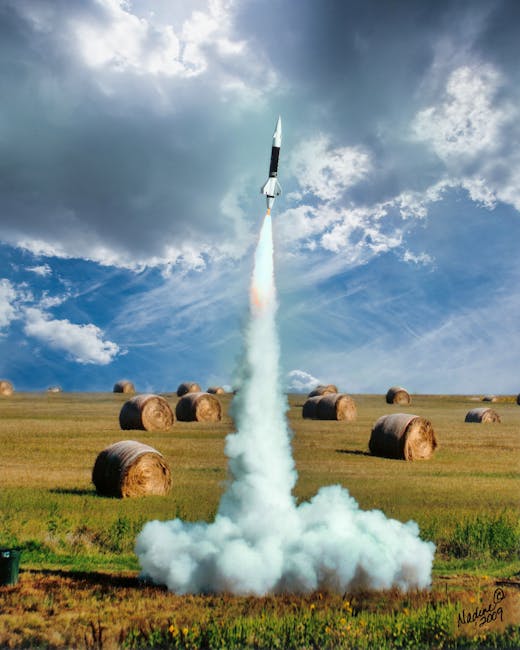
The test involved a prototype of the Zhuque-3 rocket, which is designed to be a medium-to-heavy lift vehicle. During the flight, the booster lifted off vertically and reached a planned altitude before beginning its descent. It then used its engines to slow down and steer itself back toward a landing pad. The booster touched down safely, remaining upright and intact after the flight concluded.
This specific test took place at the Jiuquan Satellite Launch Center, located in the Gobi Desert of northwest China. Engineers and technicians from LandSpace monitored the entire process from a nearby control center. They tracked the rocket's speed, fuel levels, and orientation throughout the mission. The successful landing confirms that their guidance and control systems are working as intended for future missions.
Reusable rockets are considered a major goal in the aerospace industry because they can drastically reduce costs. Traditionally, the first stage of a rocket is discarded into the ocean after it runs out of fuel. By landing and reusing these expensive components, companies can save millions of dollars per launch. This makes it easier for businesses to send satellites into orbit for internet, GPS, and weather tracking.
For several years, the American company SpaceX, led by Chief Executive Officer Elon Musk, was the only organization regularly landing boosters. Their Falcon 9 rocket set the standard for reusability and changed how the world views space travel. Now, other companies like LandSpace and Blue Origin are proving they can master the same difficult physics. This growing competition is expected to accelerate the pace of innovation in the global space sector.
The process of landing a rocket vertically is often compared to balancing a pencil on its tip during a windstorm. The booster must perform a specific engine burn to change its direction and head back toward the launch site. As it falls through the atmosphere, it uses grid fins to steer through the air at supersonic speeds. Finally, it must reignite its engines at the last moment to hover just above the ground before landing.
LandSpace was founded with the goal of providing reliable and affordable launch services to the international market. The company has been working on the Zhuque series of rockets for several years, using liquid oxygen and methane as fuel. Methane is often preferred for reusable rockets because it burns cleaner than traditional kerosene. This makes it easier to clean and refurbish the engines between different flights.
The Zhuque-3 is intended to be a workhorse for the Chinese commercial space sector once it enters full service. It is designed to carry large payloads, which could include groups of small satellites or components for space stations. By mastering reusability, LandSpace hopes to offer prices that are competitive with established global providers. This could shift the balance of the commercial launch market in the coming years.
The success of this test has implications beyond just one company or country. It shows that the technical barriers to advanced spaceflight are being overcome by private enterprises around the world. As more organizations gain these capabilities, the frequency of space missions is likely to increase. This could lead to more scientific research and better global communication networks for everyone on Earth.
There are also environmental benefits to using reusable rocket technology. Building a new rocket for every mission requires a massive amount of raw materials and energy. Reusing hardware reduces the industrial footprint of the space industry and limits the amount of debris left in the ocean. Many experts believe that sustainability will be a key requirement for the future of space exploration.
Following the landing, LandSpace engineers will conduct a thorough inspection of the Zhuque-3 booster. They will look for signs of structural stress or heat damage that occurred during the high-speed descent. The data gathered from this flight will be used to refine the design for the next version of the rocket. Continuous testing is a standard part of the development process for all modern aerospace companies.
The successful landing at Jiuquan represents a landmark achievement for LandSpace and the broader tech industry. It highlights the rapid progress being made in autonomous flight systems and rocket engine design. As the company moves toward orbital missions, the global community will be watching closely. This event signals that the era of reusable space travel is expanding to new players across the globe.
Ask the Author
Subscribers can ask the journalist a question about this story. Subscribe to ask.
Neutrality note
Auto-harvested from global news wires and presented neutrally by PENN.
to vote
Comments
No comments yet — be the first to share your thoughts.