Community Conservation Initiative Doubles Rare Niger Delta Red Colobus Population in Nigeria
Biologist Rachel Ikemeh receives international recognition as grassroots forest reserves spur population growth for one of Earth's rarest primates.
PENN Explainer
Hear this story explained in 90 seconds.
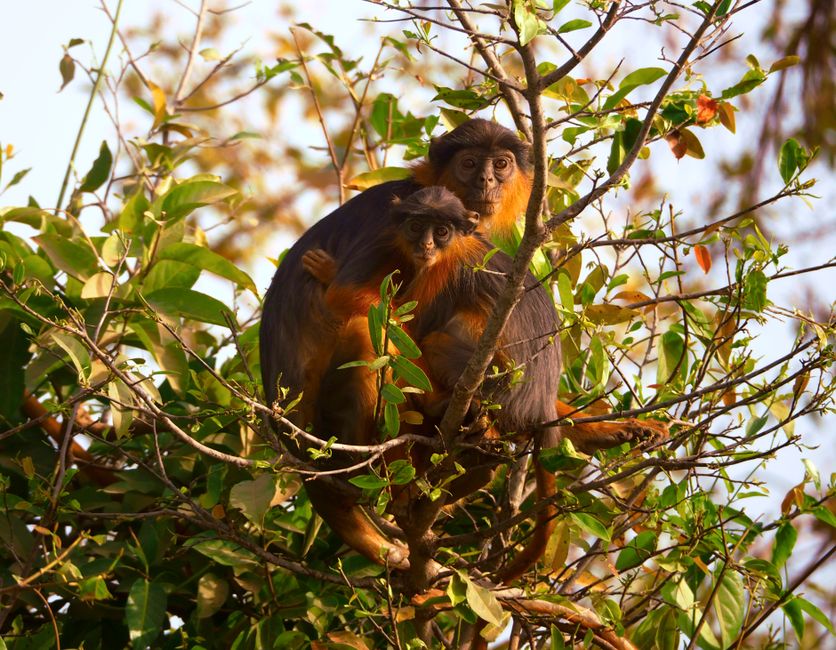
A community-led wildlife conservation initiative in southern Nigeria has successfully spurred a population recovery for the critically endangered Niger Delta red colobus monkey. The primate, scientifically known as Piliocolobus epieni, is recognized by the International Union for Conservation of Nature as one of the 25 most endangered primates in the world. First identified by biologists in 1993, the species experienced severe habitat loss and hunting pressure over subsequent decades, dropping from around 10,000 individuals to only several hundred by 2013.
In recognition of pioneering work to reverse that decline, Nigerian conservation biologist Rachel Ikemeh was named a 2026 Rolex Award for Enterprise laureate. Ikemeh has spent over a decade working alongside local delta communities to establish and enforce community-managed wildlife reserves. Her efforts have helped protect core forest patches in Bayelsa State, creating secure zones where native wildlife can reproduce without disturbance from commercial logging or agricultural encroachment.
The turnaround began in 2021 when Ikemeh collaborated with residents in the delta town of Apoi to designate a 1,010-hectare, or approximately 2,496-acre, community-protected area. Within the protected perimeter, local forest guards conduct patrols to deter illegal hunting and prevent commercial timber removal. Field monitoring data confirmed that between 2021 and 2024, the local monkey population in the Apoi forest jumped from an estimated 180 to 200 animals to roughly double that number.
Following the clear success in Apoi, neighboring villages observed the outcomes and decided to replicate the program. New community-managed forest reserves have since expanded into the surrounding settlements of Garnaut and Kokoloama. In total, Apoi community leaders have hosted delegations from six other neighboring communities to train them in establishing local bylaws, monitoring natural boundaries, and coordinating field patrols.
Local participation has proven central to sustaining the conservation boundary over long periods. When conservationists first entered the area, many community members voiced initial concerns that external teams might seize ancestral land on behalf of federal agencies. Organizers addressed these concerns by maintaining total local ownership and decision-making authority over the forest, turning species preservation into an asset that reinforces local governance and civic pride.
The Niger Delta red colobus is endemic exclusively to marsh and swamp forests situated between the Niger River and the Forcados River. Because the monkeys rely on specific canopy tree species for their leaf-heavy diet, large-scale clear-cutting rapidly drives groups to regional extinction. Unlike widely distributed primates, this particular subspecies cannot migrate beyond its restricted wetlands habitat if surrounding trees disappear.
Despite localized gains inside community reserves, significant ecological threats continue across the broader Niger Delta basin. Unregulated logging operations, illegal industrial activities, and agricultural clearing continue to fragment surrounding forested corridors. Conservation teams report that commercial sand mining along regional riverbanks and historical petroleum pollution continue to degrade adjacent waterways, restricting natural animal corridors between isolated tree clusters.
Local rangers also face economic pressures stemming from the regional bushmeat trade. While reserve bylaws prohibit hunting of the red colobus, general trapping targeting other mammals occasionally catches arboreal wildlife inadvertently. Educational outreach programs funded through external grants are currently active across several school districts to build youth awareness regarding local biodiversity.
Ikemeh noted that external honors like the Rolex Award provide vital international validation for community-run conservation frameworks. Rather than relying on traditional top-down government enforcement, the project demonstrates that rural populations can act as direct stewards of rare natural resources. Conservation scientists argue that empowering local communities often creates more enduring protections than distant administrative mandates that lack local personnel on the ground.
Looking ahead, project organizers plan to connect the three existing village reserves into a contiguous protected forest belt across the delta. Securing formal legal recognitions and long-term funding remain central to ensuring rangers can maintain ongoing monitoring routines. If sustained, researchers hope the expanding forest sanctuaries will provide a stable long-term refuge for one of Africa's most vulnerable primates.
Ask the Author
Subscribers can ask the journalist a question about this story. Subscribe to ask.
Заметка о нейтральности
Auto-harvested from global news wires and presented neutrally by PENN.
to vote
Comments
No comments yet — be the first to share your thoughts.