Community of the Day: Marrakesh
Exploring the Red City's rich history, vibrant souks, and stunning Atlas mountain views.
PENN Explainer
Hear this story explained in 90 seconds.
Marrakesh, Morocco
Known as the 'Red City' for its iconic ochre-colored ramparts, Marrakesh is a historic imperial capital that serves as the cultural heart of Morocco. Nestled near the foothills of the Atlas Mountains, it offers a mesmerizing blend of ancient traditions and modern North African life.
- Founded in 1062 by the Almoravid dynasty, Marrakesh served as a vital capital for religious nomads who emerged from the south to establish their empire. The city quickly became a major cultural and commercial hub, eventually becoming one of Morocco's four historic imperial cities. Today, its ancient medina is recognized as a UNESCO World Heritage site, preserving centuries of architectural evolution and North African history.
- The city is strategically located near the foothills of the snow-capped Atlas Mountains, providing a dramatic backdrop to its desert landscape. It sits along the Tensift River, which has historically supported the region's agriculture and settlement through sophisticated irrigation systems. This unique positioning allows visitors to experience both the heat of the plains and the cool mountain air within a short drive.
- Marrakesh is famously known as the 'Red City' or 'Ochre City' due to the distinctive reddish-pink pigment of its fortified walls and buildings. These ramparts, constructed in the 12th century, stretch for several miles and were originally built to protect the medina from invaders. The uniform color palette gives the city a warm, glowing appearance, especially during the golden hour of sunset.
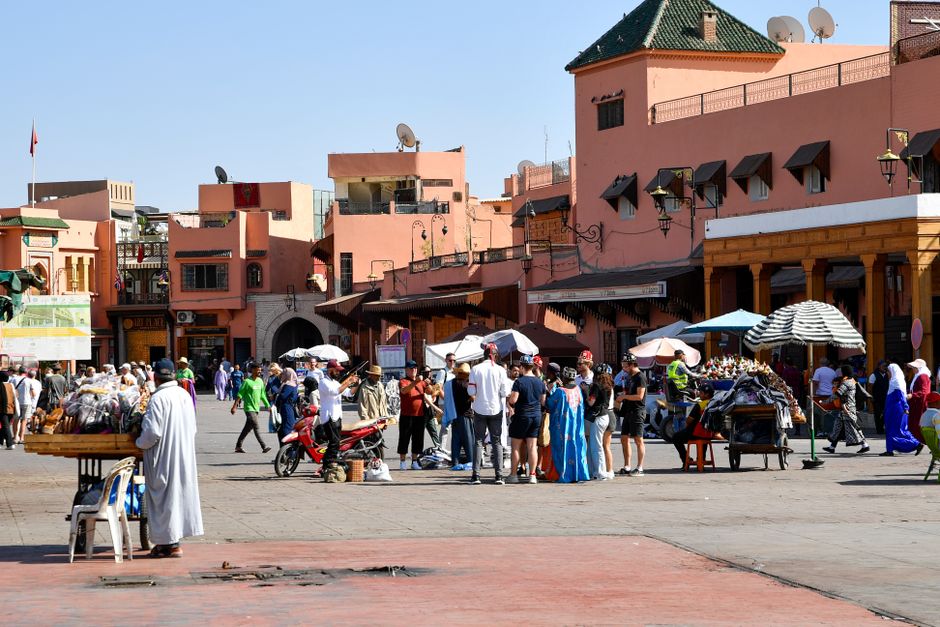
- At the heart of the city lies Jemaa el-Fnaa, a massive public square that serves as a vibrant theater of daily life. During the day, it hosts orange juice stalls and henna artists, but it transforms at night into a bustling open-air food market filled with storytellers and musicians. This space is so culturally significant that UNESCO designated it a Masterpiece of the Oral and Intangible Heritage of Humanity.
- The Koutoubia Mosque is the city's most iconic landmark, featuring a 77-meter-tall minaret that dominates the skyline. Completed in the 12th century, its design influenced other famous structures like the Giralda in Seville and the Hassan Tower in Rabat. Local laws ensure that no other building in the city can be taller than the minaret, preserving its status as a visual anchor.
- The population of Marrakesh is a rich tapestry of Berber and Arab heritage, reflecting the diverse ethnic makeup of Morocco. Residents typically speak Moroccan Arabic, known as Darija, but Tamazight and French are also widely used in daily commerce and education. This linguistic diversity facilitates the city's role as a bridge between Africa, the Middle East, and Europe.
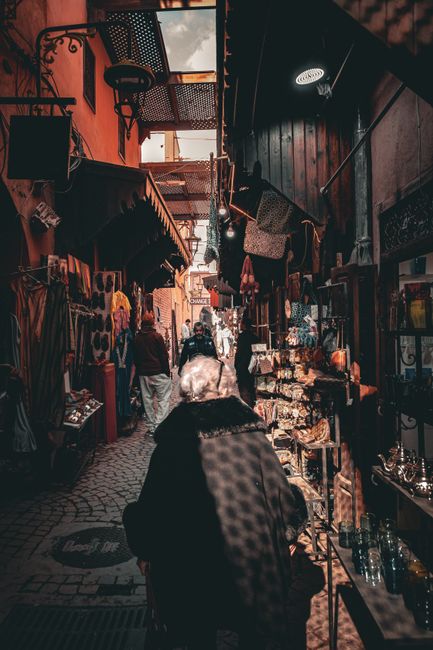
- Tourism is a primary driver of the local economy, with millions of visitors drawn to the city's luxury riads, traditional souks, and modern resorts. Beyond tourism, the city is a major center for traditional handicrafts, including leatherwork, pottery, and intricate carpet weaving. These artisanal goods are exported globally, maintaining the city's reputation as a hub for skilled craftsmanship.
- Despite its arid climate, Marrakesh is home to stunning green spaces like the Majorelle Garden, which was famously restored by fashion designer Yves Saint Laurent. The garden features a striking cobalt blue villa surrounded by exotic plants from five continents, creating a tranquil oasis away from the city's noise. Other notable spaces include the Menara Gardens and the Secret Garden, which showcase ancient Islamic irrigation techniques.
- The culinary scene in Marrakesh is world-renowned, blending sweet and savory flavors with a complex array of spices like saffron and cumin. Traditional dishes like tagine and couscous are staples, often served with the ubiquitous Moroccan mint tea, which is a symbol of hospitality. Dining is often a communal experience, reflecting the deep-seated cultural values of sharing and generosity.
- While deeply rooted in history, Marrakesh is also a forward-looking city that hosts major international events and film festivals. It features a modern district called Gueliz, which was developed during the French protectorate and offers contemporary shopping, art galleries, and cafes. This blend of the ancient medina and the modern 'Ville Nouvelle' creates a unique urban environment that caters to all tastes.
Photo Gallery

Ask the Author
Subscribers can ask the journalist a question about this story. Subscribe to ask.
Neutrality note
Community of the Day feature by PENN editorial.
to vote
Comments
No comments yet — be the first to share your thoughts.
Author
Planet Earth News Travel DeskSenior Editor, Planet Earth News Network
View all articles by Desk →