Community of the Day: Plovdiv, Bulgaria
Ancient History Meets Modern Creativity in Europe's Oldest City
PENN Explainer
Hear this story explained in 90 seconds.
Plovdiv, Bulgaria
Plovdiv is the second-largest city in Bulgaria and serves as the cultural heart of the nation. Known for its remarkable blend of ancient Roman ruins and a vibrant modern arts scene, it offers a window into thousands of years of human civilization.
- Plovdiv is widely recognized as one of the oldest continuously inhabited cities in Europe, with a history spanning over 8,000 years. Archaeological evidence suggests that the settlement dates back to the Neolithic era, predating the founding of Rome and Athens. Throughout its long existence, the city has been inhabited by Thracians, Greeks, Romans, Byzantines, and Ottomans, each leaving a distinct layer of history behind.
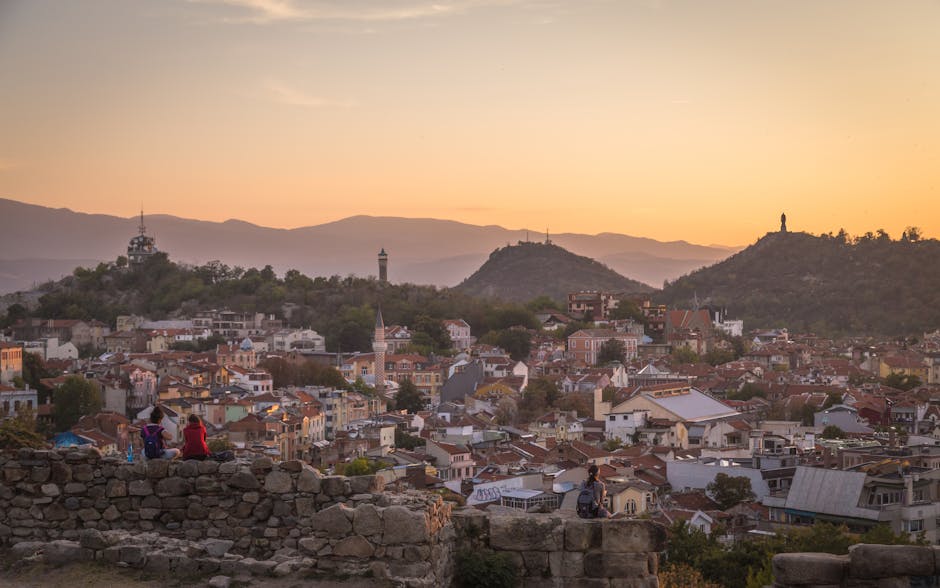
- Geographically, the city is famously built around seven syenite hills, which is why it is often referred to as the City of Seven Hills. While some of these hills have been partially leveled for urban development over the centuries, the remaining ones provide stunning panoramic views of the surrounding Thracian Plain. These natural landmarks have served as strategic vantage points and religious sites for various civilizations throughout the millennia.
- One of Plovdiv’s most iconic landmarks is the ancient Roman Theater, which was discovered by accident following a landslide in the 1970s. Built in the 2nd century AD during the reign of Emperor Trajan, it is considered one of the best-preserved ancient theaters in the world. Today, the theater is still in use, hosting operas, plays, and concerts for up to 5,000 spectators under the open Balkan sky.
- The heart of modern Plovdiv’s social life is the Kapana district, whose name translates literally to The Trap. Originally a center for craftsmen and artisans five centuries ago, it has been transformed into Bulgaria’s first official creative district. Its narrow, pedestrianized streets are lined with contemporary galleries, trendy cafes, and independent boutiques, making it a hub for the city’s youth and artist communities.
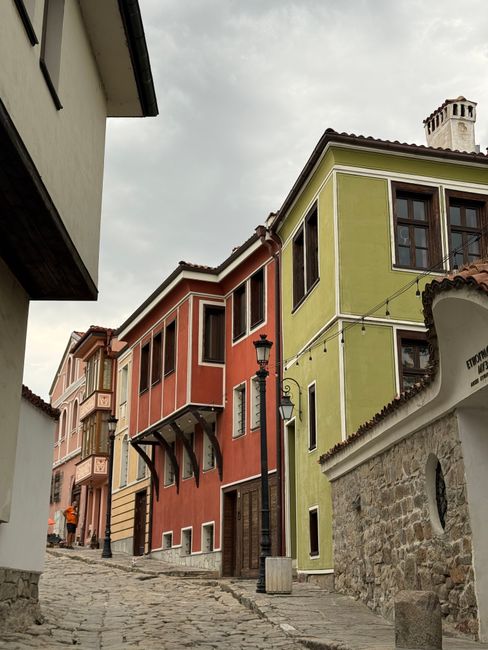
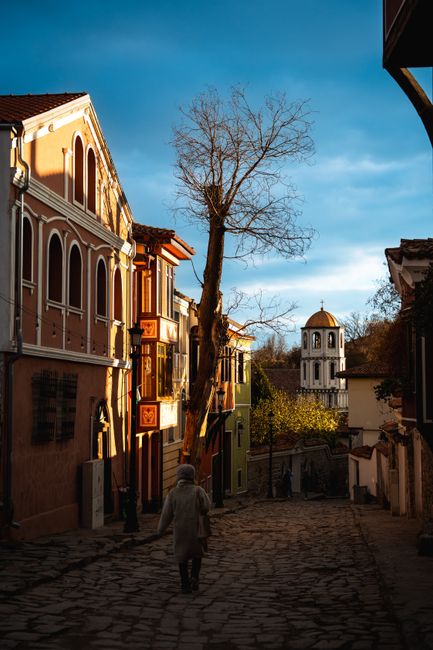
- The Old Town of Plovdiv is a living museum of the Bulgarian National Revival period, featuring colorful mansions with unique architectural styles. These 19th-century houses are characterized by their symmetrical designs, ornate wood-carvings, and bay windows that overhang the cobbled streets. Many of these historical homes have been converted into museums or art galleries that preserve the lifestyle and heritage of the wealthy merchant class of that era.
- Lying directly beneath the city’s main pedestrian street is the Roman Stadium of Philippopolis, an enormous structure that could once hold 30,000 spectators. Visitors can descend into the northern part of the stadium to see the marble seats and the track level where chariot races and athletic games were once held. It serves as a reminder that the modern city is literally built on top of a massive Roman metropolis.
- The city is a remarkable example of religious and ethnic coexistence, often called a model of tolerance by local residents. Within a small radius in the city center, one can find the Dzhumaya Mosque, ancient Orthodox churches, a synagogue, and a Catholic cathedral. This diversity is a testament to the city's role as a major trade crossroads where different cultures have lived side-by-side for centuries.
- In 2019, Plovdiv achieved international recognition when it was designated as the European Capital of Culture. This milestone spurred a massive wave of urban renewal and cultural programming that focused on the motto Together. The initiative helped integrate the city's diverse ethnic neighborhoods and boosted its reputation as a leading destination for international travelers interested in the arts.
- Economically, Plovdiv has evolved from an agrarian center into a modern industrial and technological hub within the Trakia Economic Zone. This region is one of the largest industrial zones in Eastern Europe, attracting significant foreign investment in automotive parts, electronics, and food processing. The city's strategic location along major European transport corridors makes it a vital engine for Bulgaria's national economy.
- The region surrounding Plovdiv is the heart of the Thracian Valley, which is internationally famous for its ancient winemaking traditions. Local vineyards have been producing high-quality wine since the time of the Thracians, particularly specializing in the Mavrud grape variety. Modern wine tourism is a growing sector here, with many boutique wineries offering tours that combine viticulture with local archaeological history.
Photo Gallery
Ask the Author
Subscribers can ask the journalist a question about this story. Subscribe to ask.
Neŭtraleca noto
Community of the Day feature by PENN editorial.
to vote
Comments
No comments yet — be the first to share your thoughts.
Author
Planet Earth News Travel DeskSenior Editor, Planet Earth News Network
View all articles by Desk →