
Congo Basin Blackwater Lakes Found Releasing Ancient Carbon Into Atmosphere
New scientific research reveals that unique African wetland ecosystems are contributing to global greenhouse gas levels.
PENN Explainer
Hear this story explained in 90 seconds.
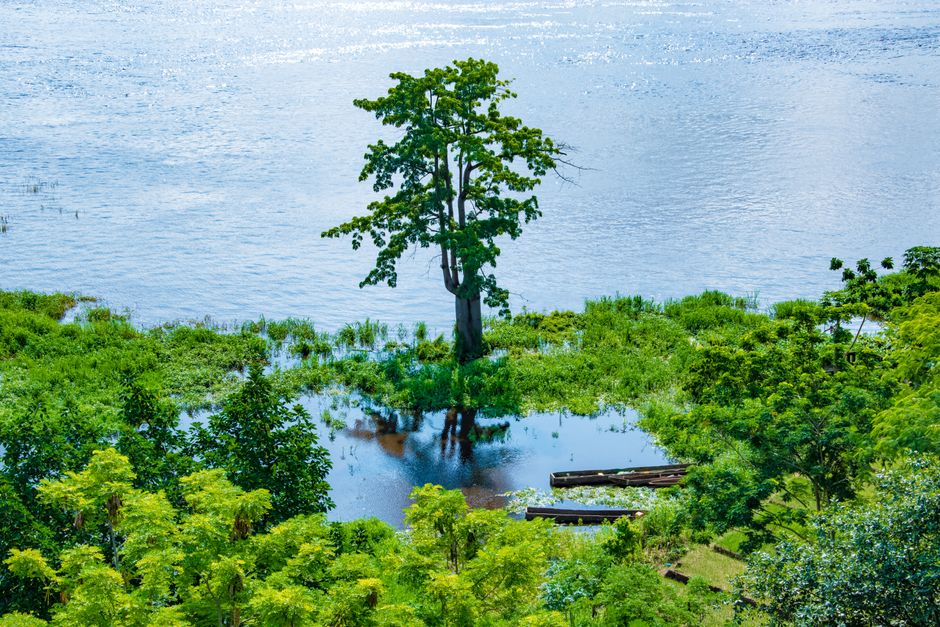
A recent scientific study has identified that blackwater lakes located within the Congo Basin are releasing significant amounts of ancient carbon into the atmosphere. These unique wetland ecosystems, which are characterized by their dark, tea-colored water, act as natural reservoirs for organic matter that has accumulated over thousands of years. As environmental conditions shift, this stored carbon is being processed and released as greenhouse gases. Researchers are now working to understand the specific mechanisms driving this process in one of the world's most vital tropical regions. The Congo Basin is often referred to as the second lung of the planet due to its massive capacity to absorb carbon dioxide. However, this new discovery highlights the complexity of carbon cycling in tropical wetlands. Scientists emphasize that these findings are crucial for creating more accurate global climate models. By identifying these hidden sources of emissions, experts hope to better predict how different landscapes will respond to a warming world. The study underscores the importance of protecting these delicate environments from further disruption. Understanding the role of blackwater lakes is a significant step in managing the global carbon budget. Researchers involved in the project noted that the release of ancient carbon is a natural process that may be accelerated by human-induced environmental changes. Further investigation is required to determine the full scale of these emissions across the entire basin. The team plans to continue monitoring these sites to track changes over the coming years. This research serves as a reminder that even remote and seemingly stable ecosystems are deeply connected to the global climate system. Protecting the integrity of the Congo Basin remains a priority for international conservation efforts. Scientists believe that integrating this data into future policy decisions will be essential for effective climate mitigation strategies.
Ask the Author
Subscribers can ask the journalist a question about this story. Subscribe to ask.
Neutrality note
Auto-harvested from global news wires and presented neutrally by PENN.
to vote
Comments
No comments yet — be the first to share your thoughts.
Related stories in Environment

Researchers Develop New Flow Battery Technology to Boost Renewable Energy Storage
2026-09-24
New Study Finds Cougars Significantly Reduce Vehicle-Deer Collisions in the United States
2026-09-24