Culinary Tradition of the Day: French Crêpes
A delicate, paper-thin pancake that evolved from a regional Breton staple into a global symbol of French gastronomy.
Hear this story explained in 90 seconds.
French Crêpes
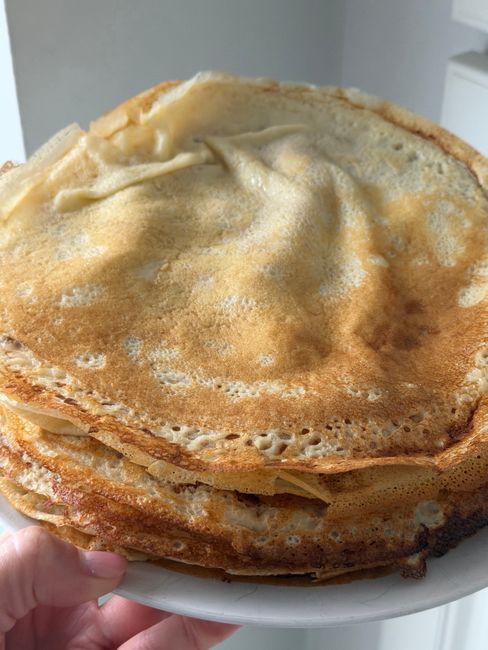
The crêpe is an ultra-thin, versatile pancake that serves as a cornerstone of French culinary identity. Whether served as a savory galette or a sweet dessert, this dish is celebrated for its delicate texture and ability to pair with a vast array of ingredients.
History
The history of the crêpe is deeply rooted in the Brittany region of northwest France. While various cultures have developed pancake-like dishes throughout human history, the specific evolution of the crêpe began in the 12th century. During this time, buckwheat was introduced to the cool, rainy climate of Brittany, where it thrived better than wheat. These early buckwheat pancakes, known as galettes, became a regional staple. The term "crêpe" itself is derived from the Latin word "crispus," meaning curled or wavy, which later evolved into the Old French "crespe." By the 19th century, as white flour and sugar became more accessible, the sweet wheat-based crêpe gained popularity, eventually spreading from Brittany to become a national icon of France.
Cultural Significance
Crêpes are deeply embedded in French tradition, most notably during the celebration of Chandeleur (Candlemas). Traditionally held on February 2nd, this holiday marks the return of light after winter. The round, golden shape of the crêpe is said to symbolize the sun. Beyond holidays, crêpes are a staple of street food culture, often served in paper cones for easy consumption, as well as a refined dish in sit-down restaurants. They represent a unique blend of rustic origins and culinary elegance.
How It Works
Preparing a crêpe requires a thin, pourable batter typically made from flour, eggs, milk, and a pinch of salt. The batter is poured onto a hot, flat surface—traditionally a large circular plate called a billig in Brittany, or a standard non-stick frying pan in home kitchens. The batter is spread into a very thin layer and cooked for only 30 to 60 seconds per side until it is dry and lightly golden. Once cooked, they are folded or rolled around fillings ranging from ham, cheese, and eggs for savory versions to jam, chocolate, or fruit for sweet varieties.
Representative Recipe
Classic French Crêpes
Delicate, buttery, and thin, these versatile crêpes are the perfect canvas for any sweet or savory filling.
Prep time: 10 min | Cook time: 15 min | Total time: 25 min | Yield: 8 servings | Difficulty: Medium
Ingredients
- 250g all-purpose flour
- 3 large eggs
- 500ml whole milk
- 50g unsalted butter, melted
- 1 pinch of salt
Instructions
- In a large mixing bowl, whisk the flour and eggs together until smooth.
- Gradually add the milk while whisking constantly to prevent lumps from forming.
- Stir in the melted butter and salt until the batter is smooth and thin.
- Heat a lightly greased non-stick pan over medium heat.
- Pour a small ladle of batter into the center of the pan, tilting it quickly to coat the bottom in a thin, even layer.
- Cook for about 45 seconds until the edges lift and the bottom is golden brown, then flip and cook for another 30 seconds.
- Remove from the pan and repeat with the remaining batter.
Notes
Serve warm with a dusting of powdered sugar, a squeeze of lemon, or your favorite fruit preserves. For a savory variation, omit any sugar from the batter and fill with sautéed mushrooms, gruyère cheese, and ham.
Subscribers can ask the journalist a question about this story. Subscribe to ask.
Culinary Tradition of the Day feature by the PENN Food & Spirits Desk.
Comments
No comments yet — be the first to share your thoughts.
PENN's lifestyle and culinary department, covering global cuisine — the origins, traditions, and recipes behind the world's dishes, with deep histories and cultural context that go beyond the plate. and PENN's beverage-focused culinary team, dedicated to spirits and drinks — covering distilleries, breweries, and producers worldwide, with histories, tasting notes, professional reviews, and cocktail traditions.
View all articles by Desk →