Culinary Tradition of the Day: Peruvian Ceviche
Exploring the history and cultural significance of Peru's iconic citrus-cured seafood dish
Hear this story explained in 90 seconds.
Culinary Tradition of the Day: Peruvian Ceviche
Peruvian ceviche is a vibrant, refreshing dish consisting of fresh raw fish cured in citrus juices, typically lime, and seasoned with chili peppers, onions, and salt. Recognized globally as a symbol of Peruvian identity, it represents a unique fusion of indigenous history and international influence.
History
The origins of ceviche are deeply rooted in the ancient coastal civilizations of Peru, such as the Moche and Tallan cultures, which date back over 2,000 years. These early coastal communities prepared raw fish marinated in fermented fruit juices. Following the arrival of Spanish colonists, the dish evolved with the introduction of limes and onions. Over the centuries, the recipe further incorporated influences from Japanese, Chinese, and Moorish culinary traditions, reflecting the diverse history of migration in Peru.
Cultural Significance
Ceviche is more than a meal in Peru; it is a cornerstone of social cohesion and national pride. In 2023, UNESCO inscribed the practices and meanings associated with the preparation and consumption of ceviche on the Representative List of the Intangible Cultural Heritage of Humanity. The dish is celebrated annually on June 28, known as National Ceviche Day. It is commonly enjoyed in specialized eateries called cevicherías, where the quality of the "catch of the day" is paramount.
How It Works
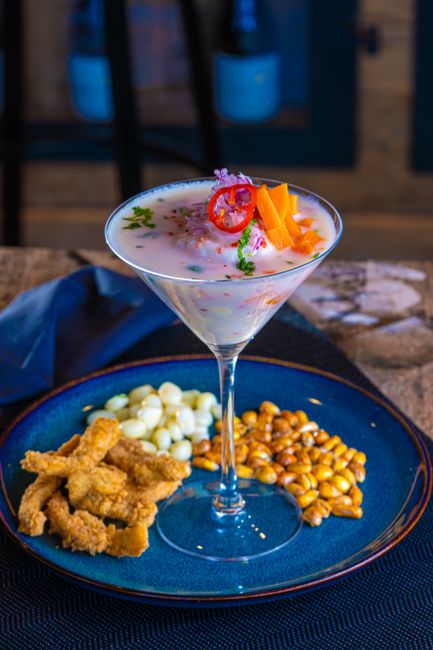
The preparation of traditional Peruvian ceviche relies on the chemical process of denaturation, where the citric acid in the lime juice "cooks" the proteins in the raw fish, changing its texture and color without the use of heat. The dish is typically served immediately after preparation to maintain its fresh, bright flavor. It is often accompanied by boiled sweet potatoes, giant Peruvian corn (choclo), and crunchy corn nuts (cancha). A popular byproduct of the marination process is leche de tigre (tiger's milk), a flavorful, spicy citrus marinade often served in a shot glass.
Representative Recipe
Peruvian Ceviche
A bright, zesty, and refreshing dish featuring fresh white fish cured in lime juice and spiced with authentic Peruvian chili paste.
Prep time: 20 min | Cook time: 10 min | Total time: 30 min | Yield: 4 servings | Difficulty: Medium
Ingredients
- 2 lbs fresh white fish (such as sea bass or sole), cut into 1-inch cubes
- 30 limes, juiced
- 2 red onions, thinly sliced
- 1 bunch fresh cilantro, chopped
- 2 tsp ají amarillo paste
- 1 clove garlic, minced
- Salt to taste
- Boiled sweet potato and toasted corn kernels (cancha) for serving
Instructions
- Place the cubed fish in a glass bowl and season with salt and minced garlic.
- Add the ají amarillo paste and mix gently to coat the fish.
- Pour the fresh lime juice over the fish until it is mostly submerged.
- Let the fish marinate for approximately 5 to 10 minutes, or until the edges turn opaque and firm.
- Gently fold in the sliced red onions and fresh cilantro.
- Serve immediately on a plate alongside slices of boiled sweet potato and a handful of crunchy corn kernels.
Notes
Ensure the fish is ultra-fresh and of high quality. You can substitute the fish with shrimp or calamari, provided they are properly cleaned and blanched if necessary. The dish is best enjoyed fresh and should not be stored for long periods.
Subscribers can ask the journalist a question about this story. Subscribe to ask.
Culinary Tradition of the Day feature by the PENN Food & Spirits Desk.
Comments
No comments yet — be the first to share your thoughts.
PENN's lifestyle and culinary department, covering global cuisine — the origins, traditions, and recipes behind the world's dishes, with deep histories and cultural context that go beyond the plate. and PENN's beverage-focused culinary team, dedicated to spirits and drinks — covering distilleries, breweries, and producers worldwide, with histories, tasting notes, professional reviews, and cocktail traditions.
View all articles by Desk →