Evolutionary Pressures Force Morning Glories to Adapt to Changing Climate
Researchers observe rapid shifts in plant traits as rising temperatures alter pollinator availability.
PENN Explainer
Hear this story explained in 90 seconds.
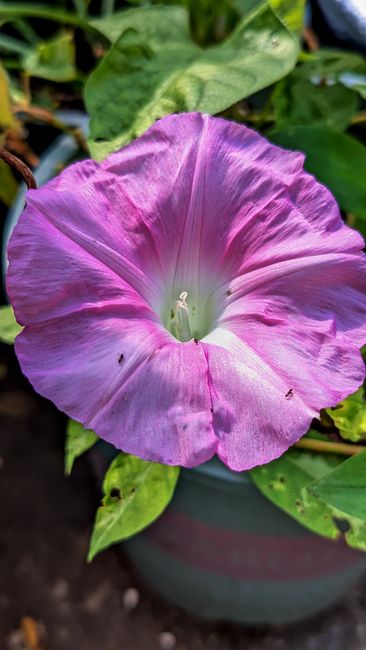
A new study published in late September 2026 reveals that morning glories are undergoing a rapid evolutionary shift. Scientists discovered that these common flowers are caught in a difficult tug-of-war between surviving rising global temperatures and attracting increasingly scarce pollinators. The research highlights how climate change is forcing plants to alter their fundamental biological traits in real time. Over a period of just nine years, the study tracked significant changes in how these plants interact with their environment.
Researchers observed that the flowers are struggling to maintain their reproductive success as the insects they rely on become less predictable. This evolutionary pressure suggests that many plant species may be forced to adapt much faster than previously anticipated by biologists. The findings provide a clear look at the hidden impacts of global warming on common flora. By studying these specific plants, scientists hope to better understand the broader consequences for global ecosystems.
The study emphasizes that even familiar garden plants are not immune to the pressures of a warming planet. Experts noted that the loss of reliable pollinators creates a ripple effect that could threaten plant biodiversity. Future research will focus on whether these adaptations are sufficient to ensure the long-term survival of the species. The study serves as a reminder that climate change is actively reshaping the natural world in ways that are often invisible to the casual observer. Scientists continue to monitor these developments to see how other plant life might respond to similar environmental stressors.
Ask the Author
Subscribers can ask the journalist a question about this story. Subscribe to ask.
Neutrality note
Auto-harvested from global news wires and presented neutrally by PENN.
to vote
Comments
No comments yet — be the first to share your thoughts.