Politicsen
German Parliament Rescinds Fast-Track Citizenship Program
Lawmakers vote to end the three-year naturalization pathway as national debate over migration policy continues.
PENN Explainer
Hear this story explained in 90 seconds.
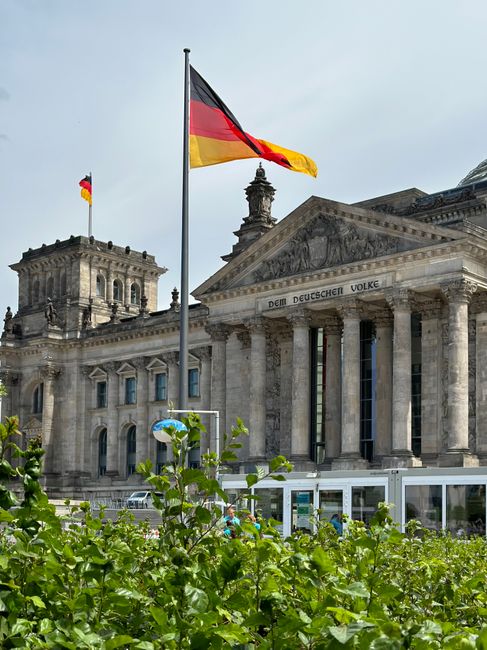
The German parliament, known as the Bundestag, voted on October 8, 2025, to rescind a controversial fast-track citizenship program. This legislative move marks a significant shift in the country's approach to immigration and naturalization. The program, which had allowed exceptionally well-integrated residents to apply for citizenship after just three years of residency, was officially ended following a parliamentary debate. The decision reflects a broader trend of tightening migration policies within the European nation.
Chancellor Friedrich Merz and his conservative coalition had made the reversal of this policy a central pillar of their recent election campaign. Supporters of the repeal argued that a German passport should serve as a formal recognition of a successful and long-term integration process. They expressed concerns that the fast-track option could potentially act as an unintended incentive for illegal immigration. Interior Minister Alexander Dobrindt emphasized that the government aims to prioritize established integration standards over accelerated timelines.
The fast-track program, often referred to as "turbo citizenship," had set high bars for applicants. To qualify, individuals were required to demonstrate special integrational achievements, such as exceptional performance in their professional careers or academic studies. Additionally, applicants needed to prove a high level of German language proficiency, specifically at the C1 level, and show a history of active volunteering. Despite these rigorous requirements, the political climate in Germany shifted, leading to the decision to scrap the pathway entirely.
This vote follows a period of intense political activity regarding citizenship laws in Germany. In early 2024, the Bundestag had passed a modernization act that aimed to facilitate easier access to citizenship and allow for dual nationality. That earlier reform was intended to encourage long-term residents to feel more at home in Germany without requiring them to sever ties with their countries of origin. However, the political landscape has since evolved, leading to the current legislative reversal.
The debate surrounding these changes has been marked by significant disagreement among political parties. Earlier in 2026, a motion brought forward by the AfD party to further reverse the 2024 citizenship reforms failed to gain traction in the Bundestag. That motion had proposed raising language requirements to a B2 level and extending the standard residency period back to eight years. While that specific motion was defeated, the successful rescinding of the fast-track program demonstrates the ongoing influence of conservative policy goals.
For many international residents, the sudden change in law has created uncertainty regarding their future status. Reports indicate that the government has not planned to implement a grace period for those who had already submitted their applications under the fast-track rules. This lack of a transition period has been a point of discussion among legal experts and immigrant advocacy groups. The government maintains that the new policy is necessary to ensure the integrity of the naturalization process.
Germany continues to navigate the complexities of balancing labor needs with strict immigration controls. As Europe's largest economy, the country remains a primary destination for workers from around the world. Policymakers are currently tasked with managing these migration flows while addressing the concerns of a public that is increasingly focused on national identity and security. The recent vote is seen as a direct response to these shifting public sentiments.
Beyond national legislation, Germany is also adjusting to broader European Union frameworks. The reformed EU asylum law, known as the Common European Asylum System (CEAS), recently came into effect in mid-2026. While this system aims to standardize asylum procedures across member states, experts remain divided on its potential effectiveness. The interplay between national citizenship laws and these regional agreements remains a critical area of focus for the German government.
The history of German citizenship law is characterized by periodic updates to address changing social and economic realities. In 2021, for instance, lawmakers passed changes to make it easier for descendants of those who fled Nazi persecution to obtain citizenship. These efforts were aimed at closing legal loopholes that had previously prevented many from reconnecting with their heritage. Such historical considerations continue to influence the ongoing dialogue about what it means to be a German citizen today.
As the country moves forward, the focus is expected to remain on the implementation of these new rules. The government has signaled that it will continue to monitor the impact of its immigration policies on the labor market and social cohesion. For now, the path to citizenship for international residents will follow the standard, longer-term requirements that were in place before the introduction of the fast-track program. The political debate over these issues is likely to persist as Germany balances its role as an economic powerhouse with its evolving domestic policies.
Ask the Author
Subscribers can ask the journalist a question about this story. Subscribe to ask.
Nota de neutralidade
Auto-harvested from global news wires and presented neutrally by PENN.
to vote
Comments
No comments yet — be the first to share your thoughts.