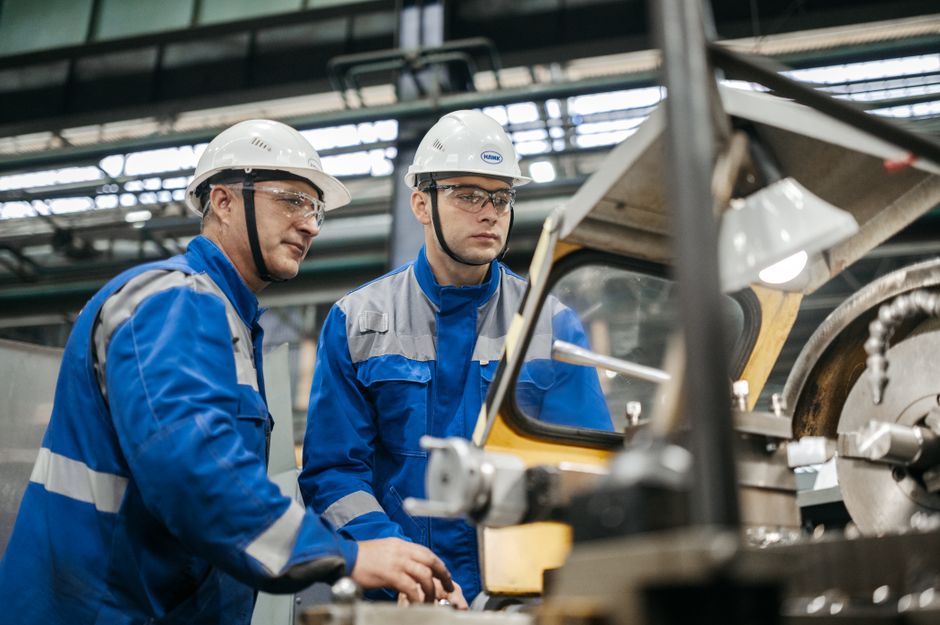
Germany Navigates Complex Labor Market Amid Structural Shifts and Economic Stagnation
While the nation actively recruits global talent to fill critical shortages, major domestic corporations are simultaneously initiating significant workforce reductions.

PENN Explainer
Hear this story explained in 90 seconds.
Germany is currently managing a complex labor market environment characterized by a persistent need for skilled international workers alongside a cooling domestic economy. While the federal government continues to streamline visa processes to attract global talent, major industrial sectors are facing structural challenges that have led to significant restructuring efforts. This dual reality highlights the tension between long-term demographic needs and immediate economic pressures.
Dr. Martin Bergfelder, the Special Representative for Skilled Immigration in the Federal Foreign Office of Germany, recently emphasized the urgent necessity of this recruitment strategy. He stated that Germany requires skilled immigration to maintain its economic stability and address ongoing demographic issues. The government is actively pursuing bilateral agreements with various nations to facilitate the arrival of qualified professionals who can fill critical gaps in the workforce.
Despite these recruitment efforts, the broader economic landscape remains difficult for many established companies. Germany has experienced two consecutive years of GDP contraction, with growth projections for the current year remaining modest at approximately 0.5 percent. This economic stagnation has prompted leading corporations to reevaluate their staffing levels and operational structures.
Major industrial players are now moving toward significant workforce reductions to adapt to the changing economic climate. For instance, the automaker Volkswagen has announced plans to cut 50,000 jobs in Germany by 2030, while the electronics corporation Bosch is also pursuing the elimination of more than 20,000 positions. The German Association of the Automotive Industry projects that a total of 225,000 jobs could disappear across the sector by 2035.
Due to Germany's robust labor laws, these companies are largely avoiding mass layoffs in favor of indirect reduction methods. Strategies such as voluntary retirement, hiring freezes, and early retirement inducements have become the primary tools for corporate restructuring. Consequently, while the government seeks to bring in new talent, the pace of new hiring within these core industries has effectively stalled.
Data from the ifo Institute provides further insight into the shifting demand for labor. In February 2026, only 22.7 percent of companies reported a shortage of skilled workers, marking the lowest level in five years. This decline is largely attributed to the weak economic situation, which has reduced the immediate pressure on firms to expand their headcounts.
Klaus Wohlrabe, a researcher at the ifo Institute, noted that while the immediate shortage has eased, structural challenges remain a significant concern. He pointed out that the integration of artificial intelligence is fundamentally changing the requirements for the modern workforce. This technological shift means that even as the total number of vacancies fluctuates, the specific skills required by employers are evolving rapidly.
To support the influx of international workers, Germany has implemented various policy updates, including the introduction of the Chancenkarte, or Opportunity Card. This points-based system allows non-EU migrants to move to the country to seek employment without a pre-existing job sponsor. The policy is designed to attract individuals with specific qualifications in sectors where labor shortages are most acute, such as nursing and engineering.
However, integration remains a hurdle for many newcomers. A survey by the OECD indicated that language barriers and complex administrative processes continue to deter a large portion of potential skilled migrants from completing their move to Germany. While approximately 70 percent of migrants currently in the country have found employment, businesses emphasize that cultural and systemic shifts are necessary to fully support foreign workers.
As the country moves forward, the government must balance its aggressive international recruitment goals with the reality of domestic industrial restructuring. The success of these efforts will likely depend on how effectively the nation can align its immigration policies with the changing demands of its core industries. Future developments will hinge on whether the economy can return to growth while successfully integrating the new talent arriving from abroad.
Ask the Author
Subscribers can ask the journalist a question about this story. Subscribe to ask.
中立性の注記
Auto-harvested from global news wires and presented neutrally by PENN.
to vote
Comments
No comments yet — be the first to share your thoughts.