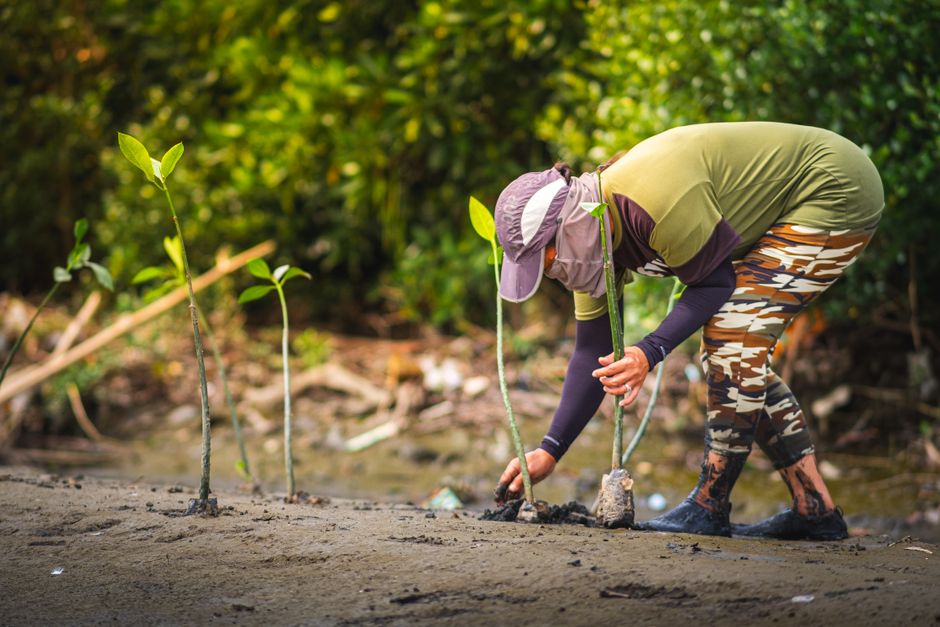
Global Efforts Intensify to Restore Peatlands for Climate and Biodiversity
New initiatives in Indonesia and the United Kingdom highlight the critical role of peatland restoration in carbon storage and habitat recovery.
PENN Explainer
Hear this story explained in 90 seconds.
Peatlands are gaining renewed global attention as essential tools for climate mitigation and biodiversity conservation. These unique ecosystems, which cover only a small fraction of the Earth's surface, store vast amounts of carbon within their waterlogged soil. When peatlands are damaged or drained, they release this stored carbon into the atmosphere, contributing significantly to global greenhouse gas emissions. Recent projects across Indonesia and the United Kingdom are now focusing on rewetting and restoring these landscapes to reverse this trend.
In Indonesia, President Prabowo Subianto has established the National Peatland and Mangrove Management Agency to address the recurring issue of peatland fires and the resulting haze. This new agency aims to provide stronger authority and better coordination across government ministries to prevent fires and restore degraded areas. Experts emphasize that the success of this initiative will depend on clear mandates, sufficient funding, and the power to regulate industrial concessions effectively. The agency is expected to prioritize real-time monitoring and local community involvement to ensure long-term protection of these vital carbon sinks.
Meanwhile, the United Kingdom is scaling up its own restoration efforts through significant government investment and innovative farming models. The government has committed to directing over £7 billion into nature recovery, with specific allocations for peatland restoration and tree planting. These funds are intended to help the country meet its emissions reduction targets under the Climate Change Act 2008. By improving the quality of water and air, these projects also aim to create healthier spaces for wildlife to thrive.
One notable project in the United Kingdom involves a new demonstration site for bulrush paludiculture, which is the cultivation of crops on rewetted peatland. The biomaterials company Ponda recently secured a £2.4 million grant to lead this 30-hectare project in partnership with the Lancashire Wildlife Trust. This initiative seeks to create a commercially viable model that links peatland regeneration directly to the production of sustainable, plant-based insulation. By proving that wetland farming can be profitable, the project hopes to encourage more landowners to restore their peat-rich soils.
In Wales, conservationists are reporting early successes as rare birds return to restored areas of Y Migneint. Species such as the Curlew, Golden Plover, Black Grouse, and Snipe have been recorded in areas where peatland has been successfully rewetted and repaired. David Smith, a senior conservation officer for RSPB Cymru, noted that the project demonstrates the positive impact of organizations working together with a shared vision for nature recovery. These results highlight how restoring the hydrological balance of a landscape can quickly lead to increased biodiversity.
Other regional partnerships, such as the Fens East Peat Partnership in England, are working to secure sites hydrologically to prevent further degradation. By managing water levels, these projects ensure that carbon remains locked in the ground while protecting surrounding land from potential impacts. These efforts are part of a broader strategy to address the loss of specialized native species and rich vegetation cover in low-lying areas. The work is expected to continue through at least 2027 as more sites are identified for restoration.
Financial mechanisms are also evolving to support these conservation goals, with the development of biodiversity metrics for the UK's Peatland Code. The Facility for Investment Ready Nature in Scotland is currently supporting the refinement of these metrics to help quantify the environmental benefits of restoration. As the market for nature-based credits grows, these tools provide a way to attract private investment into public conservation projects. Rising prices for carbon units in 2025 suggest that there is increasing interest in the financial value of healthy peatlands.
Despite these advancements, experts warn that the scale of the challenge remains significant. Tropical peatlands in places like Kalimantan, Indonesia, cover millions of hectares and require sustained political will to protect from development and fire. The cost of restoration is often high, but studies suggest that the long-term benefits to the climate, human health, and the environment far outweigh these initial investments. Effective management requires a combination of scientific research, local knowledge, and robust policy enforcement.
International cooperation is also playing a role in sharing best practices for peatland management. Organizations like the IUCN UK Peatland Programme facilitate the exchange of information on restoration techniques and funding opportunities. By sharing data on what works in different climates and soil types, these groups help accelerate the pace of global conservation efforts. This collaborative approach is essential for addressing the complex, cross-border nature of climate change.
As these projects continue to develop, the focus will likely shift toward long-term monitoring and maintenance. Ensuring that restored peatlands remain wet and healthy requires ongoing management of water levels and protection from human encroachment. The integration of indigenous knowledge and local community participation remains a cornerstone of successful conservation strategies worldwide. These efforts represent a critical step in maintaining the Earth's life support systems for future generations.
Ask the Author
Subscribers can ask the journalist a question about this story. Subscribe to ask.
中立性说明
Auto-harvested from global news wires and presented neutrally by PENN.
to vote
Comments
No comments yet — be the first to share your thoughts.