
Environmenten
Global Treaty Conference Formally Adopts Marine Flyways Framework to Protect Threatened Seabirds
Governments at the Convention on Migratory Species establish historic international protections for ocean flight corridors spanning dozens of nations.
PENN Explainer
Hear this story explained in 90 seconds.
International delegates gathered at the fifteenth Conference of the Parties to the Convention on the Conservation of Migratory Species of Wild Animals, known as CMS COP15, have formally recognized marine flyways for the first time. The landmark resolution establishes a global conservation framework designed to protect oceanic pathways used by flying marine wildlife. Conservation scientists have described the move as a major breakthrough for pelagic conservation, creating a coordinated legal structure across national borders.
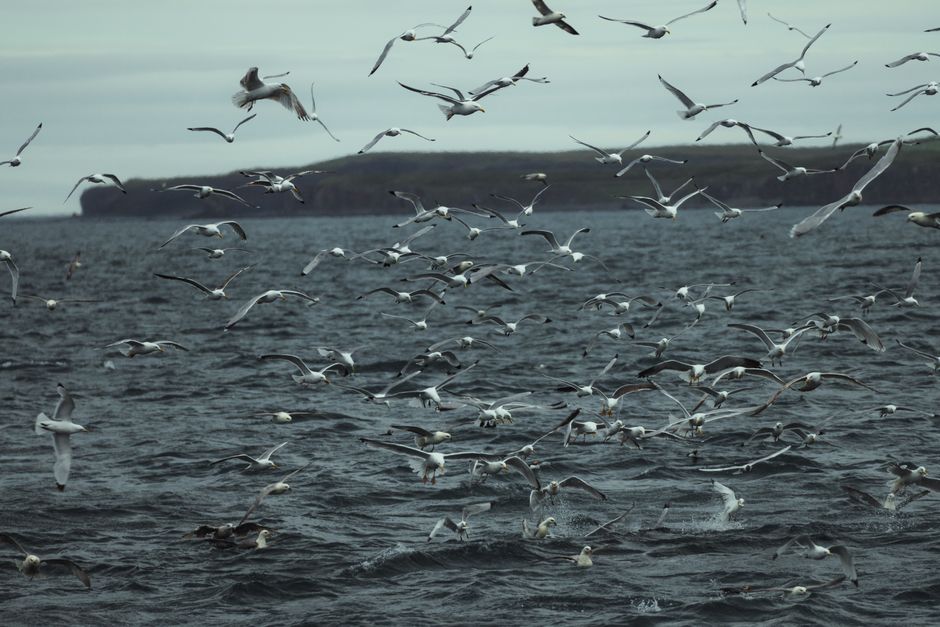
Marine flyways function as extensive biological corridors spanning thousands of miles across open ocean basins. More than 150 seabird species across 54 countries rely on these high-seas pathways during annual migrations between breeding grounds and distant feeding waters. Scientific assessments presented at the summit indicate that approximately 42 percent of these seabird species are currently threatened with extinction, while more than half exhibit declining population trends worldwide.
Seabirds serve as critical indicator species whose survival reflects broader environmental conditions across the marine biome. Dr. Tammy Davies, the Marine Science Coordinator at BirdLife International, noted that seabirds act as a direct gauge of ocean health. When populations experience sharp stress, researchers view it as an early signal that wider pelagic systems are deteriorating due to overfishing, plastic pollution, and rising water temperatures.
Under the newly established CMS framework, governments have agreed to treat these expansive flight paths as shared operational systems. Conservation tasks previously managed only within individual national exclusive economic zones will now be coordinated along complete migratory corridors. This approach applies the same multi-country management strategy historically used for terrestrial avian flyways to the open ocean.
Extensive tracking research compiled by BirdLife International and partner research institutions identified key biodiversity areas along the flyways requiring rapid intervention. Marine birds face overlapping pressures, including incidental capture in commercial longline and trawl fisheries, the introduction of non-native predatory mammals on offshore nesting islands, and declining prey stocks caused by ocean warming.
Professor Dr. Aline Kühl Stenzel, Senior Policy Manager for Marine at BirdLife International, emphasized that isolated protections within single jurisdictions cannot prevent population collapses. According to Kühl Stenzel, addressing pressures across entire ocean basins represents the only viable path toward securing sustainable numbers for species such as petrels, shearwaters, and albatrosses.
Practical implementation of the resolution will center on three core pillars: expanding designated marine protected areas, undertaking invasive predator eradication programs on remote nesting islands, and adopting seabird-safe fishing mechanisms. Safer gear standards include streamer lines that deter birds from diving onto baited hooks, night-setting requirements, and weighted lines that submerge hooks rapidly beyond diving reach.
The marine flyways framework directly aligns with broader multinational accords, including the Kunming-Montreal Global Biodiversity Framework, regional fisheries management agreements, and the United Nations High Seas Treaty. By formally codifying these routes, signatories intend to facilitate joint project financing, streamline scientific data exchanges, and track progress against biodiversity targets.
Participating governments are scheduled to begin drafting regional enforcement plans to establish interconnected buffer zones along major flight corridors. Environmental policy analysts note that the framework provides participating countries with a unified legal foundation to align fisheries regulations and ecological preserves, establishing shared accountability for wildlife traveling thousands of miles across jurisdictional borders.
Neutrality note
Auto-harvested from global news wires and presented neutrally by PENN.
to vote
Comments
No comments yet — be the first to share your thoughts.