Humanoid Robot Race Intensifies as Chinese Maker Unitree Sees Market Value Soar
The global competition for advanced robotics reaches new heights as industry leaders and researchers achieve major milestones in humanoid movement and market growth.
PENN Explainer
Hear this story explained in 90 seconds.
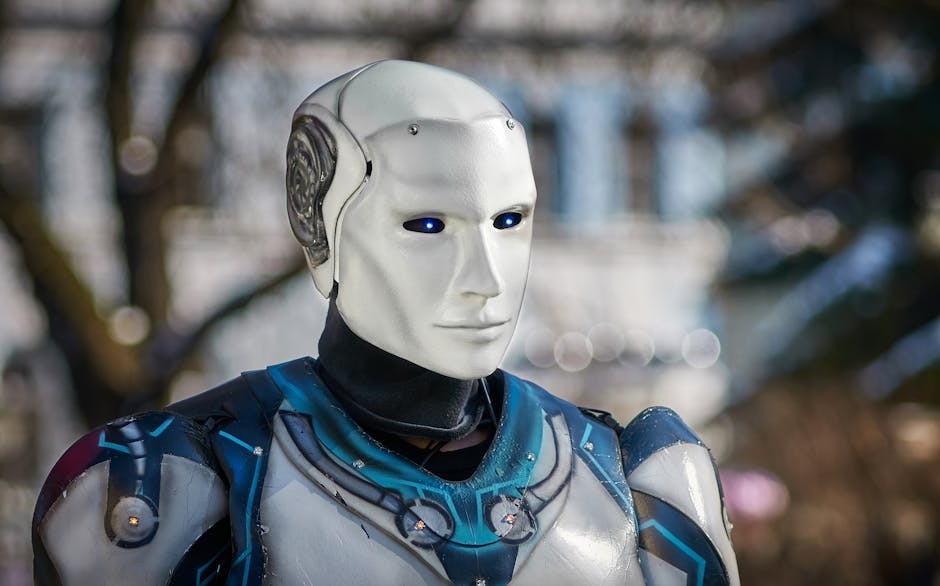
The global race for humanoid robot dominance has reached a new milestone as Chinese manufacturer Unitree sees its market value soar. This surge comes amid intensifying competition between Chinese and American firms to lead the next generation of automated labor. On August 20, 2026, Unitree, a leading developer of mobile robots, experienced a nearly six-fold increase in its stock value during its market debut. Financial analyst Sean Hogan reported that the company's rapid growth reflects high investor confidence in the future of humanoid technology.
Unitree’s latest models are designed to mimic human movement and perform tasks in environments built for people. These robots use advanced sensors and artificial intelligence to navigate complex spaces, such as factories and warehouses, without human assistance. The rise of Unitree highlights a broader technological rivalry between the United States and China. Both nations are investing billions of dollars into robotics, viewing the technology as a solution to aging workforces and labor shortages.
In the United States, companies like Tesla and Boston Dynamics are also pushing the boundaries of humanoid locomotion. These firms are focusing on integrating sophisticated AI models that allow robots to learn new tasks by observing human behavior. Recent academic research has supported these industry gains. A study published in Science Robotics on August 19, 2026, by researchers Yan Gu and Guanya Shi detailed new methods for controlling how humanoid robots walk and balance.
The research by Gu and Shi focuses on humanoid locomotion control, which helps robots stay upright on uneven terrain. This breakthrough is essential for moving robots out of controlled laboratory settings and into the unpredictable real world. The rapid development of these machines is expected to transform the global economy. Industry experts suggest that humanoid robots could eventually take over dangerous or repetitive jobs, potentially lowering production costs for many goods.
However, the shift toward automation has also raised questions about the future of human employment. While some argue that robots will create new high-tech jobs, others worry about the displacement of workers in traditional manufacturing sectors. To support these advanced robots, both Chinese and U.S. firms are calling for massive investments in AI supercomputers. These powerful systems are necessary to process the vast amounts of data required for robots to think and react in real-time.
Governments are now beginning to look at how to regulate the use of humanoid robots in public spaces. Issues such as safety standards, data privacy, and liability in the event of an accident are currently being debated by international policy experts. As 2026 progresses, the competition shows no signs of slowing down. With Unitree’s successful market entry and ongoing research breakthroughs, the era of functional humanoid robots appears to be moving from science fiction toward everyday reality.
Ask the Author
Subscribers can ask the journalist a question about this story. Subscribe to ask.
Nota de neutralidade
Auto-harvested from global news wires and presented neutrally by PENN.
to vote
Comments
No comments yet — be the first to share your thoughts.
Related stories in Science & Technology

Engineers Propose New Warp Drive Propulsion Concept
2026-09-25
Researchers Unveil Genetic Foundations of Fibromyalgia in Landmark Study
2026-09-25