Indonesian Coastal Communities Use Bamboo Traps to Restore Mangrove Forests
Local residents in Demak are using innovative sediment-trapping techniques to rebuild natural storm barriers and protect their sinking coastline.
PENN Explainer
Hear this story explained in 90 seconds.
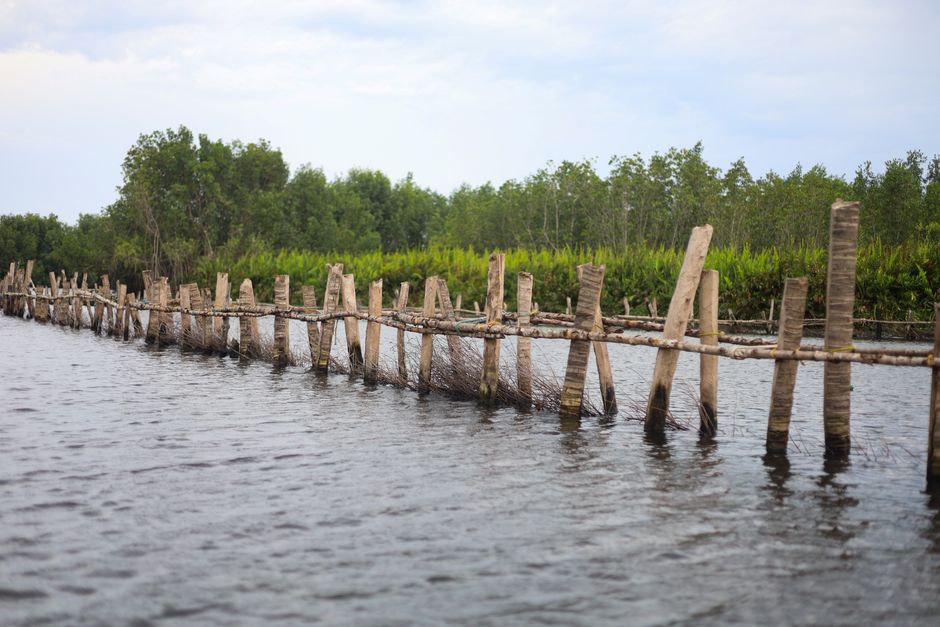
Coastal communities on the Indonesian island of Java are finding new ways to combat rising sea levels and land erosion. In the district of Demak, residents are leading a grassroots effort to restore mangrove forests that once served as a natural shield against the ocean. These ecosystems are vital for protecting homes and farmland from storm surges and flooding. By focusing on natural restoration, these communities are creating a sustainable defense system for their future. The project highlights how local knowledge can be combined with simple engineering to solve complex environmental challenges. Ahmad Busro, a community leader in the region, has been at the forefront of this initiative. He and other residents use bamboo poles and nets to build structures along the coast. These structures act as traps for sediment carried by the tides. As the sediment builds up behind the bamboo barriers, it creates the right conditions for mangrove seeds to take root naturally. This method is often more effective than simply planting trees in areas where the soil has already washed away. The process allows the forest to regenerate in a way that mimics natural growth patterns. This approach is part of a broader strategy supported by organizations like Wetlands International. By working with the natural flow of the ocean, the community is able to reclaim land that was previously lost to the sea. The project has shown measurable success in stabilizing the shoreline and encouraging the return of local wildlife. Beyond environmental benefits, the restoration of mangroves provides economic support for the village. Healthy mangrove forests serve as nurseries for fish and shellfish, which are essential food sources for the local population. Residents have shifted their practices to ensure the long-term health of these ecosystems. Instead of cutting down mangrove branches, they now harvest shellfish from the roots in a way that does not harm the trees. This shift demonstrates how conservation can align with the daily needs of a community. The success in Demak serves as a model for other coastal regions facing similar threats. It proves that community-led, low-cost solutions can have a significant impact on climate resilience. As sea levels continue to rise globally, these local initiatives offer a practical path forward for vulnerable areas. The dedication of the people in Demak shows the power of collective action in protecting shared natural resources.
Ask the Author
Subscribers can ask the journalist a question about this story. Subscribe to ask.
Neutrality note
Auto-harvested from global news wires and presented neutrally by PENN.
to vote
Comments
No comments yet — be the first to share your thoughts.