Ingredient of the Day: Nutmeg
Uncovering the history, science, and culinary versatility of a prized global spice
Hear this story explained in 90 seconds.
Nutmeg
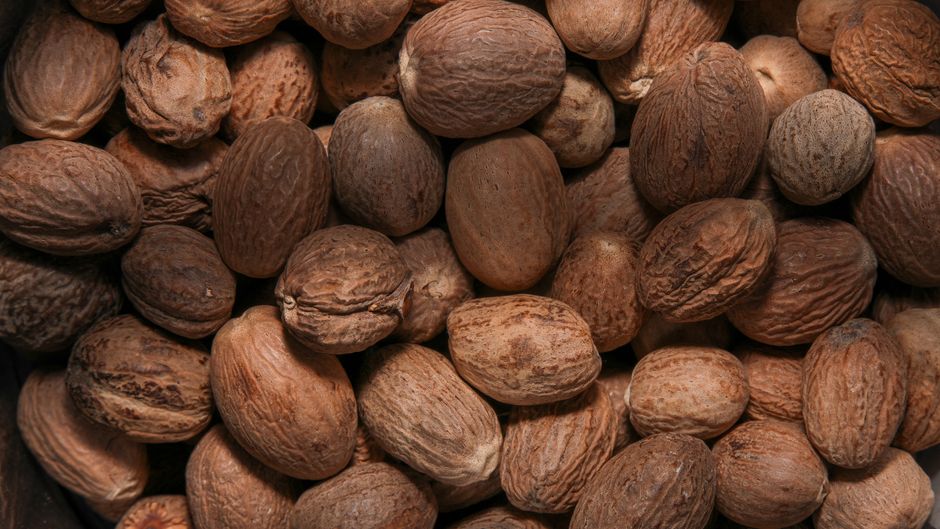
Nutmeg is a warm, aromatic spice derived from the seed of the Myristica fragrans tree. Known for its complex, slightly sweet, and woody flavor profile, it has transitioned from a highly coveted luxury item in ancient times to a staple in modern spice cabinets worldwide.
Origin & History
The Myristica fragrans tree is native to the Banda Islands, part of the Maluku Islands in Indonesia, historically referred to as the Spice Islands. Nutmeg has a long, significant history of trade. By the 6th century, it had reached Constantinople and later became highly valued in Europe during the Middle Ages, not only for its flavor but also as a status symbol. During the 17th century, the spice trade became the subject of intense international competition. The Dutch East India Company, known as the Vereenigde Oost-Indische Compagnie, sought to control the production and distribution of nutmeg, leading to significant conflicts and the historic Treaty of Breda in 1667, which saw the British trade the island of Run to the Dutch in exchange for New Amsterdam, now known as Manhattan, New York.
Production
The Myristica fragrans is an evergreen tree that thrives in tropical climates. The fruit of the tree resembles an apricot. When the fruit ripens, it splits open, revealing a hard, dark brown seed surrounded by a bright red, lacy covering known as mace. Both nutmeg and mace are harvested from the same fruit. Once gathered, the red mace is removed and dried, while the nutmeg seed is dried in the sun or in specialized ovens over several weeks. During this drying process, the kernel shrinks inside the shell. When the shell is finally cracked open, the nutmeg seed—the spice we recognize—is removed and prepared for sale, either whole or ground.
Culinary Uses
Nutmeg is incredibly versatile across global cuisines. In European and North American traditions, it is a classic ingredient in baking, frequently used in spice cakes, cookies, and custards, and is considered an essential addition to a creamy Béchamel sauce. In Middle Eastern and Indian cooking, it is often incorporated into complex spice blends, such as garam masala, to add depth to meat dishes, stews, and vegetable curries. It is also a popular addition to winter beverages like eggnog and mulled wine, where its warming properties are highly prized.
Nutrition & Facts
Nutmeg contains small amounts of essential nutrients, including manganese, copper, and magnesium, as well as dietary fiber. It is also a source of volatile oils like myristicin, which contribute to its distinct aroma and flavor. Interesting to note, nutmeg has historical significance in various medicinal traditions, though it should be consumed in moderation; consuming very large quantities can be toxic due to these naturally occurring compounds. A fun culinary fact: because the volatile oils in nutmeg dissipate quickly after grinding, many professional chefs prefer to grate the whole seed fresh using a microplane for the most potent flavor.
Recipe Featuring This Ingredient
Classic Béchamel Sauce
A smooth, velvety white sauce elevated by the subtle warmth and aromatic depth of freshly grated nutmeg.
Prep time: 5 min | Cook time: 10 min | Total time: 15 min | Yield: 2 cups | Difficulty: Easy
Ingredients
- 50 g unsalted butter
- 40 g all-purpose flour
- 500 ml whole milk
- 0.5 tsp salt
- 0.25 tsp freshly grated nutmeg
Instructions
- In a medium saucepan over medium heat, melt the butter until foaming but not browned.
- Add the flour to the melted butter and whisk constantly for 1–2 minutes to create a roux, ensuring it is smooth and bubbling but not colored.
- Gradually pour in the milk, whisking constantly to prevent lumps from forming.
- Continue to cook over medium heat, stirring frequently, until the sauce thickens enough to coat the back of a spoon, usually taking about 5–7 minutes.
- Remove from heat and stir in the salt and freshly grated nutmeg.
Notes
Serve immediately over pasta, roasted vegetables, or as a base for lasagna. Store any leftovers in an airtight container in the refrigerator for up to three days. For a richer sauce, replace 50ml of milk with heavy cream.
Subscribers can ask the journalist a question about this story. Subscribe to ask.
Ingredient of the Day feature by the PENN Food & Spirits Desk.
Comments
No comments yet — be the first to share your thoughts.
PENN's lifestyle and culinary department, covering global cuisine — the origins, traditions, and recipes behind the world's dishes, with deep histories and cultural context that go beyond the plate. and PENN's beverage-focused culinary team, dedicated to spirits and drinks — covering distilleries, breweries, and producers worldwide, with histories, tasting notes, professional reviews, and cocktail traditions.
View all articles by Desk →