Ingredient of the Day: Turmeric
Exploring the Golden Spice of the Ancient World
Hear this story explained in 90 seconds.
Ingredient Name
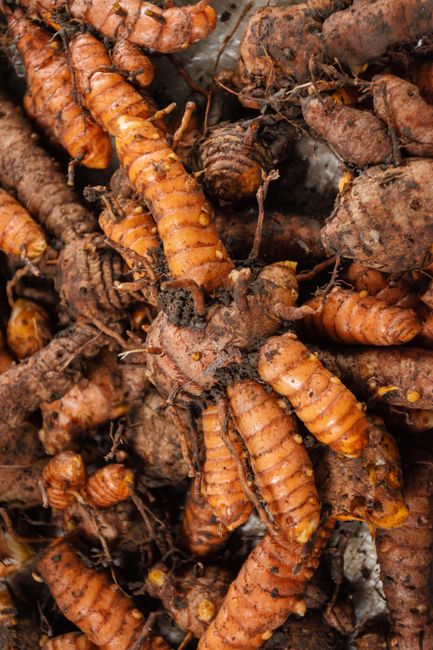
Turmeric, scientifically known as Curcuma longa, is a vibrant, golden-hued rhizome that has served as a cornerstone of culinary, medicinal, and cultural traditions for thousands of years. Often referred to as the "golden spice," it is a member of the Zingiberaceae, or ginger family.
Origin & History
Turmeric is native to the tropical regions of South Asia and Southeast Asia. Historians and archaeologists trace its origins to the Indian subcontinent, with evidence of its use dating back to at least 2000 BCE. Archaeological findings at sites like Farmana in the Indus Valley have revealed traces of turmeric on ancient cooking pots and even human teeth. The plant is a cultigen, meaning it has been propagated by humans for so long that it no longer reliably sets seed, existing today entirely as a product of deliberate cultivation.
Production
Turmeric is a leafy perennial that grows to about 1 to 1.5 meters in height. It is grown as an annual field crop in warm, humid climates. The part of the plant used is the rhizome, or underground stem. To produce the familiar yellow powder, the rhizomes are harvested, boiled, dried in the sun, and then ground into a fine spice. India remains the world's largest producer, consumer, and exporter of turmeric.
Culinary Uses
Turmeric is a fundamental ingredient in many global cuisines, most notably as a primary component of curry powders and various masala blends. It is prized for its earthy, pungent flavor and its ability to impart a brilliant yellow-orange color to dishes. Beyond curries, it is used in soups, stews, rice dishes, and even as a natural food coloring in dairy, confectionery, and baked goods. Its versatility has made it a staple in both traditional home cooking and modern food manufacturing.
Nutrition & Facts
The most significant compound in turmeric is curcumin, which provides the spice with its characteristic pigment and is the subject of extensive scientific research regarding its potential health benefits, including anti-inflammatory and cognitive support. Beyond its culinary and health roles, turmeric has a long history as a natural dye for textiles, including the robes of Buddhist monks, and as a traditional cosmetic. The name "turmeric" is thought to derive from the Latin terra merita, meaning "meritorious earth."
Recipe Featuring This Ingredient
Golden Turmeric Rice
A fragrant and vibrant side dish that pairs perfectly with grilled proteins or roasted vegetables.
Prep time: 5 min | Cook time: 20 min | Total time: 25 min | Yield: 4 servings | Difficulty: Easy
Ingredients
- 200 g basmati rice
- 450 ml vegetable broth
- 1 tsp ground turmeric
- 1 tbsp olive oil
- 0.5 tsp salt
- 1 small onion, finely diced
Instructions
- Heat the olive oil in a medium saucepan over medium heat and sauté the diced onion until translucent, about 3 minutes.
- Add the rice to the pan and stir for 1 minute to coat the grains in the oil.
- Stir in the turmeric and salt until the rice is evenly colored.
- Pour in the vegetable broth and bring the mixture to a boil.
- Reduce heat to low, cover with a tight-fitting lid, and simmer for 15 minutes or until the liquid is absorbed and the rice is tender.
- Remove from heat and let sit covered for 5 minutes before fluffing with a fork.
Notes
For added depth, garnish with fresh cilantro or toasted cashews. Store leftovers in an airtight container in the refrigerator for up to three days.
Subscribers can ask the journalist a question about this story. Subscribe to ask.
Ingredient of the Day feature by the PENN Food & Spirits Desk.
Comments
No comments yet — be the first to share your thoughts.
PENN's lifestyle and culinary department, covering global cuisine — the origins, traditions, and recipes behind the world's dishes, with deep histories and cultural context that go beyond the plate. and PENN's beverage-focused culinary team, dedicated to spirits and drinks — covering distilleries, breweries, and producers worldwide, with histories, tasting notes, professional reviews, and cocktail traditions.
View all articles by Desk →