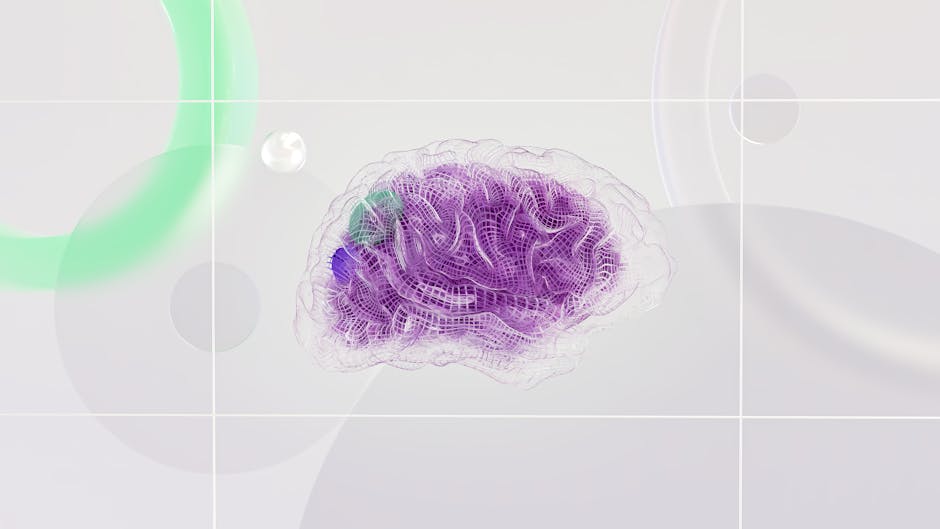
International Consortium Maps Entire Fruit Fly Brain Wiring in Landmark Connectome Breakthrough
Scientists chart all 139,255 neurons and 50 million synaptic connections of Drosophila melanogaster, establishing the most complete animal wiring diagram to date.
PENN Explainer
Hear this story explained in 90 seconds.
An international collaboration of neuroscientists led by the FlyWire consortium has completed the first whole-brain wiring diagram of an adult fruit fly, Drosophila melanogaster. Published across a series of landmark studies in the journal Nature, the project maps all 139,255 individual neurons and over 50 million synaptic connections. The achievement marks the largest and most complex animal connectome ever constructed, offering unprecedented resolution into how brains process information and guide behavior.
The massive effort was co-led by Dr. Mala Murthy and Dr. H. Sebastian Seung of Princeton University, alongside researchers from the Medical Research Council Laboratory of Molecular Biology in Cambridge and institutions worldwide. To accomplish the feat, researchers sliced the brain of a single female fruit fly into thousands of ultra-thin sections and imaged them using high-throughput transmission electron microscopy. Artificial intelligence models developed at Google Research reconstructed the cell boundaries before an open community of global researchers and citizen scientists spent years proofreading and validating each segment.
The resulting open-access dataset, accessible to researchers around the globe, categorizes hundreds of previously unknown cell types and maps sensory and motor processing pathways. By tracing how visual, auditory, and olfactory signals travel through intermediate circuits down to motor neurons, scientists can now observe the entire trajectory of neural computation. Prior to this breakthrough, full connectomes had only been completed for microscopic organisms with several hundred neurons, such as the nematode worm Caenorhabditis elegans.
Researchers discovered distinct organizational hubs within the fly brain that regulate complex behaviors such as walking, grooming, mating, and navigation. Unexpectedly, the team uncovered extensive feedback loops and cross-talk between sensory pathways that were previously thought to operate independently. These detailed maps will allow scientists to simulate circuit functions computationally and compare synthetic brain models against physical biological systems.
Fruit flies share approximately 60 percent of their genetic material with humans, including many fundamental neural signaling pathways. Because biological mechanisms controlling memory, sleep, and navigation are evolutionarily conserved, researchers believe this connectome will advance the study of human neurological conditions. Diseases characterized by synaptic decay or circuit dysfunction could benefit from targeted laboratory trials using fly models with known circuit layouts.
The complete connectome also provides a foundational blueprint for emerging artificial intelligence and robotics architectures. Computer scientists studying neural networks can directly analyze how biological brains achieve energy-efficient computation and multi-sensory processing with minimal power consumption. Several computational research labs have already begun testing whether artificial neural circuits based on the Drosophila connectome perform better at real-time robotic navigation tasks.
While the fruit fly brain is microscopic compared to the estimated 86 billion neurons in a human brain, the scale of data generated by the FlyWire project is vast. The imagery and 3D geometric models occupy petabytes of digital storage, illustrating the engineering challenges associated with whole-brain mapping. The FlyWire consortium has made all raw imaging data, segmentation algorithms, and circuit analysis tools freely downloadable without commercial restrictions.
Neuroscientists view the fruit fly map as a crucial stepping stone toward intermediate model organisms, including the mouse brain, which contains approximately 70 million neurons. Global scientific consortia have already initiated pilot projects aimed at scaling automated electron microscopy and machine-learning segmentation to accommodate mammalian brain tissue. Researchers emphasize that overcoming current data-processing and tissue-handling limits will require sustained international funding and open data-sharing partnerships.
Ethics boards and science policy experts have praised the open-science framework of the project, which engaged hundreds of volunteer annotators and researchers across dozens of nations. The consortium's transparent method of data sharing is designed to democratize brain research, allowing independent laboratories without multi-million-dollar imaging facilities to interrogate the circuitry. FlyWire team members confirmed that regular updates to the digital atlas will continue as scientists refine behavioral sub-circuits.
The publication of the complete fly connectome establishes a new baseline for modern neuroscience, transitioning the field from isolated neuron studies to comprehensive network analysis. Researchers around the world can now formulate precise, testable hypotheses regarding how neural circuits process information, adapt to environmental stimuli, and control physical movement. As computational neuroscience matures, the fruit fly map is poised to guide discoveries across biological medicine and synthetic computation for years to come.
Ask the Author
Subscribers can ask the journalist a question about this story. Subscribe to ask.
Neŭtraleca noto
Auto-harvested from global news wires and presented neutrally by PENN.
to vote
Comments
No comments yet — be the first to share your thoughts.
Related stories in Science & Technology

Scientists Use Artificial Intelligence to Design New Functional Viruses
2026-09-28
Astronomers Detect First Atmosphere on Earth-Like Planet
2026-09-28