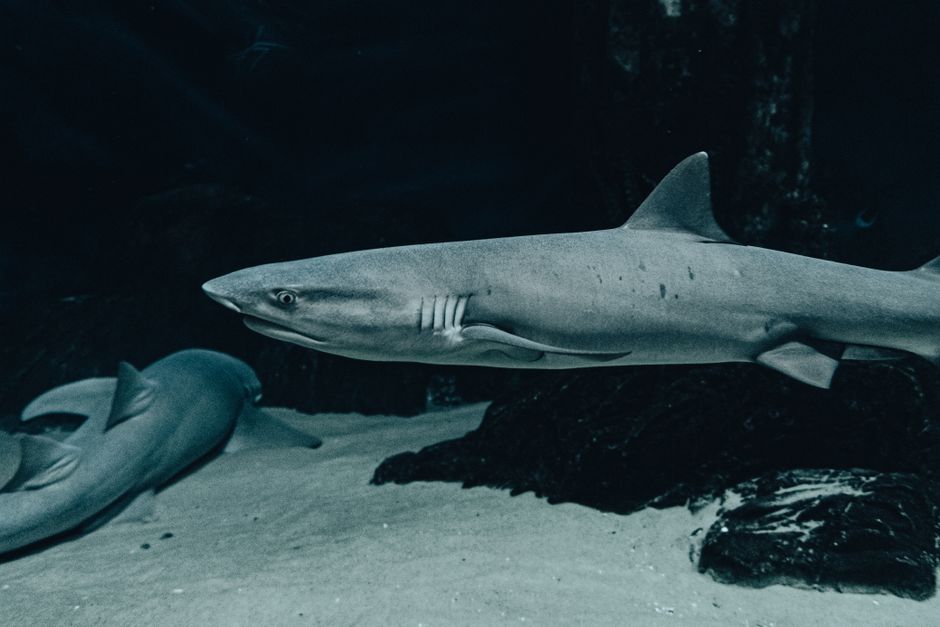
International Expedition Discovers 31 New Deep-Sea Species Off Brazil Coast
Scientists explore the ocean's midwater zone to reveal previously unknown marine life and capture high-resolution 3D cellular images.
PENN Explainer
Hear this story explained in 90 seconds.
An international team of scientists has identified 31 new marine species during a recent expedition in the South Atlantic Ocean. The research took place off the coast of Brazil, focusing on the vast, dimly lit habitat known as the midwater zone. This area exists between the sunlit surface waters and the dark seafloor, representing one of the least explored ecosystems on the planet.
The mission was conducted aboard the Falkor (too), a research vessel operated by the Schmidt Ocean Institute. Researchers utilized advanced underwater technology to survey the region and collect biological samples. These tools allowed the team to document life in an environment that remains largely mysterious to modern science.
Among the notable findings are transparent creatures featuring unique, glittering hair structures. The team also discovered a specific type of crustacean that lives inside the see-through body of another sea dweller. These unusual adaptations highlight the complex survival strategies used by organisms in the deep ocean.
Beyond identifying new species, the expedition achieved a significant technical milestone in marine biology. Scientists successfully imaged the living cellular structure of a microbe in three dimensions. This accomplishment provides researchers with a clearer view of how microscopic life functions in deep-sea environments.
The team relied on a combination of high-resolution imaging technologies and genome sequencing to confirm their discoveries. These methods are essential for distinguishing new species from those already cataloged in scientific databases. By analyzing genetic data, the researchers can better understand the evolutionary history of these organisms.
The midwater zone is considered Earth's largest habitable ecosystem, yet it remains difficult to study due to extreme pressure and darkness. Expeditions like this one are vital for mapping the biodiversity of the global ocean. Understanding these species helps scientists grasp how life persists in such challenging conditions.
This research contributes to a growing body of knowledge regarding the health and composition of the South Atlantic. As human activity continues to impact marine environments, documenting baseline biodiversity becomes increasingly important. The data collected will be shared with the global scientific community to support further study.
Future analysis of the collected samples is expected to reveal more about the ecological roles these creatures play. Scientists hope to determine how these species interact with their environment and each other. Such insights are necessary for developing effective conservation strategies for deep-sea habitats.
The Schmidt Ocean Institute continues to support missions that push the boundaries of deep-sea exploration. By providing specialized vessels and equipment, the organization enables international teams to collaborate on complex biological projects. These partnerships are key to uncovering the hidden life forms that inhabit the world's oceans.
As the team processes the findings from this mission, they plan to publish their full results in peer-reviewed journals. This process ensures that the discovery of the 31 new species is verified and accessible to other experts. The work serves as a reminder of how much of the ocean remains to be discovered.
You've reached your free article limit
You've read 10 of 10 free articles this month. Subscribe to Planet Earth News Network for unlimited access to neutral, global journalism — plus puzzles, podcasts, and the weekly newsletter.
Already a subscriber? Sign in.
Ask the Author
Subscribers can ask the journalist a question about this story. Subscribe to ask.
Nota de neutralidade
Auto-harvested from global news wires and presented neutrally by PENN.
to vote
Comments
No comments yet — be the first to share your thoughts.