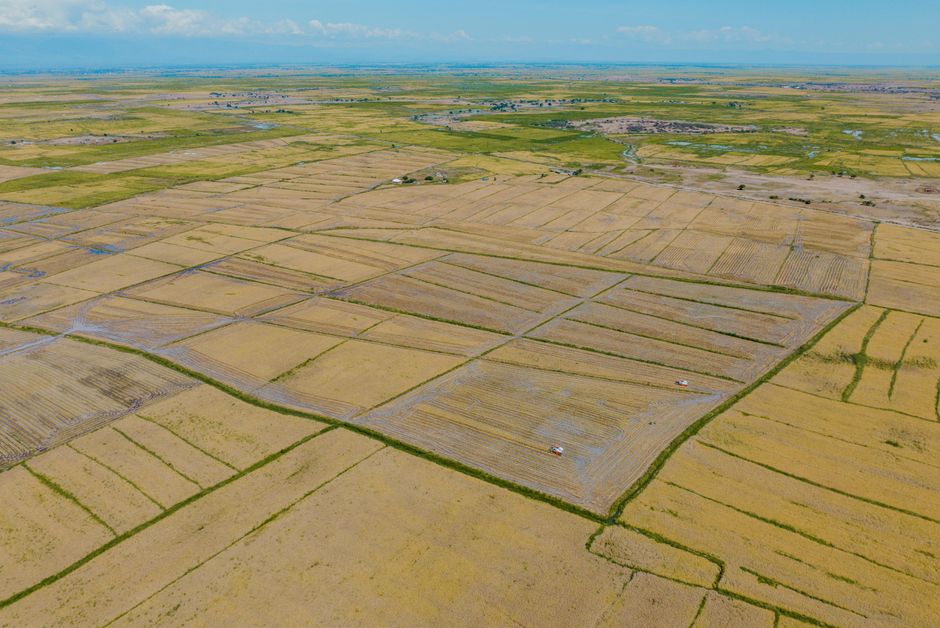
Kenyan Farmers Gain New AI Tool to Combat Climate-Driven Agricultural Risks
The HarvestMAX platform aims to help smallholder farmers navigate unpredictable weather patterns and improve crop yields.

PENN Explainer
Hear this story explained in 90 seconds.
Farmers in Kenya are gaining access to a new technological resource designed to help them manage the growing challenges of climate change. The online news portal FarmBizAfrica recently launched an artificial intelligence tool called HarvestMAX. This digital platform is specifically engineered to assist local farmers in reducing risks associated with unpredictable weather and shifting environmental conditions. By providing data-driven insights, the tool aims to stabilize production for those most vulnerable to climate volatility. Agriculture remains a vital pillar of the Kenyan economy, supporting millions of livelihoods across diverse ecological zones. The sector encompasses everything from small-scale crop production to large-scale agribusiness operations. As climate patterns become more erratic, the need for innovative solutions to protect food security has become increasingly urgent. The introduction of HarvestMAX represents a broader trend of integrating technology into traditional farming practices. This initiative joins other ongoing efforts in the region, such as the Boosting Sustainable Food Production Action in Kenya, known as the BOOST programme. That project has already provided support to over 40,000 smallholder farmers by promoting sustainable agro-ecological practices. These programs collectively aim to transform agriculture into a more commercially viable and resilient enterprise. Government and private sector partnerships are also playing a significant role in this agricultural evolution. For instance, the National Agricultural Value Chain Development Project, funded by the Government of Kenya and the World Bank, seeks to increase market participation for targeted farmers. Such projects focus on value chain addition to ensure that agricultural products reach markets more efficiently. These efforts are aligned with the Kenya Climate Smart Agriculture Implementation Framework, which envisions a low-carbon, resilient future for the nation's food systems. Beyond crop production, the aquaculture sector is also seeing significant expansion. Victory Farms, a major player in the region, recently marked a milestone with the development of its Doho site. This expansion is expected to create hundreds of direct jobs while increasing the availability of affordable protein sources like tilapia. The company is currently scaling its operations to meet the growing demand for fish across the continent. As these various initiatives take root, the focus remains on balancing immediate food needs with long-term sustainability. By combining traditional knowledge with modern tools like artificial intelligence, stakeholders hope to secure a more stable future for Kenyan agriculture. The success of these programs will be measured by their ability to lift farmers out of poverty while ensuring consistent food supplies for the population.
Ask the Author
Subscribers can ask the journalist a question about this story. Subscribe to ask.
Note de neutralité
Auto-harvested from global news wires and presented neutrally by PENN.
to vote
Comments
No comments yet — be the first to share your thoughts.
Related stories in Agriculture & Food Security

European Commission Outlines New Framework for Sustainable Farming Post-2027
2026-09-24
European Economic and Social Committee Calls for Shift to Regenerative Agriculture
2026-09-24