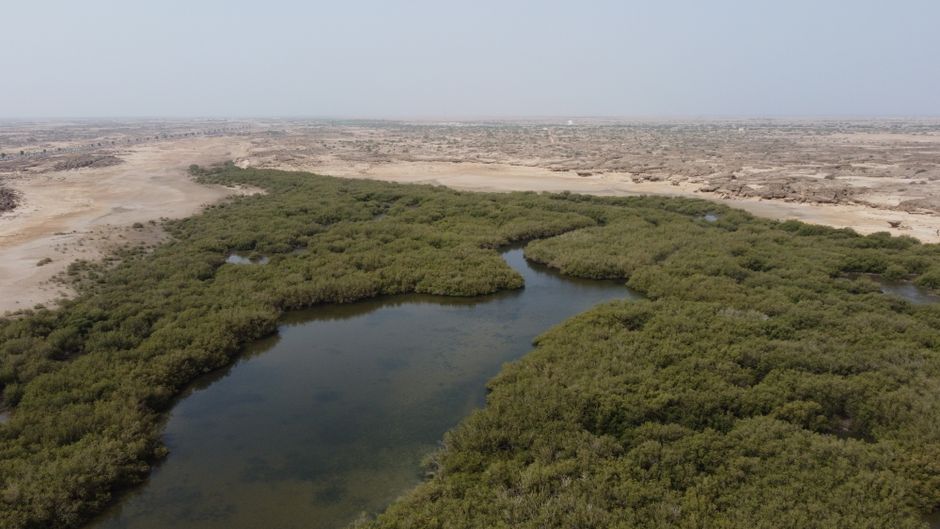
Micronesian Communities Restore Marine Health Through Traditional Management
Local leaders and scientists partner to revive ancestral fishing practices, leading to measurable increases in fish biomass and diversity.
PENN Explainer
Hear this story explained in 90 seconds.
Communities on the remote Ulithi Atoll in Micronesia are successfully restoring their local marine ecosystems by returning to traditional management practices. For generations, these islanders relied on ancestral knowledge to maintain the health of their reefs and lagoons. However, the introduction of modern equipment like motorboats and flashlights in recent decades led to widespread overfishing and a decline in essential food sources. Chief Lazarus Ulith of the island of Fedarai noted that the shift away from traditional methods created significant challenges for the local food supply.
To address this decline, the community partnered with the organization One People One Reef to combine traditional wisdom with modern scientific data. This collaboration allows residents to monitor the health of their marine resources while making informed decisions about conservation. Magul Rulmal, a leader within the initiative, explained that the goal is to better understand the changes in their environment to ensure the long-term survival of the community. By integrating scientific research with local oversight, the project provides a framework for sustainable resource management.
One of the primary actions taken by the community was the implementation of targeted bans on specific types of spearfishing around the island of MogMog. These restrictions are designed to allow fish populations to recover and reach larger sizes, which is vital for the health of the reef ecosystem. Dr. Nicole Crane, a scientist working with the project, reported that the results of these changes have been promising. Data collected by the team shows that both fish biomass and species diversity are steadily increasing in the protected areas.
Unlike top-down conservation models that rely on external enforcement, this approach empowers local residents to act as stewards of their own waters. Scientists provide the necessary data to help the community understand the impact of their fishing habits, but the decisions remain in the hands of the local leaders. This model of community-led conservation ensures that the rules are respected and that the benefits of a healthy ocean are shared by everyone. The success of the program demonstrates how traditional knowledge can be a powerful tool in modern environmental protection.
While the project has shown clear signs of ecological recovery, the team continues to refine their methods through ongoing research. Scientists are working to document the long-term effects of these practices to provide a clearer picture of how traditional management influences marine health. The collaboration serves as a potential model for other remote island communities facing similar pressures from overfishing and environmental change. By valuing local expertise, these communities are finding effective ways to protect their heritage and their future food security.
You've reached your free article limit
You've read 10 of 10 free articles this month. Subscribe to Planet Earth News Network for unlimited access to neutral, global journalism — plus puzzles, podcasts, and the weekly newsletter.
Already a subscriber? Sign in.
Ask the Author
Subscribers can ask the journalist a question about this story. Subscribe to ask.
Neutrality note
Auto-harvested from global news wires and presented neutrally by PENN.
to vote
Comments
No comments yet — be the first to share your thoughts.
Related stories in Solutions

Davao Prison Launches Hydroponic Facility to Boost Food Security and Rehabilitation
2026-11-11
Brazilian Cities Integrate Urban Agriculture to Bolster Food Security and Climate Resilience
2026-11-11