Edition No. 52 · GlobalEst. 2026

30 days left in your free trial. Subscribe now — just $10/month.

S&P 5007,699.65-0.84%Dow Jones51,565.72-0.93%Nasdaq26,900.13-0.82%FTSE 10010,684.88-0.50%DAX25,374.42-0.78%Nikkei 22565,877.62+2.72%Hang Seng24,642.51-1.60%EUR/USD1.1373-0.80%GBP/USD1.3259-0.84%Gold4,164.90-3.55%Crude Oil92.46+0.33%Bitcoin83,803.61-0.68%S&P 5007,699.65-0.84%Dow Jones51,565.72-0.93%Nasdaq26,900.13-0.82%FTSE 10010,684.88-0.50%DAX25,374.42-0.78%Nikkei 22565,877.62+2.72%Hang Seng24,642.51-1.60%EUR/USD1.1373-0.80%GBP/USD1.3259-0.84%Gold4,164.90-3.55%Crude Oil92.46+0.33%Bitcoin83,803.61-0.68%

NASA-Funded Study Reveals Prescribed Burns Protect Giant Sequoias from Wildfires

New research indicates that managed forest fires significantly increase the survival rates of iconic giant sequoia trees during extreme wildfire events.
Por Planet Earth News Science & Technology Desk· Publicado 2026-08-17· 2 min read
PENN Explainer

Hear this story explained in 90 seconds.

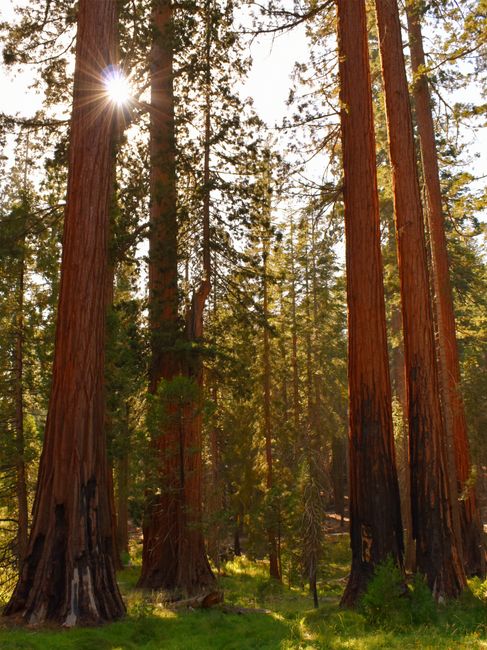
A recent study funded by the National Aeronautics and Space Administration (NASA) has provided new insights into the survival of giant sequoias during extreme wildfire events. Researchers found that these massive trees are nearly four times more likely to survive when they grow in forests that have been managed with prescribed burns. These controlled fires are used by land managers to reduce the amount of dry brush and debris that can fuel larger, more dangerous blazes. By clearing out this undergrowth, the fires help protect the health and longevity of the forest ecosystem. The findings highlight the importance of active forest management in preserving some of the world's oldest and largest living organisms. As climate conditions continue to change, the frequency and intensity of wildfires have become a significant concern for environmental scientists. The study suggests that human intervention through controlled burning is a vital tool for mitigating the damage caused by these extreme events. By reducing the fuel load on the forest floor, managers can prevent fires from climbing into the canopy of the giant sequoias. This strategy helps maintain the structural integrity of the trees, which are highly sensitive to intense heat. The research team analyzed data from recent wildfire seasons to compare survival rates in managed versus unmanaged areas. Their results consistently showed that the trees in treated zones had a much higher chance of remaining standing after a fire. This evidence supports the ongoing efforts of conservationists to implement more proactive fire management policies. Protecting these trees is not only important for biodiversity but also for the carbon sequestration they provide. Giant sequoias are known for their ability to store large amounts of carbon, making them essential allies in the effort to manage global climate impacts. The study serves as a reminder of how scientific research can guide practical solutions for environmental challenges. By understanding the relationship between fire behavior and forest health, experts can better protect these natural treasures for future generations. The findings are expected to influence future land management strategies across the United States and potentially in other regions with similar forest types.
Ask the Author

Subscribers can ask the journalist a question about this story. Subscribe to ask.

Nota de neutralidade

Auto-harvested from global news wires and presented neutrally by PENN.

Share this article

to vote

Comments

No comments yet — be the first to share your thoughts.

Author
Planet Earth News Science & Technology Desk

Covering scientific discovery and technological innovation — from astronomy, biology, chemistry, physics, and earth sciences to artificial intelligence, cybersecurity, consumer electronics, and digital infrastructure — with clear, accurate, neutral reporting on peer-reviewed findings, companies, products, and policy debates, and their implications for humanity.

View all articles by Desk →

Related stories in Science & Technology