New Robotic Swarm Technology Deployed to Map Greenland’s Melting Ice Sheets
Scientists launch an ambitious expedition using autonomous robots to study the critical boundary where glaciers meet the sea.

PENN Explainer
Hear this story explained in 90 seconds.
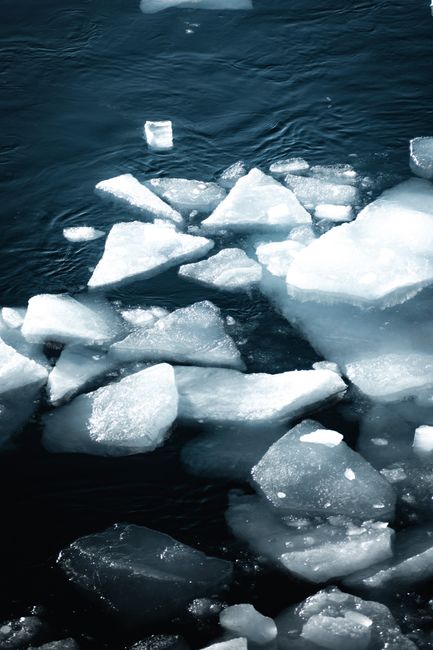
A team of international researchers has launched an ambitious scientific expedition to study the rapidly changing ice sheets of Greenland. The project utilizes a swarm of autonomous robots designed to navigate the dangerous and remote waters where glaciers meet the ocean. By gathering high-resolution data from these hard-to-reach areas, scientists hope to better understand the mechanisms driving ice loss. This mission aims to fill significant gaps in current climate models that predict global sea-level rise. The researchers are particularly focused on the glacier-sea boundary, a region that has historically been difficult to monitor due to extreme conditions. These robotic units are equipped with advanced sensors to measure water temperature, salinity, and ice thickness. By operating as a coordinated swarm, the robots can cover a larger area than a single vessel or stationary sensor could manage. This approach allows for a more comprehensive view of how warming ocean currents interact with the base of massive glaciers. The data collected will be vital for improving the accuracy of long-term climate projections. Understanding these interactions is essential for coastal communities worldwide that face the risk of rising sea levels. The expedition represents a significant technological leap in polar research and environmental monitoring. While the environment remains harsh and unpredictable, the team is optimistic that the robotic swarm will provide unprecedented insights. The project is part of a broader global effort to track the health of the planet's cryosphere. As the mission progresses, the researchers plan to share their findings with the international scientific community to support global climate policy development. This work highlights the growing role of robotics and artificial intelligence in addressing complex environmental challenges.
Ask the Author
Subscribers can ask the journalist a question about this story. Subscribe to ask.
Заметка о нейтральности
Auto-harvested from global news wires and presented neutrally by PENN.
to vote
Comments
No comments yet — be the first to share your thoughts.