Researchers Announce Major Breakthroughs in Multimodal Artificial Intelligence and Neuromorphic Computing
New developments in AI models and energy-efficient chips are changing how scientists approach medicine, space exploration, and complex data analysis.

PENN Explainer
Hear this story explained in 90 seconds.
Artificial intelligence has reached a new milestone in 2026 with the release of advanced multimodal systems. These models can now process text, images, video, and audio at the same time with high accuracy. Researchers say this change allows machines to understand the world more like humans do. This development is expected to impact many fields, from healthcare to space exploration.
A recent study published in the journal Nature Machine Intelligence highlights the capabilities of OpenAI’s latest model, GPT-5. The research shows that the system achieved a 94.7% accuracy rate on the Comprehensive Multimodal Understanding Benchmark. This score is significant because it marks the first time an AI has surpassed human performance on this specific test. The model uses a unified attention mechanism to link different types of data together.
One of the most practical uses for this technology is in the field of medicine. The new AI systems can analyze live video of a surgical procedure while simultaneously reading medical textbooks. By doing this, the software can provide real-time guidance to surgeons during complex operations. Experts note that the accuracy of these suggestions is now comparable to that of senior medical specialists.
Dr. Marcus Webb from the Human-Computer Interaction Lab at Stanford University has spent months testing these new systems. He explained that the real breakthrough is not just about processing data, but about contextual reasoning. This means the AI can understand why certain information is important in a specific situation. Dr. Webb believes this will lead to more reliable tools for professionals in high-stakes environments.
Alongside software improvements, hardware technology is also seeing major changes with the mass production of neuromorphic computing chips. These specialized chips are designed to mimic the structure of the human brain. They are much more efficient than traditional processors, reducing power consumption by up to 85%. This energy saving is crucial for mobile devices and large data centers that run AI programs.
Another significant trend in 2026 is the integration of quantum computing with artificial intelligence. These hybrid systems are achieving accuracy levels as high as 99.7% in complex simulations. By combining the speed of quantum processors with the learning ability of AI, scientists can solve problems that were previously impossible. This technology is now moving from experimental labs into commercial use.
The impact of these breakthroughs is being felt strongly in the world of scientific research. AI-driven discovery is accelerating the development of new drugs and materials. Researchers are using autonomous agents to plan and carry out experiments without constant human intervention. These agents can adapt to new results and learn from their mistakes in real time.
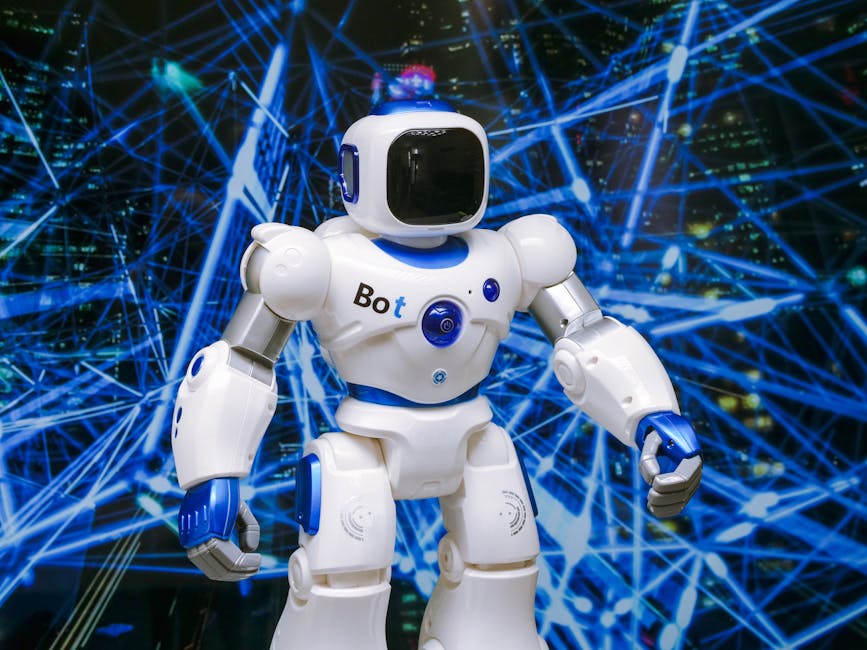
Google DeepMind has also reported a leap forward in robotic capabilities using these multimodal models. Their research focuses on physical AI, which helps robots interact with the physical world more naturally. By understanding both visual and sensory data, robots can perform tasks that require a delicate touch or complex movement. This could lead to better automation in factories and homes.
Safety remains a top priority for the organizations developing these powerful tools. New oversight protocols have been established to ensure that autonomous AI agents operate within ethical boundaries. Developers are including built-in safety features in neuromorphic chips to prevent malfunctions in critical systems like self-driving cars. These measures are designed to build public trust in the technology.
As 2026 progresses, the focus is shifting toward making these advanced tools more accessible to the general public. Companies are working to cut the costs of running large AI models by using more energy-efficient hardware. This could allow smaller businesses and schools to benefit from high-level computing power. The goal is to create a future where AI supports human creativity and problem-solving across the globe.
Ask the Author
Subscribers can ask the journalist a question about this story. Subscribe to ask.
Neutrality note
Auto-harvested from global news wires and presented neutrally by PENN.
to vote
Comments
No comments yet — be the first to share your thoughts.