Researchers Identify Significant Timing Flaw in Lab-Grown Human Minibrains
A new study reveals that miniature brain models do not follow the same developmental timeline as real human brains, potentially impacting medical research.
PENN Explainer
Hear this story explained in 90 seconds.
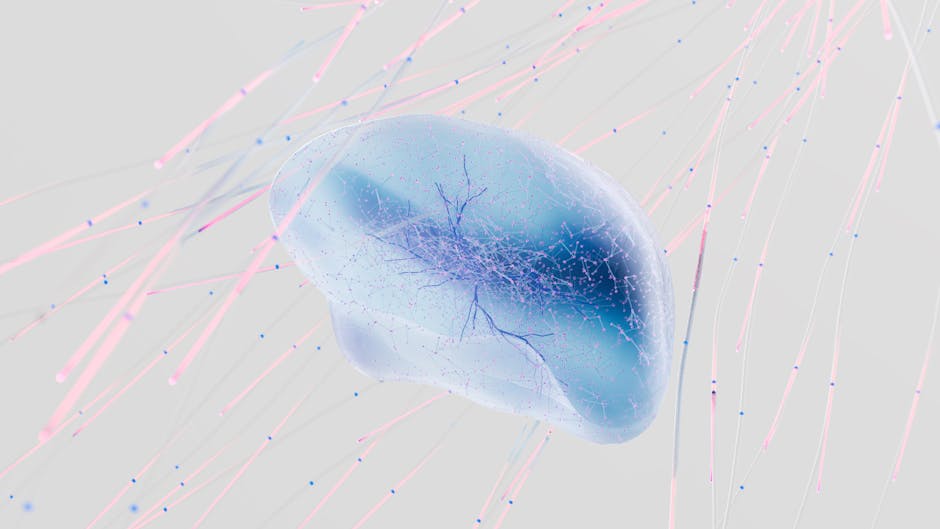
Scientists use tiny, lab-grown versions of human organs to study how the body works without needing a living patient. These models, called organoids, are especially important for studying the human brain. They allow researchers to observe complex biological processes in a controlled environment that mimics parts of the human body.
A new study has found a major limitation in these "minibrains" that could change how researchers use them. The research shows that these lab-grown models have a skewed sense of time compared to real human brains. This means the models do not follow the natural developmental schedule of a person as they grow.
This discovery is significant because scientists rely on these models to understand how the brain develops over many years. If the timing is off, the data gathered from these experiments might lead to incorrect conclusions about human health. The study was highlighted in scientific reports published in August 2026.
Researchers create these minibrains using human stem cells, which are then guided to grow into specific types of tissue. This process allows scientists to watch how diseases like Alzheimer’s or Parkinson’s might start and progress. It is considered a cornerstone of modern neurological research and drug development.
However, the new findings suggest that the internal "clock" of these organoids is not synchronized with natural human biology. While they look like brain tissue, their developmental milestones happen on a different schedule than those in a living person. This discrepancy makes it hard to compare them directly to actual human patients.
A drug that works on a fast-aging minibrain might not work the same way in a person whose brain ages normally. This creates a challenge for pharmaceutical companies trying to develop new treatments for age-related conditions. Accuracy in timing is essential for predicting how a human will react to a new medicine.
The findings suggest that the environment of the laboratory dish lacks certain signals found in the human body. In a living person, the brain receives constant input from the blood, hormones, and other organs. These external factors help regulate how fast or slow the brain develops throughout a lifetime.
Without these natural signals, the lab-grown cells seem to lose track of the proper biological timeline. This makes it difficult for scientists to know if they are looking at a "young" brain or an "old" one during their observations. The lack of a physical body around the cells appears to be the main cause of the issue.
Scientists noted that this discovery does not mean minibrains are useless for science. Instead, it provides a new roadmap for how to improve these models to make them more realistic for future studies. It identifies a specific problem that engineers and biologists can now work together to solve.
One possible solution being discussed is finding ways to simulate the body's natural environment more closely in the lab. This could involve adding synthetic hormones or creating better systems to provide nutrients to the growing cells. Researchers are already testing new types of growth containers to address this.
The goal is to ensure that these models can accurately represent the decades-long process of human brain growth. If the timing issue is fixed, these tools could become even more powerful for finding cures for complex diseases. It would bridge the gap between laboratory experiments and clinical applications.
This research is part of a larger effort to reduce the need for animal testing in medical science. By making human cell models more accurate, scientists hope to develop safer and more effective treatments for everyone. The study marks an important step in refining the future of biotechnology and personalized medicine.
Ask the Author
Subscribers can ask the journalist a question about this story. Subscribe to ask.
Neutrality note
Auto-harvested from global news wires and presented neutrally by PENN.
to vote
Comments
No comments yet — be the first to share your thoughts.