Researchers Map Entire Brain of Adult Fruit Fly in Landmark Neuroscience Achievement
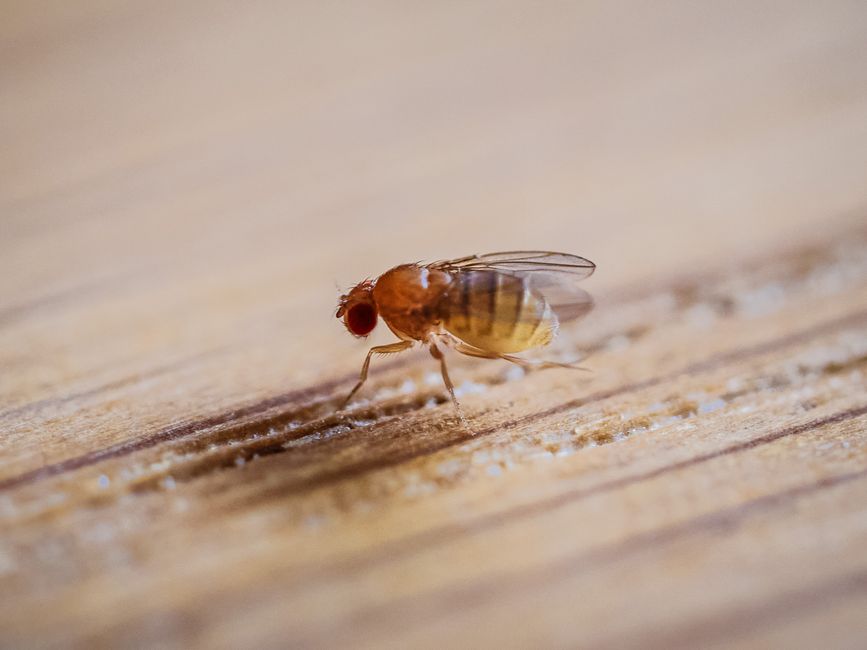
Scientists have successfully charted all 139,255 neurons and their connections in the brain of the fruit fly, Drosophila melanogaster.
PENN Explainer
Hear this story explained in 90 seconds.
In a significant milestone for neuroscience, researchers have completed the first full map of a complex brain. The subject of this study was the fruit fly, known scientifically as Drosophila melanogaster. This tiny insect is one of the most studied organisms in biological research due to its relatively simple yet functional nervous system. By mapping its entire brain, scientists have gained unprecedented insight into how neural circuits process information. The project involved identifying and documenting every single one of the 139,255 neurons within the fly's brain. These neurons are linked by millions of individual connections, forming a dense and intricate network. Researchers utilized advanced imaging technology to capture the structure of these cells in high detail. This effort represents a major leap forward in our understanding of how brains are organized at a cellular level. The data generated from this project is expected to serve as a foundational resource for future studies in biology and medicine. Understanding the connectivity of a brain is essential for deciphering how complex behaviors are generated. While the fruit fly brain is much smaller than a human brain, the principles of neural connectivity often share common features across species. Scientists hope that this map will help them better understand how neural pathways influence movement, memory, and sensory perception. The completion of this map is the result of years of collaborative work by international research teams. By making this data available to the scientific community, the researchers aim to accelerate discoveries in brain health and neurological conditions. This achievement highlights the power of modern technology to solve long-standing mysteries in the natural world. As researchers continue to analyze the map, they anticipate uncovering new details about how the brain functions under different conditions. This work marks a historic moment in the field of connectomics, the study of neural connections. Future research will likely build upon this map to explore how these circuits change over time or in response to environmental factors.
Ask the Author
Subscribers can ask the journalist a question about this story. Subscribe to ask.
Nota neutralitatis
Auto-harvested from global news wires and presented neutrally by PENN.
to vote
Comments
No comments yet — be the first to share your thoughts.