Scientists Discover Over 1,100 New Marine Species Across Global Deep-Sea Expeditions
Global ocean exploration initiative reveals hundreds of previously unknown creatures dwelling at extreme ocean depths.
PENN Explainer
Hear this story explained in 90 seconds.
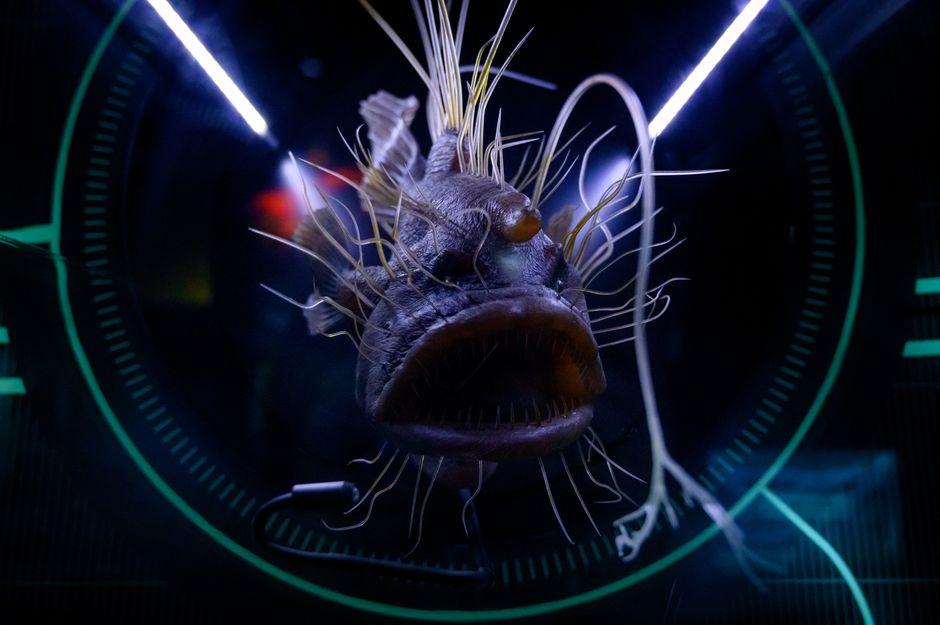
An international alliance of marine scientists operating under the global Ocean Census initiative has confirmed the discovery of more than 1,100 new marine species. The scientific project involves researchers from over 400 academic institutions worldwide who are collaborating to map and catalog uncharted marine life. Specimens were documented at depths plunging down to 6,575 meters across diverse ocean basins. The findings represent one of the largest coordinated efforts to catalog deep-sea biodiversity in modern scientific history.
Among the newly documented creatures are several remarkable species adapted to extreme underwater environments. Researchers identified a new species of deep-sea ghost shark, as well as an unusual symbiotic bristle worm that lives within a glass sponge structure. Other notable finds include a newly identified guitar shark discovered at intermediate depths off the coasts of Mozambique and Tanzania, and a unique octocoral documented in the waters surrounding the Maldives. Scientists also described a predatory marine snail, Turridrupa magnifica, found in the South Pacific that uses specialized venomous appendages to capture prey.
Oliver Steeds, Director of the Ocean Census, noted that large-scale exploration is vital for understanding fragile aquatic ecosystems. Marine biologists estimate that between 700,000 and 1 million multicellular species inhabit Earth's oceans, but roughly two-thirds remain unclassified by science. The initiative aims to accelerate the pace of taxonomy by combining modern submersibles, autonomous diving robots, high-resolution optical imaging, and DNA barcoding to analyze organisms much faster than traditional museum methods.
Taxonomic work has historically been a slow, methodical process that can take years for a single specimen to be officially named. To speed up classifications, the program organized specialized Discovery Workshops, bringing together taxonomists, geneticists, and ecologists in collaborative settings. For example, related deep-sea research conducted with the Natural History Museum and the University of Lodz in Poland recently described dozens of new amphipod crustaceans collected from the Clarion-Clipperton Zone in the Pacific Ocean. Similar multi-institution efforts are taking place across Europe, the Americas, and Asia to address the massive backlog of unidentified ocean life.
The broader scientific community emphasizes that understanding deep-sea biodiversity is essential as industrial interest in deep-ocean mining expands. Vast stretches of the seabed contain valuable polymetallic nodules that hold nickel, cobalt, and copper, which are sought after for renewable energy infrastructure. However, conservationists and marine researchers warn that seafloor extraction could disrupt delicate ecosystems before scientists even know what lives there. Detailed biological mapping provides baseline data needed by international regulators, including the United Nations, to evaluate environmental impacts.
In addition to ecological conservation, marine discoveries frequently yield benefits for medical and biotechnology research. Several species identified during these surveys produce complex biochemical compounds used for predation or defense in dark, high-pressure environments. Researchers point out that peptides isolated from venomous gastropods have previously led to breakthroughs in chronic pain relief and cancer therapeutics. Identifying these chemical mechanisms offers pharmaceutical researchers novel molecular templates that cannot easily be synthesized without natural biological blueprints.
To ensure widespread access to the findings, the Ocean Census network has partnered with the United Nations Environment Programme World Conservation Monitoring Centre to deploy an open-access biodiversity database. This digital platform allows researchers, policymakers, and the public to examine 3D scans, high-definition photography, and genomic sequences of the newly named species. Project leaders emphasize that making raw taxonomic data globally accessible will empower scientists from developing coastal nations to participate directly in deep-water stewardship.
Expedition teams deployed a variety of cutting-edge robotic tools to collect fragile biological samples without damaging their delicate structures. Remotely operated vehicles such as SuBastian and crewed deep-diving submersibles were equipped with soft robotic grippers and specialized suction chambers. These technologies allowed marine biologists to retrieve soft-bodied invertebrates from abyssal plains and undersea seamounts in pristine condition for laboratory sequencing. The integration of high-resolution sensors also enabled scientists to observe animal behaviors in their natural habitats miles beneath the surface.
Ocean Census officials estimate that systematically documenting 100,000 new marine species over the coming decade will require roughly one billion dollars in combined global funding. The project continues to invite academic institutions, private philanthropies, and government research bodies to sponsor coordinated survey voyages across unexplored marine trenches and ridges. Steeds stated that the ultimate success of the program will be measured not just by the count of new species, but by how effectively the resulting data protects oceanic ecosystems against climate change and environmental degradation.
With vast tracts of the planet's seafloor still unmapped, marine scientists view these 1,100 discoveries as just the first step in unveiling Earth's final frontier. Further expeditions are scheduled throughout the coming year across the Atlantic, Indian, and Pacific Oceans. Researchers believe that continuing to discover and catalog these resilient organisms will deepen humanity's understanding of how life survives under extreme conditions and provide critical knowledge for safeguarding the global marine environment.
Ask the Author
Subscribers can ask the journalist a question about this story. Subscribe to ask.
中立性说明
Auto-harvested from global news wires and presented neutrally by PENN.
to vote
Comments
No comments yet — be the first to share your thoughts.
Related stories in Science & Technology

Engineers Propose New Warp Drive Propulsion Concept
2026-09-25
Researchers Unveil Genetic Foundations of Fibromyalgia in Landmark Study
2026-09-25