Scientists Discover Tiny Plasma Whirlpools on the Sun's Surface
New observations reveal small-scale solar activity that could help explain the Sun's complex magnetic behavior.
PENN Explainer
Hear this story explained in 90 seconds.
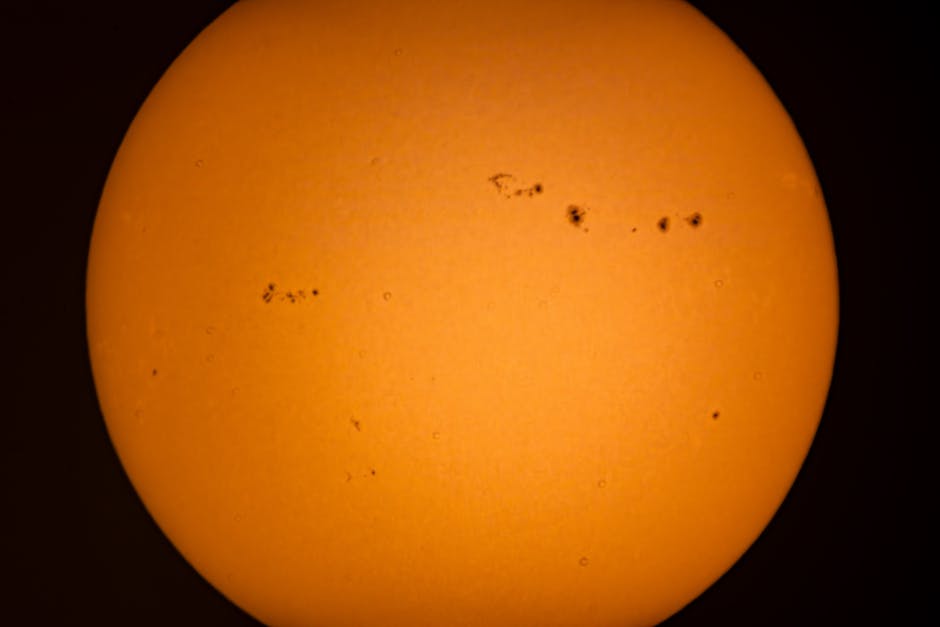
Researchers have recently identified incredibly small plasma whirlpools swirling across the surface of the Sun. These features, which measure only about 20 kilometers in width, were observed by scientists studying the solar atmosphere. This discovery provides a new look at the turbulent and energetic nature of our closest star. Understanding these tiny structures is a significant step for solar physics. The findings were reported by researchers who monitor the Sun's constant activity. These whirlpools are part of the complex magnetic environment that defines the solar surface. By studying such small-scale events, experts hope to better understand how energy moves through the Sun's outer layers. This research helps clarify how the Sun maintains its intense heat and magnetic fields. The discovery was made possible by advanced imaging technology that allows for higher resolution than ever before. Scientists have long known that the Sun is a dynamic and changing environment. However, seeing these specific plasma movements at such a small scale is a new development. This work adds to the growing body of knowledge regarding solar weather and its potential impact on space. The study of these whirlpools is expected to continue as more data is collected from solar observatories. Future observations will aim to determine how common these features are across the entire solar disk. This information is vital for building more accurate models of solar behavior. The scientific community continues to prioritize these observations to improve our understanding of the Sun's influence on the solar system.
Ask the Author
Subscribers can ask the journalist a question about this story. Subscribe to ask.
Neutrality note
Auto-harvested from global news wires and presented neutrally by PENN.
to vote
Comments
No comments yet — be the first to share your thoughts.
Author
Planet Earth News Science & Technology DeskCovering scientific discovery and technological innovation — from astronomy, biology, chemistry, physics, and earth sciences to artificial intelligence, cybersecurity, consumer electronics, and digital infrastructure — with clear, accurate, neutral reporting on peer-reviewed findings, companies, products, and policy debates, and their implications for humanity.
View all articles by Desk →