
South Korea Completes Independent Military Surveillance Network with Fifth Satellite Launch
The successful deployment of the final '425 Project' satellite marks a significant shift in Seoul's autonomous intelligence-gathering capabilities.
PENN Explainer
Hear this story explained in 90 seconds.
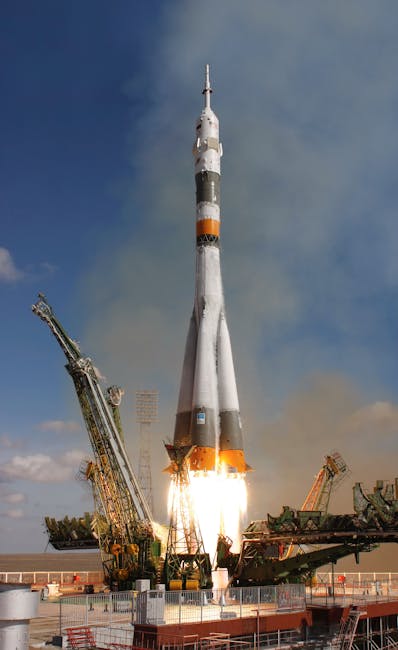
South Korea successfully launched its fifth military reconnaissance satellite from the Cape Canaveral Space Force Station in Florida this past weekend. This mission marks the final stage of the country’s multiyear initiative known as the 425 Project. The project was designed to establish an independent surveillance network capable of monitoring North Korea without relying on external imagery. The South Korean Defense Ministry confirmed the satellite reached its targeted orbit shortly after liftoff.
The newly deployed satellite is equipped with advanced synthetic aperture radar technology. This sensor allows the military to capture high-resolution images regardless of weather conditions or time of day. By utilizing radar rather than traditional optical cameras, the system can maintain constant observation of the Korean Peninsula. This capability is considered a vital component of Seoul's broader defense strategy.
With all five satellites now in orbit, the South Korean military has achieved a fully operational cluster for intelligence gathering. Officials stated that this constellation will allow the military to detect potential threats from North Korea more quickly and accurately. The integration of these assets into the national defense system is expected to significantly reduce the time required to process critical security data. The first three satellites are already fully integrated, while the fourth is currently undergoing final performance assessments.
This development represents a major shift in how South Korea manages its national security. For many years, the country relied heavily on satellite imagery provided by the United States to monitor regional activities. By developing its own autonomous network, Seoul aims to increase its strategic independence in the face of rising regional tensions. The completion of the 425 Project is a central pillar of this effort to bolster domestic defense infrastructure.
The launch program has been a collaborative effort involving both domestic aerospace development and international launch services. While the satellites were developed domestically, the military utilized SpaceX Falcon 9 rockets to place them into orbit. This partnership has allowed South Korea to maintain a consistent launch schedule over the past two years. The successful deployment of the fifth unit concludes the current phase of this procurement strategy.
Beyond the 425 Project, South Korea is also investing in other space-based defense technologies. The state-run Agency for Defense Development is currently testing a new solid-fuel rocket designed to launch small reconnaissance satellites on short notice. This launcher is intended to provide the military with the ability to replace or augment its satellite network during emergencies. Three test flights have already been conducted off the coast of Jeju Island to verify the system's performance.
These advancements in space technology are part of a larger national focus on aerospace capabilities. President Yoon Suk Yeol recently announced the creation of the Korea Aerospace Administration to centralize the country's space exploration efforts. The government has committed to significant long-term funding to support both military and civilian space projects. This includes ambitious goals such as landing a probe on the moon by 2032 and reaching Mars by 2045.
The regional security environment remains a primary driver for these investments. North Korea has also been actively attempting to place its own military spy satellites into orbit, though several of its recent efforts have resulted in failure. South Korean intelligence authorities continue to monitor these activities closely to assess the potential impact on regional stability. The ability to maintain a persistent watch over the border is viewed by Seoul as a necessary measure for national defense.
Looking ahead, the South Korean government plans to expand its surveillance capabilities even further. Future initiatives include the development of a synthetic aperture radar satellite constellation and additional electro-optical satellites. These systems will work alongside the existing 425 Project cluster to provide a comprehensive view of the security landscape. The focus will now shift toward optimizing the data flow between these space assets and ground-based command centers.
As these technologies become fully operational, the military will refine its procedures for rapid response. The goal is to ensure that intelligence gathered from space can be immediately utilized by tactical units on the ground. This integration is expected to enhance the effectiveness of the country's existing defense systems, including its long-range monitoring and response frameworks. The successful completion of the current satellite network serves as the foundation for these future operational improvements.
Ask the Author
Subscribers can ask the journalist a question about this story. Subscribe to ask.
Neutrality note
Auto-harvested from global news wires and presented neutrally by PENN.
to vote
Comments
No comments yet — be the first to share your thoughts.


