Politicsen
United States and Peru Hold Bilateral Talks in Lima to Strengthen Strategic and Trade Ties
High-level diplomatic meetings between Secretary of State Marco Rubio and Peruvian President Keiko Fujimori focus on regional cooperation, economic policy, and security.
PENN Explainer
Hear this story explained in 90 seconds.
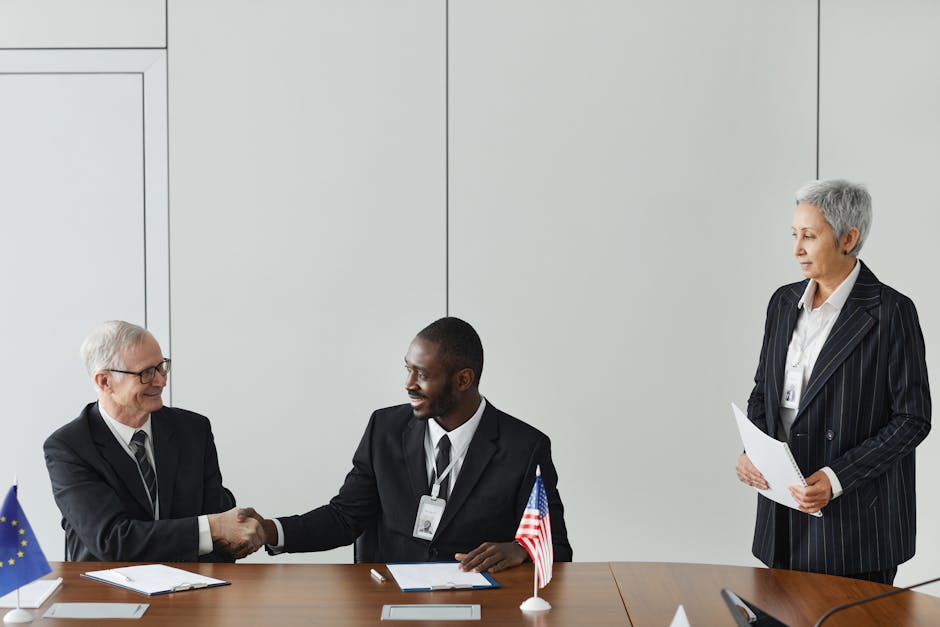
United States Secretary of State Marco Rubio met with Peruvian President Keiko Fujimori at the government palace in Lima, Peru, to conduct extensive talks on bilateral relations, economic cooperation, and hemispheric security. The high-level conference served as a key stop in a broader diplomatic itinerary across Latin America aimed at reaffirming institutional ties. Both delegations addressed critical policy topics ranging from commercial investment frameworks to joint border security measures.
During a joint news conference held inside the presidential palace, Fujimori expressed appreciation for the continued partnership between the two nations, highlighting Peru's desire to expand foreign direct investment. She emphasized that Peru remains dedicated to maintaining an open market economy and creating favorable conditions for international trade. Peruvian officials also noted that sustained cooperation with Washington will help support ongoing infrastructure modernizations across the country.
Secretary Rubio highlighted the long-standing diplomatic relationship between Washington and Lima, underscoring mutual interests in regional stability and lawful commerce. He reiterated the United States government's intent to partner closely with regional leaders who prioritize rule of law, anti-corruption reforms, and investment protection. Rubio emphasized that collaborative agreements on trade and law enforcement benefit working citizens across both continents.
Security cooperation featured prominently on the bilateral agenda. Officials from both delegations discussed comprehensive strategies to counteract transnational organized crime, illicit drug distribution networks, and illegal cross-border commerce. Washington and Lima pledged to enhance intelligence sharing and provide specialized training programs for judicial and border enforcement personnel.
Economic discussions centered on supply chain resilience and critical minerals. Peru is one of the world's leading producers of copper and silver, minerals that play a vital role in global high-tech and industrial manufacturing. Delegates reviewed measures to ensure smooth logistical pipelines while fostering transparent environmental and regulatory practices for corporate investors operating in the Andes region.
The bilateral meeting also drew notice from regional political observers, who pointed out that domestic political environments across South America continue to face significant public polarization. Critics and opposition lawmakers in Lima voiced concerns about the diplomatic direction, arguing that economic policies must directly alleviate poverty and benefit domestic labor rather than primarily focusing on foreign trade pacts. Administration officials defended the summit as an essential platform to secure investments that fund public services.
Freedom of assembly and the right of civic groups to express their viewpoints were visible outside the government quarter, where civil society organizations and labor representatives held demonstrations during the visit. Protesters called on the government to protect social welfare programs and ensure fair working conditions. Government representatives noted that peaceful public demonstrations are protected under Peru's constitutional framework.
Regional diplomatic observers underscored the significance of the meeting in the wider context of Latin American geopolitics. With several countries in the hemisphere navigating shifting political coalitions, official bilateral summits provide critical predictability for international business contracts and cross-border security operations. Officials from both capitals stated that working groups will meet in the coming months to review the implementation of agreed-upon objectives.
Following the bilateral working sessions in Lima, technical teams signed a joint declaration outlining specific checkpoints for future technical assistance programs. The framework covers bilateral customs harmonization, anti-money laundering assistance, and technical workshops for Peruvian port authorities. Officials noted that these initiatives are designed to improve trade processing efficiency at Pacific maritime terminals.
The diplomatic engagement concluded with a ceremonial luncheon hosted by the Peruvian presidency. Delegates from both nations reaffirmed their shared commitment to maintaining regular diplomatic channels and continuing constructive dialogue on political, security, and economic matters heading into the upcoming international multilateral conferences.
Ask the Author
Subscribers can ask the journalist a question about this story. Subscribe to ask.
নিরপেক্ষতা নোট
Auto-harvested from global news wires and presented neutrally by PENN.
to vote
Comments
No comments yet — be the first to share your thoughts.