U.S. Supreme Court Expands Presidential Power by Overturning Century-Old Precedent
A 6-3 ruling grants the president greater authority to fire heads of independent agencies, overturning the 1935 Humphrey's Executor decision.
PENN Explainer
Hear this story explained in 90 seconds.
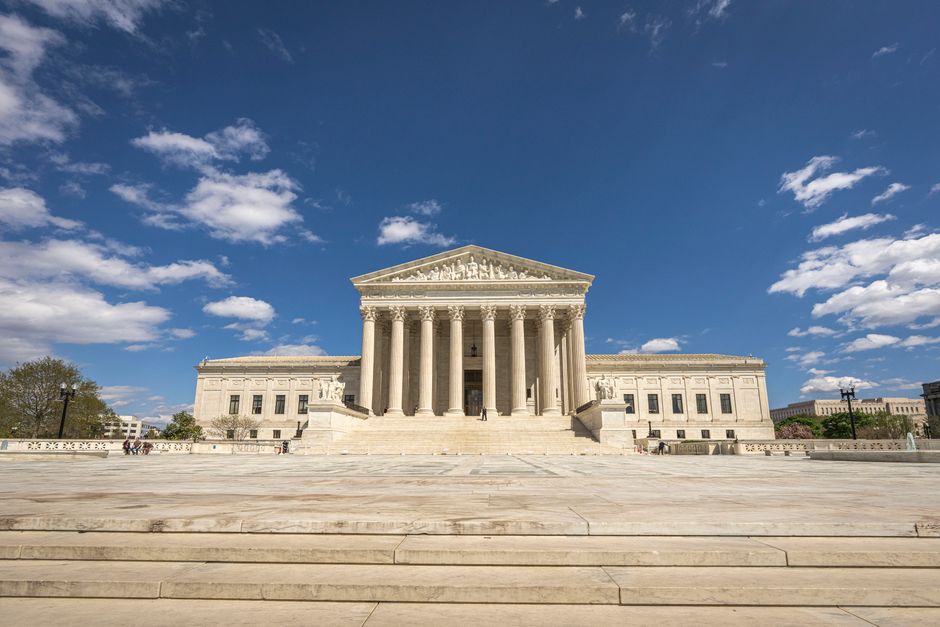
The United States Supreme Court issued a major ruling that changes how the president controls the federal government. In a 6-3 decision, the court expanded the president's power to fire the heads of independent regulatory agencies. This ruling is considered a significant shift in constitutional law because it overturns a legal rule that has been in place for nearly a century. The decision was delivered during the final days of the court's 2025-2026 term.
The case centered on the Federal Trade Commission (FTC) and the president's ability to remove its leaders. President Donald Trump argued that the Constitution gives the president the authority to manage executive branch officials directly. The court's majority agreed, stating that the president must have the power to remove agency heads to ensure the government remains accountable to the public. This ruling gives the White House much more influence over agencies that were once considered independent.
Chief Justice John Roberts wrote the majority opinion for the court. He argued that the Constitution requires the president to retain effective control over the executive branch. If the president cannot remove officials who lead these agencies, Roberts reasoned, then democratic accountability is weakened. To reach this conclusion, the court had to overturn a famous 1935 case known as Humphrey's Executor v. United States.
For over 90 years, the Humphrey's Executor ruling protected members of independent agencies from being fired without a specific legal cause. This protection was designed to let agencies like the FTC or the Securities and Exchange Commission (SEC) work without political pressure. The new ruling removes those protections for many agency heads, allowing the president to dismiss them at will. Legal experts say this is one of the most important constitutional moves in several decades.
This decision is a major endorsement of the "unitary executive" theory. This legal theory suggests that all executive authority in the government belongs to the president alone. Supporters of this idea believe it makes the government more efficient and responsive to the voters. However, critics worry that it removes important checks and balances that prevent the president from having too much power.
The impact of this ruling will be felt across many different parts of the government. It could change how the Federal Communications Commission (FCC) and the National Labor Relations Board (NLRB) operate. These groups have traditionally stayed somewhat separate from the political goals of the White House. Now, their leaders may be more closely aligned with the president's specific policies to avoid being replaced.
The three liberal justices on the court strongly disagreed with the majority's decision. Justice Sonia Sotomayor wrote a forceful dissent, which was joined by Justice Elena Kagan and Justice Ketanji Brown Jackson. They argued that the Constitution's framers never intended for the president to have such sweeping authority. The dissenters believe that some government institutions must remain independent to function fairly and effectively.
Justice Sonia Sotomayor warned that the ruling grants the president "unbridled authority" over institutions that were meant to be non-partisan. She expressed concern that this could lead to a system of total executive control. The dissent argued that the court was ignoring decades of stable legal history. They believe the old rules helped protect the public from political interference in technical or economic decisions.
Despite this broad expansion of power, the court did set some limits in a related case. In a separate 5-4 vote, the justices blocked an attempt by President Donald Trump to remove a governor from the Federal Reserve. This shows that the court still recognizes the unique need for independence at the nation's central bank. The justices emphasized that the Federal Reserve's role in the economy requires it to stay separate from daily politics.
President Donald Trump celebrated the main ruling on social media shortly after it was announced. He described the decision as a "BIG WIN" for the presidency and for the country. He believes the ruling will help his administration implement its agenda more quickly by removing bureaucratic obstacles. The president has long argued that independent agencies often slow down the work of the executive branch.
This landmark ruling was part of a series of high-profile decisions made at the end of June 2026. During the same week, the court also ruled on birthright citizenship and state laws regarding mail-in ballots. These cases have made the 2025-2026 term one of the most consequential in recent history. The rulings have sparked intense debate among legal scholars and lawmakers across the country.
The long-term effects of overturning Humphrey's Executor will take years to fully understand. Future presidents will now have the power to reshape the leadership of the federal bureaucracy much faster than before. This could lead to more frequent changes in how federal regulations are enforced when a new administration takes office. For now, the ruling stands as a dramatic shift in the balance of power within the United States government.
Ask the Author
Subscribers can ask the journalist a question about this story. Subscribe to ask.
Neutrality note
Auto-harvested from global news wires and presented neutrally by PENN.
to vote
Comments
No comments yet — be the first to share your thoughts.
Related stories in Legal & Justice

Ukrainian State Bank Seeks Enforcement of $1.1 Billion Award Against Russia
2026-10-02
Huawei Faces Historic Criminal Trial in New York Over Racketeering Allegations
2026-10-02