China's FAST Radio Telescope Discovers Two Massive Starless Hydrogen Clouds Near Whirlpool Galaxy
Astronomers using the Five-hundred-meter Aperture Spherical radio Telescope identify mysterious intergalactic clouds devoid of visible stars.
PENN Explainer
Hear this story explained in 90 seconds.
Astronomers utilizing the Five-hundred-meter Aperture Spherical radio Telescope, commonly known as FAST, have discovered two massive, mysterious hydrogen clouds floating near the Whirlpool galaxy. The research reveals that these vast intergalactic gas formations contain virtually no visible stars. The finding provides researchers with rare, direct insight into how primordial matter behaves in cosmic space outside of traditional galactic structures.
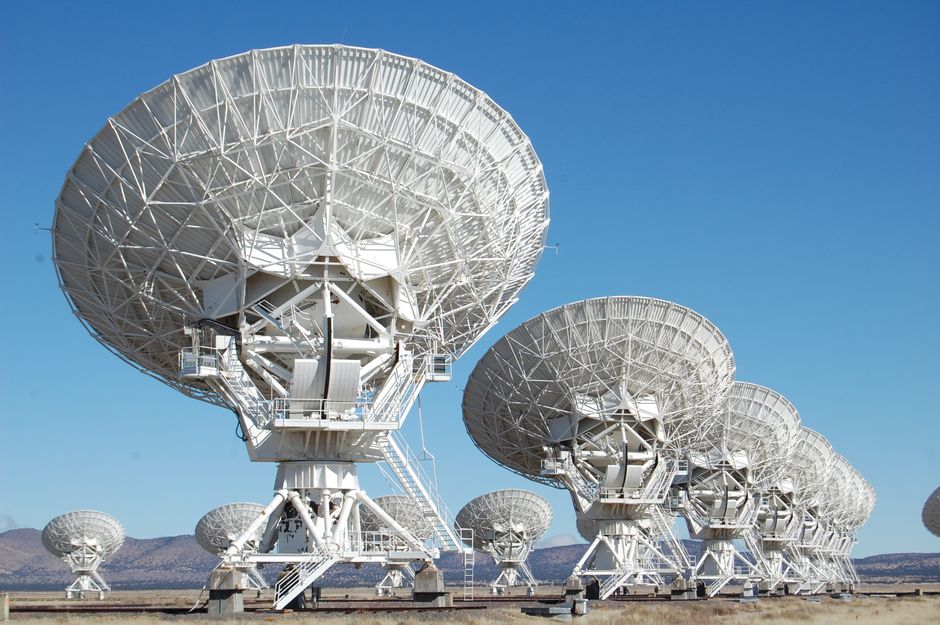
Located in Guizhou Province in southwestern China, the FAST observatory is currently the world's largest single-dish radio telescope. Its massive dish spans 500 meters across a natural karst basin, providing unprecedented sensitivity for detecting faint emissions from neutral hydrogen gas across deep space. This unique capability allowed astronomers to pinpoint the faint radio signals emitted by the two newly discovered structures, which had eluded previous observational surveys.
The Whirlpool galaxy, formally cataloged as Messier 51 or NGC 5194, is a well-studied spiral galaxy situated roughly 23 million light-years from Earth in the constellation Canes Venatici. While astronomers have mapped its sweeping spiral arms and interactions with neighboring galaxy NGC 5195 for decades, the broader environment surrounding the pair continues to hold unexpected features. The two newly detected gas clouds reside in the outer gravitational vicinity of this dynamic galactic system.
Observations show that each cloud consists primarily of neutral atomic hydrogen, the most abundant element in the universe. In typical galactic settings, cold hydrogen gas gradually collapses under its own gravity to form dense molecular nurseries that give birth to new stars. However, complementary optical observations of these specific clouds confirmed an absence of active stellar nurseries or visible mature stars throughout their expanses.
The absence of starlight makes these gaseous formations an intriguing puzzle for astrophysicists studying cosmic evolution. Researchers are investigating whether the gas represents remnant debris stripped from the Whirlpool system during gravitational interactions with companion galaxies, or if it represents an untamed reservoir of primordial gas that never underwent star formation. Because gas stripping often occurs during close galactic encounters, tidal forces remain a leading hypothesis.
If tidal stripping produced the clouds, their survival in the intergalactic medium offers valuable measurements of ambient radiation and pressure. High-energy radiation from nearby galaxies often ionizes and disperses isolated neutral gas clouds over millions of years. The persistence of these neutral hydrogen reserves suggests that local conditions may shield or stabilize the gas against external disruption.
Conversely, if the gas clouds are primordial structures that never formed stars, they could represent surviving pockets of cosmic dawn material. Studying such pristine gas reservoirs allows cosmologists to test theoretical models of how baryonic matter clustered in the early universe before massive stellar feedback transformed intergalactic space. Such objects are extremely rare and notoriously difficult to identify without ultra-sensitive radio instruments.
Astronomers plan to conduct follow-up observations to measure the precise kinematics, density, and temperature profiles of both clouds. High-resolution mapping of their internal velocities will help determine whether the clouds are gravitationally bound structures or dispersing over time into the broader intergalactic medium. Researchers also hope to measure potential trace concentrations of heavier elements, which could decisively indicate whether the gas was previously processed inside stars.
The discovery underscores the expanding role of giant radio facilities in reshaping our understanding of the universe. By mapping diffuse gas that emits no visible light, radio astronomy uncovers invisible structures that link galaxies to the broader cosmic web. As FAST continues its wide-area sky surveys, scientists anticipate identifying additional dark hydrogen structures throughout nearby regions of the cosmos.
The international astronomical community has highlighted the importance of open collaborative data sharing in confirming the nature of such discoveries. Coordinated efforts between radio observatories and space-based optical and ultraviolet telescopes will be essential to unraveling the origins of these dark clouds. For now, the two silent hydrogen formations near the Whirlpool galaxy offer an intriguing window into the unseen mechanics of cosmic evolution.
Ask the Author
Subscribers can ask the journalist a question about this story. Subscribe to ask.
तटस्थता टिप्पणी
Auto-harvested from global news wires and presented neutrally by PENN.
to vote
Comments
No comments yet — be the first to share your thoughts.
Related stories in Science & Technology

MIT Researchers Successfully Transform Bacteria Into Living Transistors
2026-09-26
Scientists Discover Mysterious Light-Absorbing Substance in Venusian Clouds
2026-09-26