Community of the Day: Cape Coast, Ghana
Discover the vibrant Fante heartland, renowned for monumental coastal history and Ghana's premier educational institutions.
PENN Explainer
Hear this story explained in 90 seconds.
Cape Coast, Ghana
Perched along the Gulf of Guinea in West Africa, Cape Coast serves as the capital of Ghana's Central Region and stands as an enduring symbol of history, resilience, and education. Known traditionally as Oguaa, this historic port town pairs deeply moving heritage sites with bustling coastal livelihoods, academic prowess, and celebrated cultural festivals.
- Origins as Oguaa and Fetu Kingdom: Long before colonial fortifications appeared along the coastline, the settlement was established as an indigenous trading community named Oguaa. It flourished as a major market center within the ancient Fetu Kingdom, an early Guan polity that dominated the trade routes just inland from the Atlantic Ocean. Today, the local community remains part of the traditional Oguaa state, preserving indigenous chieftaincy and centuries-old Akan heritage.
- European Struggles and Name Origins: In the late 15th century, Portuguese traders initiated maritime commerce with local populations and designated the rocky point Cabo Corso, meaning 'short cape.' Over successive centuries, rival European powers—including the Swedes, Danes, Dutch, and British—battled fiercely for control over this strategic shoreline. The British eventually solidified their dominance in the region, anglicizing the Portuguese nautical title into the modern name Cape Coast.
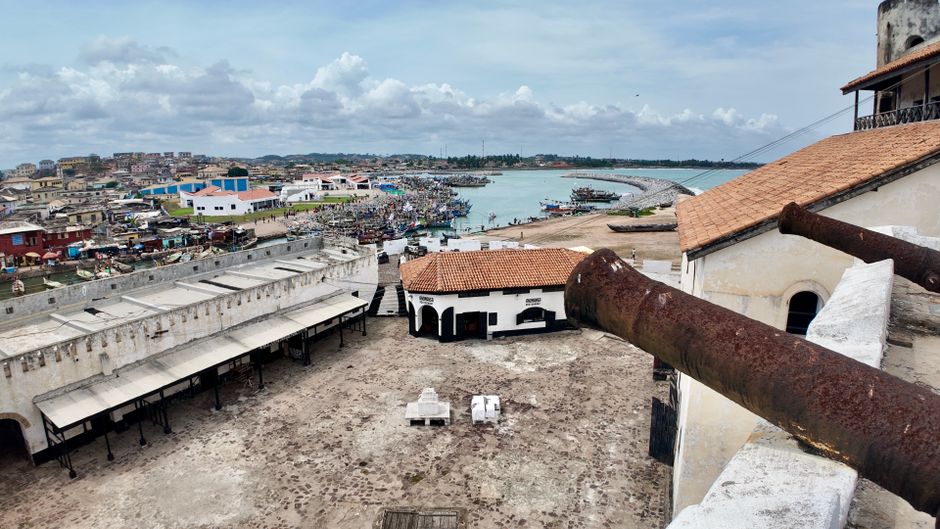
- The Transatlantic History of Cape Coast Castle: Cape Coast Castle looms over the ocean as a UNESCO World Heritage site and an international monument to the transatlantic slave trade. The fortress features harrowing underground dungeons and the infamous 'Door of No Return,' through which millions of enslaved Africans were forcibly shipped to the Americas. Today, the complex houses an acclaimed West African museum and stands as a site of profound remembrance and pilgrimage for travelers from across the global African diaspora.
- Former Capital of the Gold Coast: During the height of colonial administration, Cape Coast served as the formal seat of the British Gold Coast colony. Its strategic harbor, administrative buildings, and bustling merchant quarters made it the political and financial epicentre of the territory. However, in 1877, the British transferred the official capital eastward to Accra, transforming Cape Coast from an administrative hub into an intellectual and cultural refuge.
- The Academic Capital of Ghana: Cape Coast is celebrated across Ghana as the nation's premier educational hub, affectionately dubbed the 'Athens of West Africa.' The town is home to the renowned University of Cape Coast, Cape Coast Technical University, and several of the country's oldest and most prestigious secondary schools, such as St. Augustine's College and Mfantsipim School. Students travel from every region of Ghana and neighboring West African countries to study within its historic academic institutions.
- The Fante People and Local Language: The primary inhabitants of Cape Coast are the Fante, one of the principal subgroups of the Akan ethnic group. The local dialect of Fante is spoken across bustling market squares, fishing wharves, and residential neighborhoods alongside English. The Fante people are renowned for their maritime traditions, rich folklore, matrilineal kinship systems, and the preservation of coastal Akan identity.
- The Vibrant Fetu Afahye Festival: Every September, the city comes alive with Fetu Afahye, the preeminent cultural festival of the Oguaa Traditional Area. The multi-day celebration honors local deities, commemorates historical victories, and provides a space for community cleansing and reunion. Festivities feature elaborate processions of traditional chiefs adorned in resplendent kente cloth, vibrant asafo militia companies, and infectious drum rhythms that attract thousands of domestic and foreign visitors.
- Artisanal Fishing Economy: The waters of the Gulf of Guinea form the economic heartbeat for local fishermen who launch fleets of hand-carved, colorful wooden pirogues into the surf every dawn. The coastline bustling below the castle is filled with trade as fresh hauls of red snapper, mackerel, lobster, and shrimp are hauled ashore and sold to local fishmongers. Traditional smoking and drying techniques are widely used to prepare fish for distribution to markets far into Ghana's interior.
- Distinctive Coastal Cuisine: Cape Coast boasts a vibrant culinary scene anchored by fresh Atlantic seafood and hearty Ghanaian staples. Local eateries and seaside chop bars serve traditional dishes like spicy pepper soups, freshly pounded fufu, steamed banku paired with grilled fish and shito, and renowned Ghanaian jollof rice. Cassava, plantains, maize, and aromatic spices grown in the surrounding agricultural valleys provide rich flavors central to the daily Fante diet.
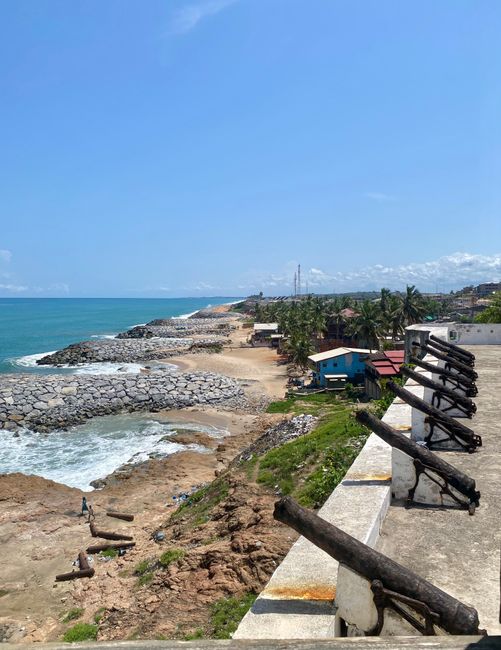
- Tropical Coastal Geography and Nature: Situated on a low, undulating promontory along the central shoreline of Ghana, Cape Coast enjoys a tropical climate shaped by Atlantic sea breezes and lush green hills. Its landscape features picturesque valleys, freshwater streams, and coconut-fringed beaches that buffer the humid maritime air. The city also acts as a primary jumping-off point for eco-travelers heading inland toward the dense, biodiverse rainforests and canopy walkways of Kakum National Park.
Photo Gallery
Ask the Author
Subscribers can ask the journalist a question about this story. Subscribe to ask.
Neutrality note
Community of the Day feature by PENN editorial.
to vote
Comments
No comments yet — be the first to share your thoughts.
Author
Planet Earth News Travel DeskSenior Editor, Planet Earth News Network
View all articles by Desk →