Community of the Day: Hallstatt
The Alpine Salt-Mining Village That Defined an Era
PENN Explainer
Hear this story explained in 90 seconds.
Hallstatt, Austria
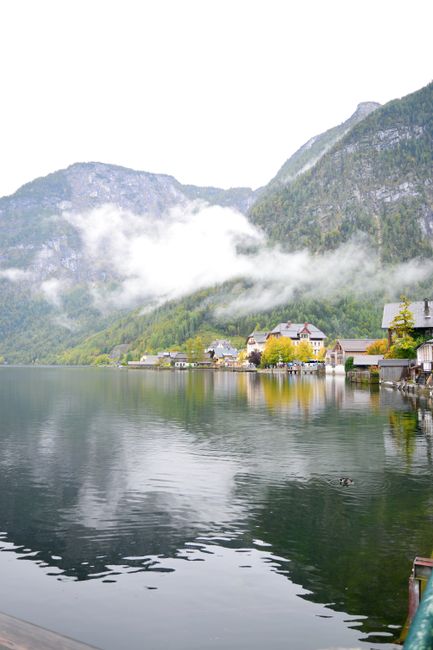
Nestled between the steep slopes of the Dachstein mountains and the glassy waters of the Hallstätter See, Hallstatt is a breathtaking Alpine village that feels frozen in time. Despite its small population of fewer than 800 residents, this community has exerted a global influence for millennia, serving as the namesake for an entire archaeological era and evolving into one of the most photographed locations on Earth.
- Hallstatt is home to the world's oldest salt mine, with evidence of mining activity dating back over 7,000 years to the Neolithic period. The rich salt deposits in the surrounding mountains, known as the Salzberg, provided the community with immense wealth and influence for millennia. Even today, the mine remains operational, though it now serves as a major educational and tourist attraction.
- The town is so historically significant that it gave its name to the "Hallstatt Culture," a major archaeological period of the Early Iron Age in Europe. Excavations in the 19th century revealed a vast cemetery with thousands of graves containing bronze and iron artifacts, jewelry, and pottery. These findings helped historians understand the transition from the Bronze Age to the Iron Age across the continent.
- Due to its dramatic location between steep mountains and the Hallstätter See, the village was remarkably isolated for most of its history. Until the late 19th century, the town could only be reached by boat or via narrow, treacherous mountain trails. The first road was not blasted into the rock until 1890, which helped preserve its unique medieval character and traditional architecture.
- One of the most striking cultural sites in Hallstatt is the Beinhaus, or Bone House, located in St. Michael’s Chapel. Because the local cemetery was so small and could not be expanded due to the rocky terrain, graves were periodically reopened to make room for new burials. The skulls were cleaned, bleached by the sun, and artistically painted with flower motifs and the names of the deceased before being displayed.
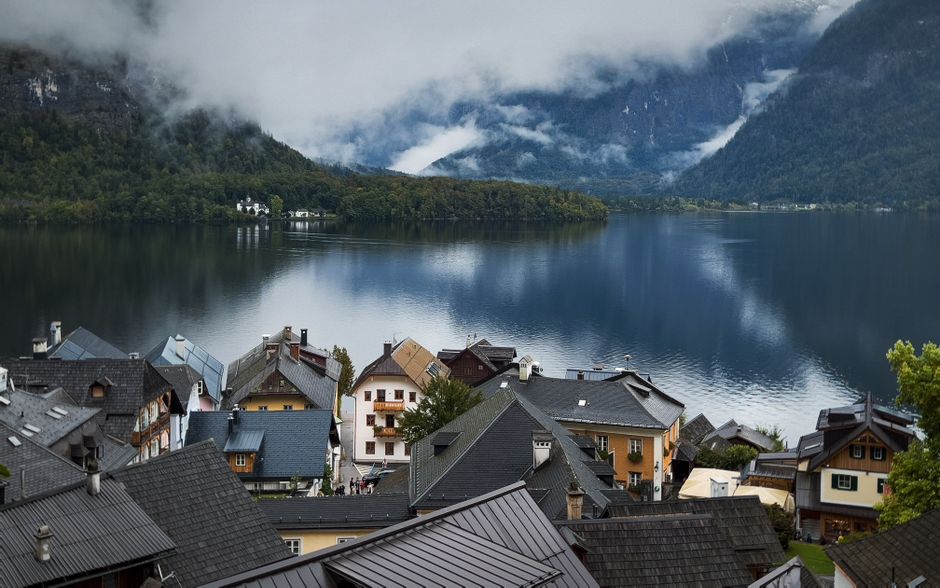
- The architecture of Hallstatt is characterized by its multi-storied timber houses that seem to cling to the mountainside. Because space was so limited, some houses were built with corridors passing through their attics to allow neighbors to move between different levels of the town. A devastating fire in 1750 destroyed much of the village, but several older structures survived and still stand today.
- In recent years, Hallstatt has become a global symbol of overtourism, sometimes hosting up to 30,000 visitors a day despite having a permanent population of fewer than 800 people. This surge was fueled by social media and rumors that the village inspired the kingdom of Arendelle in Disney’s Frozen. The local government has recently implemented measures, such as bus slot systems and temporary privacy screens, to manage the crowds.
- The village's beauty is so renowned that a full-scale replica of Hallstatt was built in Huizhou, Guangdong Province, China. The Chinese version includes a copy of the town square, the iconic church spire, and other architectural details, serving as a luxury residential and tourist development. While initially controversial, the replica has actually increased interest in visiting the original Austrian site.
- The geography of the region was shaped by ancient glacial activity, resulting in the stunning Salzkammergut landscape of 76 lakes and high Alpine peaks. Hallstatt sits at the heart of this UNESCO World Heritage region, which is recognized for both its natural beauty and its long history of human interaction with the environment. The surrounding Dachstein mountains offer dramatic views and year-round outdoor activities.
- Archaeological work in the area is ongoing, with significant discoveries as recently as 2025, including a Roman-era cameo. The Hallstatt Museum houses an extensive collection of these artifacts, ranging from ancient antler picks used for salt mining to sophisticated Iron Age weaponry. These items demonstrate the town's long-standing role as a hub for trade and cultural exchange.
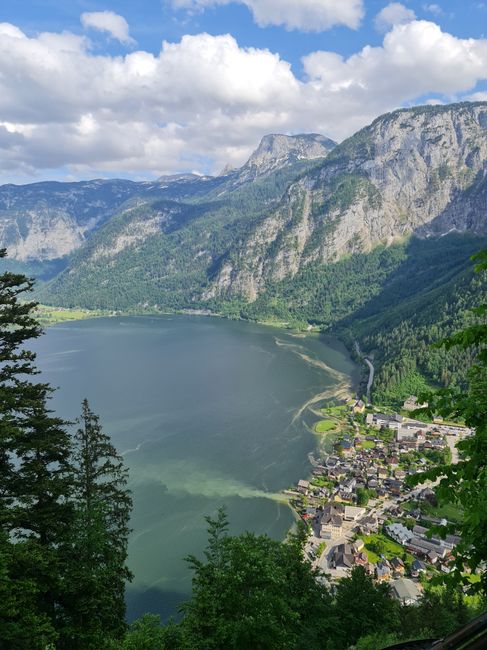
- For modern visitors, the Hallstatt Skywalk offers a "World Heritage View" from a platform suspended 360 meters above the town. This vantage point provides a panoramic look at the lake, the village's rooftops, and the surrounding mountains. It serves as a reminder of the unique verticality of a community that has thrived in a seemingly inhospitable landscape for thousands of years.
Photo Gallery
Ask the Author
Subscribers can ask the journalist a question about this story. Subscribe to ask.
Nota de neutralidade
Community of the Day feature by PENN editorial.
to vote
Comments
No comments yet — be the first to share your thoughts.
Author
Planet Earth News Travel DeskSenior Editor, Planet Earth News Network
View all articles by Desk →