Culinary Tradition of the Day: Turkish Coffee
A timeless ritual of hospitality, conversation, and finely ground artistry
Hear this story explained in 90 seconds.
Turkish Coffee
Turkish coffee is a unique style of coffee preparation that transcends the simple act of drinking caffeine. It is a deeply ingrained cultural ritual characterized by its unfiltered, finely ground beans, its signature foam, and its role as a cornerstone of social interaction and hospitality across the Middle East, the Balkans, and the Caucasus.
History
The history of Turkish coffee dates back to the 16th century. While coffee originated in Ethiopia, the specific method of brewing it as a thick, unfiltered beverage was developed within the Ottoman Empire. According to historical accounts, the tradition was popularized in the court of Sultan Suleiman the Magnificent around 1540, after being introduced by the Ottoman Governor of Yemen, Ozdemir Pasha. The drink quickly became a staple of palace life, managed by professionals known as "Kahveci Usta." As coffeehouses, or "kiraathane," emerged, they became vital social hubs for conversation, literature, and news, though the beverage occasionally faced controversy and even temporary bans by authorities like the Grand Vizier Koprulu in 1656.
Cultural Significance
In 2013, UNESCO recognized "Turkish Coffee Culture and Tradition" as part of the Intangible Cultural Heritage of Humanity. It is a profound symbol of hospitality, friendship, and refinement. The tradition is often summarized by the Turkish proverb, "A cup of coffee has 40 years of sake," meaning that sharing a cup creates a bond of friendship that lasts for decades. It remains central to significant social occasions, including engagement ceremonies and holidays, where the preparation and serving of the coffee are performed with specific etiquette.
How It Works
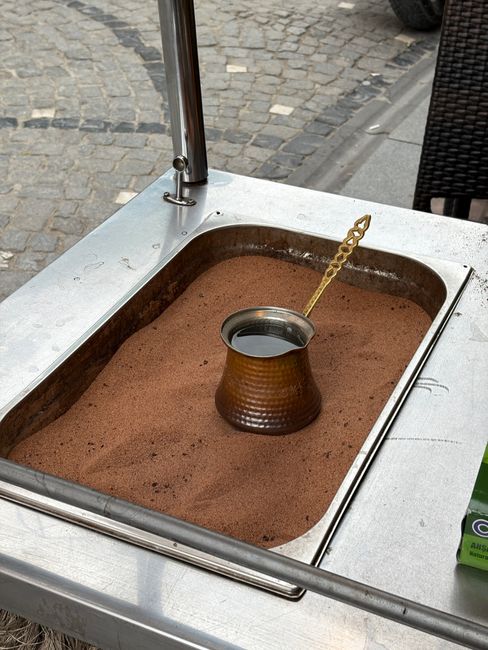
Turkish coffee is prepared using a "cezve," a small, long-handled pot. High-quality Arabica beans are roasted and ground into an extremely fine powder—finer than that used for espresso. The grounds are mixed with water and sugar (if desired) directly in the cezve and heated slowly. The coffee is not filtered; instead, it is brought to a boil until a rich foam forms on the surface. It is served in small cups, allowing the grounds to settle at the bottom before consumption. A common tradition associated with the drink is fortune-telling, where the patterns left by the grounds in the inverted cup are interpreted.
Representative Recipe
Traditional Turkish Coffee
A rich, velvety, and aromatic coffee experience served in a small cup with a signature layer of foam.
Prep time: 2 min | Cook time: 5 min | Total time: 7 min | Yield: 1 serving | Difficulty: Medium
Ingredients
- 1 heaping tbsp (approx. 7-10g) very finely ground coffee (powder consistency)
- 1 small cup (approx. 60-70ml) cold water
- 1 tsp sugar (optional, adjust to taste)
Instructions
- Add the cold water to the cezve using the serving cup to measure the exact amount.
- Add the finely ground coffee and sugar (if using) to the water. Do not stir yet.
- Place the cezve on low heat. Once the coffee begins to soften and sink, stir gently until well combined.
- Continue heating on low without stirring. As the coffee begins to rise and foam forms at the edges, remove the cezve from the heat just before it boils over.
- Carefully spoon the foam into the serving cup.
- Return the cezve to the heat for a few seconds to let the foam rise again, then pour the coffee slowly into the cup, preserving the foam on top.
- Let the coffee rest for 2-3 minutes before serving to allow the grounds to settle at the bottom.
Notes
Turkish coffee is traditionally served with a glass of water to cleanse the palate and often accompanied by a piece of Turkish delight. Do not drink the grounds at the bottom of the cup. Variations include adding a pinch of ground cardamom during the brewing process for a fragrant, spiced flavor.
Subscribers can ask the journalist a question about this story. Subscribe to ask.
Culinary Tradition of the Day feature by the PENN Food & Spirits Desk.
Comments
No comments yet — be the first to share your thoughts.
PENN's lifestyle and culinary department, covering global cuisine — the origins, traditions, and recipes behind the world's dishes, with deep histories and cultural context that go beyond the plate. and PENN's beverage-focused culinary team, dedicated to spirits and drinks — covering distilleries, breweries, and producers worldwide, with histories, tasting notes, professional reviews, and cocktail traditions.
View all articles by Desk →