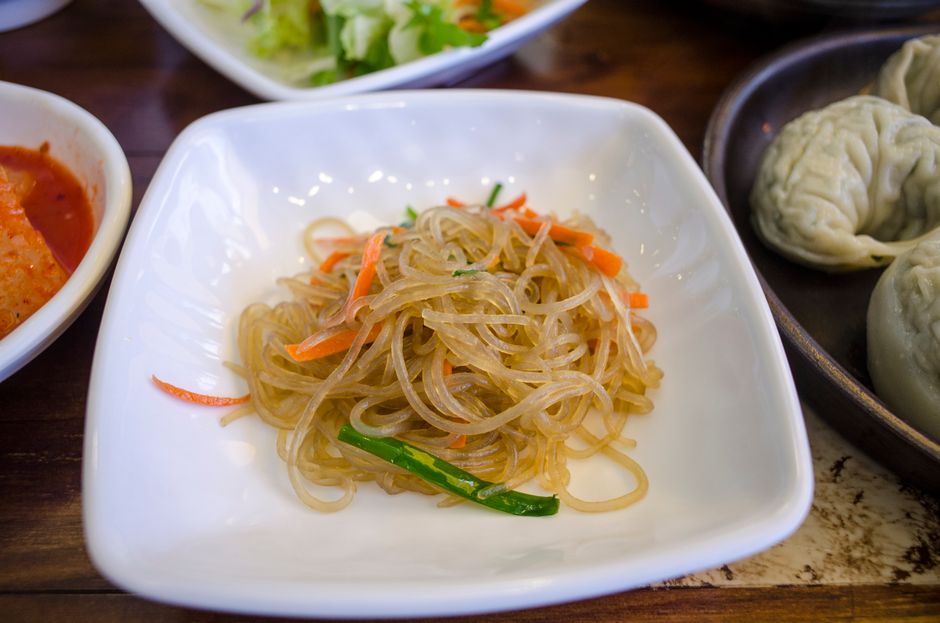
Food of the Day: Japchae
A Royal Vegetable Dish Transformed into a Korean Culinary Icon
Hear this story explained in 90 seconds.
Japchae
Japchae is a beloved Korean dish consisting of stir-fried glass noodles, vibrant vegetables, and often tender strips of beef, all tossed in a savory and slightly sweet soy-sesame sauce. Originating from the royal courts, it has evolved into a staple of Korean celebrations and home cooking.
History
The history of japchae dates back to the early 17th century during the Joseon Dynasty. According to historical records, the dish was first created by a royal liege named Yi Chung for a banquet hosted by King Gwanghaegun. The king enjoyed the dish so much that he promoted Yi Chung to the position of hojo panseo, or Secretary of the Treasury. Notably, the original version of japchae contained no noodles at all; it was a sophisticated stir-fry of thinly shredded vegetables and mushrooms, such as cucumber, daikon radish, and shiitake mushrooms. It was not until the early 20th century, specifically around 1912, that dangmyeon—translucent noodles made from sweet potato starch—were introduced to the recipe, becoming an essential component that defines the dish today.
Cultural Traditions
Japchae holds a significant place in Korean culture, appearing at almost every major celebration, including Chuseok (the harvest moon festival), Seollal (Lunar New Year), weddings, and milestone birthdays. Because of its colorful presentation, it is considered a dish that is meant to be admired visually as much as it is enjoyed for its flavor. While it is a centerpiece for festive gatherings, it is also enjoyed as a comforting everyday meal. The preparation often involves cooking each vegetable separately to preserve its individual texture and color before combining them with the noodles.
Japchae
A classic Korean stir-fry featuring chewy sweet-potato glass noodles, colorful vegetables, and a savory-sweet sesame dressing.
Prep time: 25 min | Cook time: 15 min | Total time: 40 min | Yield: 4 servings | Difficulty: Medium
Ingredients
- 7 oz (200g) Sweet-potato glass noodles (dangmyeon)
- 3.5 oz (100g) Spinach
- 1 Carrot, julienned
- 1 Onion, sliced
- 3.5 oz (100g) Shiitake mushrooms, sliced
- 2 Green onions, chopped
- 2 cloves Garlic, minced
- 4 tbsp Soy sauce
- 2 tbsp Sesame oil
- 1 tbsp Sugar
- 1 tbsp Sesame seeds
- Cooking oil, as needed
Instructions
- Boil a pot of water and cook the sweet-potato glass noodles according to package instructions until chewy and translucent, typically about 6 to 8 minutes. Drain and rinse with cold water.
- Blanch the spinach in boiling water for 30 seconds, then drain, rinse with cold water, and squeeze out excess moisture.
- In a pan over medium heat, sauté the carrots, onions, and mushrooms separately with a small amount of oil until tender.
- In a large mixing bowl or pan, combine the cooked noodles, sautéed vegetables, and spinach.
- Add the soy sauce, sesame oil, sugar, minced garlic, and sesame seeds to the mixture.
- Toss all ingredients together over low heat until well-coated and heated through.
- Garnish with chopped green onions and additional sesame seeds before serving warm or at room temperature.
Notes
For a gluten-free version, use tamari instead of soy sauce. Ensure you do not substitute the sweet-potato noodles with rice noodles or mung-bean vermicelli, as they have different textures and will not hold up to the stir-frying process.
Subscribers can ask the journalist a question about this story. Subscribe to ask.
Food of the Day feature with recipe by the PENN Food & Spirits Desk.
Comments
No comments yet — be the first to share your thoughts.
PENN's lifestyle and culinary department, covering global cuisine — the origins, traditions, and recipes behind the world's dishes, with deep histories and cultural context that go beyond the plate. and PENN's beverage-focused culinary team, dedicated to spirits and drinks — covering distilleries, breweries, and producers worldwide, with histories, tasting notes, professional reviews, and cocktail traditions.
View all articles by Desk →