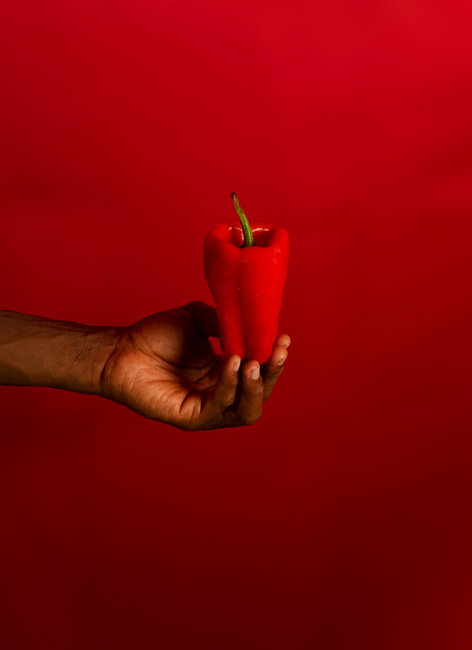
Ingredient of the Day: Cardamom
Discover the fragrant 'Queen of Spices' and how it enriches sweet and savory culinary traditions around the world.

Hear this story explained in 90 seconds.
Cardamom
Often hailed as the 'Queen of Spices,' cardamom is an intensely aromatic seed pod renowned for its herbal, citrusy, and menthol-like notes. A cornerstone of spice pantries across South Asia, the Middle East, and Scandinavia, it adds elegance and complexity to both comforting sweets and hearty, savory feasts.
Origin & History
True cardamom belongs botanically to Elettaria cardamomum, a perennial reed-like plant in the ginger family (Zingiberaceae). It is indigenous to the damp, evergreen forests of the Western Ghats in southern India—a mountain range historically referred to as the Cardamom Hills. Trade in cardamom dates back thousands of years; it was documented in ancient Sanskrit medical treatises and traveled along maritime routes to ancient Greece and the Roman Empire, where it was valued for perfumes, digestive tonics, and culinary flavoring. Centuries later, trade networks carried green cardamom across the Arabian Sea to the Middle East, while Moorish merchants and Viking travelers are credited with introducing it to Scandinavia, where it evolved into an indispensable baking staple.
Production
Cultivating cardamom requires patience and intensive manual labor. The plant thrives under the partial shade of tropical forest canopies, requiring humid conditions and rich, well-draining soil. Plants take around three years to bear fruit. The pale green seed pods mature unevenly along trailing shoots near the base of the plant and must be hand-harvested just before they are fully ripe to prevent them from splitting open. After harvest, workers wash and slowly dry the pods in temperature-controlled curing houses or under the sun to preserve their bright green color and volatile essential oils. Once dried, the outer pods protect the precious, oil-rich dark seeds inside from losing their flavor.
Culinary Uses
Cardamom exhibits remarkable culinary flexibility across diverse cultures. In Indian cuisine, cracked green pods are gently bloomed in warm ghee to build aromatic foundations for biryanis, curries, and rich chai, or ground finely to perfume desserts like kheer and gulab jamun. In Middle Eastern hospitality traditions, lightly crushed cardamom seeds are brewed directly alongside finely ground dark coffee beans to produce fragrant gahwa, traditionally served to honor arriving guests. Across Sweden and Finland, finely ground cardamom seeds provide the distinctive floral warmth behind sweet yeasted pastries such as kardemummabullar and festive breads like pulla.
Nutrition & Facts
Beyond its culinary appeal, cardamom provides dietary fiber and essential minerals, including manganese, iron, and magnesium. It contains rich concentrations of aromatic phytochemicals such as cineole, terpinyl acetate, and linalool, which are traditionally prized for their digestive and breath-freshening properties. In weight-to-value terms, green cardamom consistently ranks among the most expensive spices in the world, typically trailing only saffron and vanilla due to its rigorous hand-harvesting process.
Swedish Cardamom Buns (Kardemummabullar)
Delicate, golden twisted buns layered with a fragrant cardamom-brown sugar butter and finished with a glossy cardamom-infused sugar glaze.
Prep time: 40 min | Cook time: 15 min | Total time: 2 hr 30 min | Yield: 12 buns | Difficulty: Medium
Ingredients
Dough
- 250 ml (1 cup) whole milk, lukewarm (about 100°F / 38°C)
- 7 g (2 1/4 tsp) active dry yeast
- 75 g (6 tbsp) granulated sugar
- 10 g (1 tbsp) freshly ground green cardamom seeds
- 420 g (3 1/2 cups) all-purpose flour
- 3 g (1/2 tsp) fine sea salt
- 75 g (5 tbsp) unsalted butter, softened to room temperature
Cardamom Filling
- 85 g (6 tbsp) unsalted butter, softened
- 70 g (1/3 cup) light brown sugar, packed
- 6 g (2 tsp) freshly ground green cardamom seeds
- 2 g (1/2 tsp) ground cinnamon
Glaze and Topping
- 60 ml (1/4 cup) water
- 50 g (1/4 cup) granulated sugar
- 2 g (1/2 tsp) coarsely crushed green cardamom seeds
- 10 g (1 tbsp) pearl sugar (optional)
Instructions
- In the bowl of a stand mixer, combine lukewarm milk, yeast, and 1 tablespoon of granulated sugar; let stand for 5 to 10 minutes until frothy.
- Add the remaining sugar, ground cardamom, salt, and half the flour. Mix with a dough hook on low speed, then add the softened butter piece by piece. Gradually incorporate the remaining flour until a soft, smooth dough pulls away cleanly from the bowl sides, kneading for 7 to 8 minutes.
- Transfer dough to a lightly oiled bowl, cover with a damp cloth, and let rise in a warm place for about 60 minutes until doubled in bulk.
- In a small bowl, beat the softened butter, brown sugar, cardamom, and cinnamon until smooth and easily spreadable.
- Roll the rested dough out on a lightly floured surface into a rectangle measuring roughly 30 x 40 cm (12 x 16 inches). Spread the filling evenly across the entire surface.
- Fold the top third of the dough down to the center, then fold the bottom third up over it, like a tri-fold letter. Gently roll with a rolling pin to flatten slightly into a 20 x 30 cm rectangle.
- Cut the dough into 12 even strips. Slice each strip down the middle lengthwise, leaving the top edge attached, twist the two strands together, and knot them into a tight round bun. Place buns on a parchment-lined baking sheet, cover loosely, and let rise for 30 to 40 minutes until puffy.
- Preheat oven to 200°C (400°F). Bake buns for 12 to 15 minutes until deep golden brown and fragrant.
- While baking, simmer water and granulated sugar in a small saucepan until dissolved to make the glaze. Brush the hot buns with sugar syrup immediately out of the oven and sprinkle with crushed cardamom and pearl sugar.
Notes
Freshly cracked seeds harvested straight from whole green pods yield significantly more flavor and aroma than pre-ground cardamom powder. Store cooled buns in an airtight container for up to 3 days, or freeze for up to 2 months; reheat gently in a warm oven before serving with fresh coffee or black tea.
Subscribers can ask the journalist a question about this story. Subscribe to ask.
Ingredient of the Day feature by the PENN Food & Spirits Desk.
Comments
No comments yet — be the first to share your thoughts.
PENN's lifestyle and culinary department, covering global cuisine — the origins, traditions, and recipes behind the world's dishes, with deep histories and cultural context that go beyond the plate. and PENN's beverage-focused culinary team, dedicated to spirits and drinks — covering distilleries, breweries, and producers worldwide, with histories, tasting notes, professional reviews, and cocktail traditions.
View all articles by Desk →