
Environmenten
Prescribed Burns Offer Essential Protection for California's Giant Sequoias, Comprehensive Study Finds
An analysis of more than 26,000 ancient trees demonstrates that controlled fires dramatically reduce mortality rates during catastrophic wildfire events.
PENN Explainer
Hear this story explained in 90 seconds.
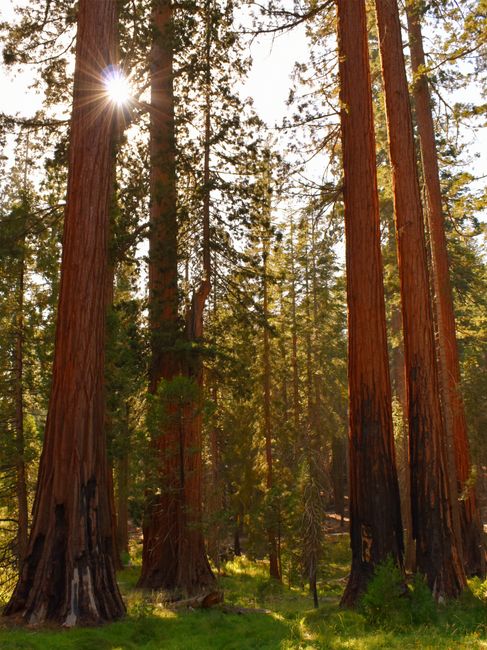
A comprehensive scientific assessment has found that controlled prescribed burning is the single most effective tool to protect ancient giant sequoias from destructive crown wildfires. Published in a major ecological survey of approximately 26,400 individual sequoia trees, the findings show that stands treated with regular managed fires survived extreme wildfire events at far higher rates than unmanaged forests. Researchers documented that low-intensity intentional fire eliminates dense forest undergrowth and built-up ground fuels that otherwise propel blazes high into the forest canopy.
Giant sequoias, native to the western slopes of California's Sierra Nevada mountain range, have evolved alongside fire for thousands of years. Their spongy, fibrous bark can grow up to two feet thick, providing natural insulation against periodic low-intensity blazes that historically cleared the forest floor. However, more than a century of total fire suppression policies, coupled with prolonged droughts and rising temperatures driven by climate change, has allowed brush, dead timber, and small firs to amass around the bases of these ancient trees.
Recent wildfire seasons dramatically exposed the vulnerability created by this buildup of fuel. Between 2020 and 2021, severe infernos including the Castle Fire and the KNP Complex Fire killed an estimated 13 to 19 percent of the world's large giant sequoias. Those blazes destroyed thousands of specimens that had survived for centuries or even millennia. The loss stunned biologists and forestry officials, prompting immediate research into why standard natural defenses failed against contemporary megafires.
The newly analyzed dataset tracked sequoia health across diverse federal and state holdings, including Sequoia and Kings Canyon National Parks, Yosemite National Park, and adjacent national forests. By comparing satellite burn severity data with detailed on-the-ground inventories, scientists demonstrated a sharp divergence in survival outcomes based entirely on recent fuel management history. Groves that had experienced prescribed burns within the previous ten to twenty years sustained minimal canopy scorch and low tree mortality.
In contrast, groves with no documented fire history for fifty or more years suffered widespread, catastrophic loss during the same extreme weather events. The excessive fuel loads on the ground created heat so intense that flames reached more than one hundred feet into the air, igniting tree crowns and killing even the most massive, thick-barked mature sequoias. When fire reaches the upper canopy of a giant sequoia, the tree cannot recover, as its foliage and growth buds are destroyed.
The study also examined the role of mechanical thinning, which involves using machinery or hand crews to clear dense undergrowth before igniting managed burns. Researchers found that while manual fuel thinning provides significant baseline protection near access roads and infrastructure, prescribed fire alone provides essential ecological benefits that machinery cannot duplicate. The heat from low-intensity ground fires triggers sequoia cones to open and release seeds, while ash provides nutrient-rich soil free of competing seedlings.
Ecologists and conservation groups have pointed to the findings as definitive evidence supporting a rapid expansion of cultural burning and state-directed fuel treatments. Indigenous tribes in the Sierra Nevada region, such as the Mono and Tubatulabal peoples, practiced regular landscape burning for generations prior to European settlement to manage plant growth and deter catastrophic fires. Forestry managers are increasingly collaborating with local tribal nations to reintroduce traditional ecological practices into public lands.
Despite the clear benefits identified in the analysis, federal and state forest managers face logistical and regulatory hurdles when executing prescribed burns. Controlled ignitions require specific temperature, humidity, and wind conditions to ensure blazes remain safely contained, leaving narrow operational windows each spring and autumn. In addition, lingering smoke often prompts air quality concerns from neighboring residential communities, sometimes requiring inter-agency waivers from regional air regulators.
Federal land managers have acknowledged these hurdles and announced updated initiatives to accelerate landscape-scale forest resilience treatments throughout California. The U.S. Forest Service and the National Park Service have committed resources under recent federal infrastructure funding packages to treat high-risk groves and streamline environmental review processes for ecological fuel reductions.
Forest scientists stress that active stewardship must be maintained continuously over decades rather than treated as a one-time intervention. As global climate patterns continue to produce hotter, drier summer conditions throughout the American West, researchers emphasize that reintroducing frequent low-intensity fire remains essential to preserving the remaining stands of Earth's largest trees.
Neutrality note
Auto-harvested from global news wires and presented neutrally by PENN.
to vote
Comments
No comments yet — be the first to share your thoughts.
Related stories in Environment

Hundreds of Endangered Khulan Return to Eastern Steppes of Mongolia After 65-Year Absence
2026-09-07
Giant Tortoises Reintroduced to Galápagos Island After Nearly 150-Year Absence
2026-09-07