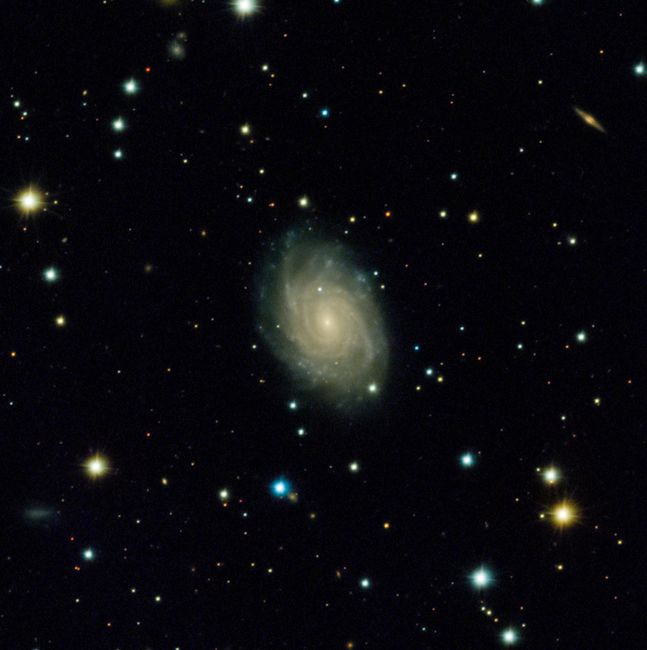
Researchers working with the Dark Energy Spectroscopic Instrument, or DESI, have officially completed a massive, multi-year project to create a detailed 3D map of the universe. This project is a significant milestone in the field of astronomy and cosmology. By mapping millions of galaxies, scientists hope to gain a clearer picture of how the universe has changed over billions of years. The data collected will serve as a vital resource for researchers around the world for many years to come.
The primary goal of this ambitious survey is to explore the nature of dark energy. Dark energy is a mysterious force that makes up about 70% of our universe and is currently driving its accelerating expansion. Understanding this force is one of the most important challenges in modern physics. By observing the distribution of galaxies, astronomers can measure how the universe has expanded at different points in time.
The DESI project is based at the Lawrence Berkeley National Laboratory in California. The team uses a specialized telescope to capture light from distant galaxies, which allows them to determine their distance from Earth. This process creates a precise three-dimensional view of the cosmos. The completion of this initial map represents a major achievement for the international team of scientists involved.
While the current phase of the project is complete, the work is far from over. Researchers plan to continue their observations through 2028 to further refine their findings. The team aims to grow the existing map by approximately 20%, expanding it from 14,000 square degrees to 17,000 square degrees. This expansion will allow for an even more comprehensive look at the structure of the universe.
Expanding the map comes with unique technical challenges for the research team. They must observe parts of the sky that are more difficult to see, such as areas near the plane of the Milky Way. In these regions, bright nearby stars can make it harder to detect more distant objects. Additionally, the team must account for atmospheric interference when peering toward the southern sky.
This project highlights the importance of large-scale collaboration in scientific discovery. By pooling resources and expertise, scientists can tackle questions that would be impossible to answer alone. The data from DESI will be analyzed by experts across various institutions to test existing theories about gravity and the evolution of the cosmos. These findings could eventually lead to a better understanding of the fundamental laws of nature.
Beyond the study of dark energy, the map provides a wealth of information for other areas of astronomy. It helps researchers identify patterns in how galaxies cluster together and how they have evolved over time. This information is essential for building accurate models of the early universe. Every new piece of data helps to fill in the gaps in our current knowledge.
The success of DESI demonstrates the power of modern technology in space exploration. Advanced instruments like this allow us to see further and more clearly than ever before. As the project continues, the scientific community expects to uncover even more details about the history of our universe. This ongoing research is a testament to human curiosity and the drive to understand our place in the cosmos.
Public interest in space exploration remains high, and projects like DESI help keep the public informed about the latest scientific progress. By sharing their findings, the researchers involved hope to inspire the next generation of scientists. The data will be made available to the broader academic community to encourage further study and discovery. This open approach is a cornerstone of modern scientific research.
As we look toward the future, the work done by the DESI team will likely influence many other areas of study. The techniques developed for this survey could be applied to future missions and telescopes. Each discovery builds upon the last, creating a continuous cycle of learning and innovation. The completion of this 3D map is just one step in a much larger journey to understand the vast and complex universe we inhabit.