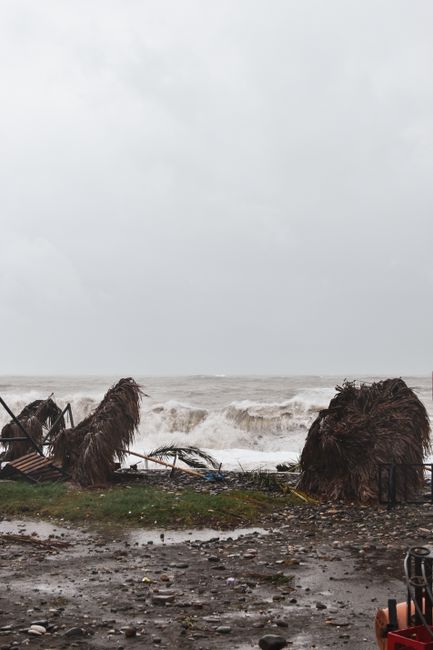
Typhoon Shanshan Causes Widespread Destruction Across Japan
Slow-moving storm triggers landslides, flooding, and travel disruptions throughout the nation

PENN Explainer
Hear this story explained in 90 seconds.
Typhoon Shanshan moved across Japan in late August 2024, bringing torrential rainfall and powerful winds to multiple regions. The storm system caused significant damage to infrastructure and forced millions of residents to consider evacuation orders. Authorities reported that the slow movement of the typhoon exacerbated the impact of the weather event.
At least eight people lost their lives due to the storm, while more than 120 individuals sustained injuries. The casualties were linked to various incidents, including landslides and structural collapses caused by the intense weather. Emergency responders worked to reach affected areas as the storm continued its path across the country.
Heavy rainfall was a primary concern for meteorological agencies throughout the event. Nearly two feet of rain fell on the Miyazaki prefecture on the island of Kyushu, leading to severe flooding in local communities. Rivers in and around Tokyo also faced the threat of spilling their banks as the storm moved toward the Kanto region.
Linear precipitation zones, which are bands of cumulonimbus clouds, developed over areas like Mie Prefecture. These formations prompted officials to issue Level 4 warnings for heavy rainfall to alert residents of immediate danger. Similar warnings were extended to the prefectures of Yamanashi, Nagano, and Niigata as the storm progressed.
Transportation networks across Japan experienced major disruptions during the typhoon. Train operations, including the Tokaido Shinkansen, were suspended between Tokyo and Nagoya to ensure passenger safety. Many residents found their travel plans halted as the storm made landfall and moved slowly eastward.
Local authorities and the Japan Meteorological Agency monitored the situation closely to provide real-time updates. They warned that the risk of landslides remained high even after the storm weakened into a tropical storm. Residents were urged to stay alert and follow instructions from local government officials.
Economic impacts from the typhoon are estimated to be between 6 and 10 billion US dollars. Hundreds of structures sustained damage, ranging from roof collapses to water-logged interiors. The recovery process involves assessing the full extent of the destruction to homes and public facilities.
This weather event followed closely after Typhoon Ampil, which had previously caused power outages and evacuations in parts of the country. The frequency of these powerful storms has kept emergency services in a state of high readiness. Officials continue to emphasize the importance of disaster preparedness in vulnerable regions.
One resident noted that the scale of the storm was unusual, stating that it was the first time they had seen a typhoon sweep across the entire nation. The slow pace of the system allowed it to dump significant amounts of water over a broad area. This prolonged exposure increased the strain on drainage systems and natural landscapes.
As the storm moved off the coast of Wakayama Prefecture, the focus shifted toward recovery and damage assessment. Cleanup efforts are expected to take time as communities work to clear debris and restore essential services. The government remains committed to supporting those affected by the disaster.
Ask the Author
Subscribers can ask the journalist a question about this story. Subscribe to ask.
中立性说明
Auto-harvested from global news wires and presented neutrally by PENN.
to vote
Comments
No comments yet — be the first to share your thoughts.